Achieving CMMC Compliance by 2026: A Step-by-Step Roadmap for US Defense Contractors

Anúncios
Achieving CMMC compliance by 2026 is critical for US defense contractors to secure sensitive government information and maintain eligibility for Department of Defense contracts.
Anúncios
For US defense contractors, the Cybersecurity Maturity Model Certification (CMMC) isn’t just another acronym; it’s a mandatory security framework crucial for continued engagement with the Department of Defense (DoD). By 2026, full implementation of CMMC will be a contractual requirement, making a clear strategy for CMMC Compliance Roadmap indispensable. Are you prepared to navigate this complex landscape and secure your place in the defense industrial base?
Understanding CMMC and its Urgency for 2026
The Cybersecurity Maturity Model Certification (CMMC) is a unified standard for implementing cybersecurity across the defense industrial base (DIB). Its primary goal is to protect sensitive unclassified information, specifically Controlled Unclassified Information (CUI) and Federal Contract Information (FCI), that is shared with DoD contractors and subcontractors.
Anúncios
The urgency for defense contractors to achieve CMMC compliance by 2026 stems from the phased rollout mandated by the DoD. While earlier versions allowed for self-attestation or limited third-party assessments, the current CMMC 2.0 framework emphasizes third-party assessments for higher maturity levels, making the process more rigorous and time-consuming. Contractors who fail to meet the required CMMC level will eventually be ineligible for new DoD contracts, posing a significant threat to their business continuity.
The Evolution of CMMC: From 1.0 to 2.0
CMMC has evolved significantly since its initial release. CMMC 1.0 introduced five maturity levels, each building upon the previous one with increasing cybersecurity practices and processes. However, feedback from the DIB led to a streamlined CMMC 2.0, which simplifies the model into three maturity levels, aligning more closely with NIST SP 800-171 and NIST SP 800-172 practices.
- Level 1: Foundational (FCI): Focuses on basic cyber hygiene, similar to FAR 52.204-21 requirements.
- Level 2: Advanced (CUI): Aligns with NIST SP 800-171, requiring a comprehensive set of security practices.
- Level 3: Expert (CUI): Based on a subset of NIST SP 800-172, designed for programs handling the most critical CUI.
This shift to CMMC 2.0 aims to reduce complexity and cost while maintaining the integrity of the cybersecurity posture. However, it still demands a proactive and strategic approach from contractors to meet the deadlines.
In essence, CMMC 2.0 simplifies the framework but reinforces the necessity for robust cybersecurity. The 2026 deadline is not merely a suggestion; it’s a critical milestone that will separate compliant contractors from those who risk losing access to lucrative DoD opportunities. Understanding this landscape is the first step toward building an effective CMMC compliance roadmap.
Phase 1: Initial Assessment and Gap Analysis
The journey towards CMMC compliance begins with a thorough understanding of your current cybersecurity posture. This initial assessment and gap analysis phase is crucial for identifying where your organization stands against the CMMC requirements and what steps are needed to bridge any deficiencies.
Start by determining the CMMC level required for your specific contracts. This information is typically specified in the Request for Information (RFI) or Request for Proposal (RFP) from the DoD. Once the target level is established, you can begin to evaluate your existing systems and processes.
Conducting a Comprehensive Self-Assessment
A self-assessment involves systematically reviewing your current cybersecurity practices against the controls outlined in the relevant CMMC level. For Level 2, this means a detailed examination of your adherence to NIST SP 800-171. This process should be meticulous and involve various departments within your organization.
- Inventory Assets: Document all information systems, networks, and data repositories that process, store, or transmit CUI or FCI.
- Review Policies and Procedures: Compare your existing cybersecurity policies and procedures against CMMC practices.
- Technical Controls Assessment: Evaluate the implementation and effectiveness of technical security controls, such as firewalls, intrusion detection systems, and encryption.
The goal is to identify specific areas where your organization falls short. This might include missing policies, inadequate technical safeguards, or a lack of documented processes. Don’t underestimate the importance of documentation; CMMC assessments heavily rely on demonstrable evidence of compliance.
Identifying these gaps early allows for strategic planning and resource allocation. It provides a clear picture of the effort and investment required, setting realistic expectations for the subsequent phases of your compliance journey. A well-executed gap analysis is the bedrock of a successful CMMC implementation.
Phase 2: Developing a Remediation Plan and Implementation
Once the gaps have been identified, the next critical step is to develop a detailed remediation plan. This plan outlines the specific actions needed to address each identified deficiency and achieve the required CMMC maturity level. It’s a strategic document that guides your implementation efforts, ensuring a structured and efficient approach.
The remediation plan should prioritize deficiencies based on their impact on CMMC compliance and the effort required for implementation. Some gaps might be quick fixes, while others could require significant investment in new technologies or processes. Effective project management is key during this phase to keep efforts on track and within budget.
Key Elements of a Robust Remediation Plan
A comprehensive remediation plan is more than just a checklist; it’s a living document that evolves with your progress. It should clearly define responsibilities, timelines, and necessary resources for each task.
- Assign Ownership: For each identified gap, designate a responsible individual or team.
- Set Timelines: Establish realistic deadlines for the completion of each remediation task.
- Allocate Resources: Determine the financial, technological, and human resources required.
- Document Evidence: Plan for the collection of evidence that demonstrates compliance, as this will be critical during the assessment.
Implementation involves putting the plan into action. This could mean updating existing policies, deploying new security software, training employees on new procedures, or enhancing network configurations. It is vital to ensure that all changes are thoroughly documented and tested to confirm their effectiveness and to avoid introducing new vulnerabilities.
This phase is often the most resource-intensive, demanding careful execution and continuous monitoring. Regular reviews of progress against the remediation plan are essential to identify any roadblocks and make necessary adjustments. A well-executed implementation ensures that your organization not only meets the technical requirements but also embeds a culture of cybersecurity.
Phase 3: Documentation and Evidence Gathering
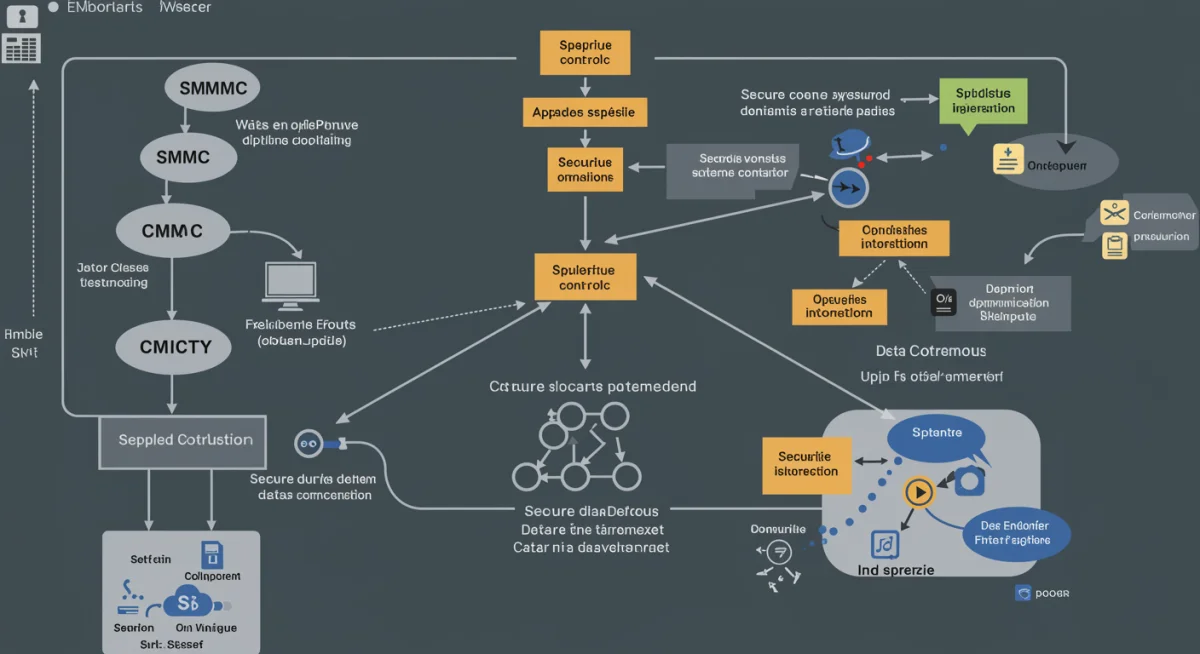
Documentation is not just a byproduct of CMMC compliance; it’s a cornerstone. In fact, many organizations struggle with compliance not because they lack the controls, but because they lack the proper documentation and evidence to demonstrate their implementation. This phase focuses on meticulously collecting and organizing all necessary artifacts to prove adherence to CMMC practices and processes.
Assessors will not simply take your word for it; they will require tangible proof. This includes everything from written policies and procedures to system configuration files, audit logs, training records, and incident response plans. Every practice within the CMMC framework must be supported by documented evidence.
What Constitutes Acceptable Evidence?
Understanding what assessors look for is crucial for effective evidence gathering. Evidence typically falls into several categories:
- Policies and Procedures: Formal documents outlining your organization’s approach to cybersecurity.
- Implementation Records: Screenshots, configuration files, system logs showing controls are active.
- Test Results: Records from vulnerability scans, penetration tests, and security audits.
- Training Records: Documentation of employee cybersecurity awareness training.
- Artifacts of Operation: Evidence of ongoing monitoring, incident response activities, and regular reviews.
It’s not enough to simply have these documents; they must be current, accessible, and clearly demonstrate how your organization meets each CMMC practice. Consider developing a centralized repository for all CMMC-related documentation to streamline the evidence gathering process. This will save significant time and effort during the actual assessment.
The documentation phase requires a systematic approach and attention to detail. It’s an ongoing process, as policies and procedures should be regularly reviewed and updated to reflect changes in your environment and the threat landscape. Strong documentation not only facilitates a smoother CMMC assessment but also strengthens your overall cybersecurity posture by ensuring consistency and accountability.
Phase 4: Pre-Assessment and Formal Assessment Preparation
As you approach the formal CMMC assessment, conducting a pre-assessment, often referred to as a mock assessment or readiness review, is highly recommended. This step allows your organization to identify and correct any remaining weaknesses before the official audit, significantly increasing your chances of a successful outcome.
A pre-assessment should simulate the actual CMMC assessment as closely as possible. This often involves engaging a third-party cybersecurity firm that has experience with CMMC C3PAOs (Certified Third-Party Assessment Organizations) or is itself a C3PAO. Their objective perspective can uncover blind spots that internal teams might miss.
Engaging a C3PAO and Understanding the Assessment Process
For CMMC Level 2 and Level 3, a formal assessment by an accredited C3PAO is mandatory. Understanding their methodology and preparing accordingly is vital. The assessment typically involves:
- Documentation Review: C3PAOs will scrutinize all your submitted policies, procedures, and evidence.
- Interviews: Personnel from various departments will be interviewed to confirm their understanding and adherence to security practices.
- Technical Verification: Assessors may conduct technical tests, observe system configurations, and review logs to verify control implementation.
Before the formal assessment, ensure all your documentation is meticulously organized and readily available. Conduct internal reviews to confirm all employees understand their roles in maintaining cybersecurity and can articulate relevant policies and procedures. Address any findings from your pre-assessment rigorously.
This preparatory phase is about minimizing surprises. By proactively addressing potential issues and familiarizing your team with the assessment process, you can approach the formal audit with confidence. Remember, the goal is not just to pass the assessment but to demonstrate a truly mature and resilient cybersecurity program.
Phase 5: Post-Assessment and Continuous Improvement
Achieving CMMC certification is not the end of your cybersecurity journey; rather, it marks a new beginning. The post-assessment phase focuses on addressing any findings from the C3PAO, maintaining your compliance, and continuously improving your cybersecurity posture.
Even if you pass the initial assessment, there might be minor findings or recommendations for improvement. It’s crucial to address these promptly and systematically. Failure to do so could jeopardize your certification during future surveillance audits or renewals.
Maintaining Compliance and Adapting to Evolving Threats
Cybersecurity is a dynamic field, with new threats and vulnerabilities emerging constantly. Therefore, CMMC compliance requires a commitment to continuous improvement. This involves:
- Regular Reviews: Periodically review your cybersecurity policies, procedures, and controls to ensure they remain effective and aligned with CMMC requirements.
- Employee Training: Continuously educate employees on the latest cybersecurity threats and best practices.
- Threat Intelligence: Stay informed about new cyber threats and vulnerabilities relevant to your industry and adjust your defenses accordingly.
- Incident Response Drills: Conduct regular drills to test and refine your incident response plan.
The CMMC framework itself may also evolve, necessitating adjustments to your compliance program. Staying informed about updates from the DoD and the CMMC Accreditation Body (CMMC-AB) is essential. Integrating cybersecurity into your organizational culture ensures that it’s not just a compliance exercise but a fundamental aspect of your operations.
By embracing a culture of continuous improvement, defense contractors can not only maintain their CMMC certification but also build a truly resilient and secure environment, protecting sensitive government information and fostering long-term trust with the DoD. This ongoing commitment is the hallmark of a mature and responsible defense industrial base participant.
| Key Point | Brief Description |
|---|---|
| Initial Assessment | Identify current cybersecurity posture and gaps against CMMC requirements. |
| Remediation Plan | Develop and implement actions to address identified cybersecurity deficiencies. |
| Documentation & Evidence | Meticulously gather and organize proof of CMMC practice implementation. |
| Continuous Improvement | Regularly review and update security measures to adapt to new threats. |
Frequently asked questions about CMMC Compliance
The primary goal of CMMC 2.0 is to enhance the cybersecurity posture of the defense industrial base by protecting sensitive unclassified information, such as Controlled Unclassified Information (CUI) and Federal Contract Information (FCI), through a unified set of cybersecurity standards and assessments.
Most defense contractors handling Controlled Unclassified Information (CUI) will likely need to achieve CMMC Level 2. This level aligns with the 110 security controls outlined in NIST SP 800-171 and requires a third-party assessment to verify compliance.
By 2026, CMMC compliance will be a mandatory contractual requirement for most Department of Defense contracts. Contractors who do not meet the required CMMC level will be ineligible for new contracts, making this deadline critical for business continuity in the defense sector.
Under CMMC 2.0, only organizations requiring Level 1 (Foundational) compliance, handling Federal Contract Information (FCI) but not CUI, may be eligible for annual self-assessments. Levels 2 and 3 require third-party assessments by accredited C3PAOs.
Key challenges include understanding the complex requirements, allocating sufficient resources for remediation, meticulous documentation and evidence gathering, and managing the continuous improvement cycle. The cost and time investment can also be significant.
Conclusion
Achieving CMMC Compliance by 2026 is more than a regulatory hurdle; it’s a strategic imperative for US defense contractors. This step-by-step roadmap, encompassing initial assessment, remediation, meticulous documentation, pre-assessment, and continuous improvement, provides a clear pathway to navigate the complexities of CMMC 2.0. By proactively embracing these phases, contractors can not only safeguard sensitive government information but also ensure their continued eligibility for vital DoD contracts, reinforcing their role in national security. The commitment to robust cybersecurity is an ongoing journey, crucial for long-term success in the defense industrial base.