AI Cyber Defenses 2026: Protecting US Critical Infrastructure
Anúncios
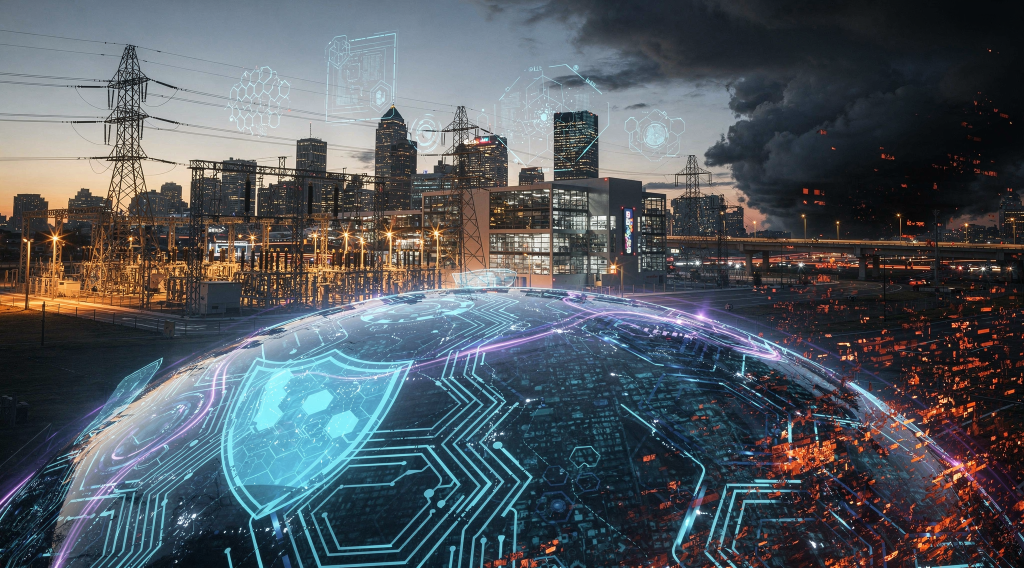
The digital age has brought unprecedented connectivity and efficiency, but with it, an escalating threat landscape. For the United States, safeguarding its critical infrastructure—the backbone of its economy, security, and public health—is paramount. As we look towards 2026, the integration of Artificial Intelligence (AI) into cyber defenses is not merely an option but a necessity. AI Cyber Defenses are rapidly becoming the frontline against sophisticated and evolving cyber threats, promising to revolutionize how the nation protects its vital systems.
Anúncios
Critical infrastructure encompasses a broad range of sectors, including energy, water, transportation, communications, healthcare, and financial services. A successful cyberattack on any of these could lead to catastrophic consequences, ranging from widespread power outages and economic collapse to public health crises and national security breaches. Traditional cyber defense mechanisms, while essential, often struggle to keep pace with the speed, scale, and stealth of modern adversaries. This is where AI Cyber Defenses step in, offering capabilities that transcend human limitations in threat detection, analysis, and response.
The Evolving Threat Landscape and the Imperative for AI Cyber Defenses
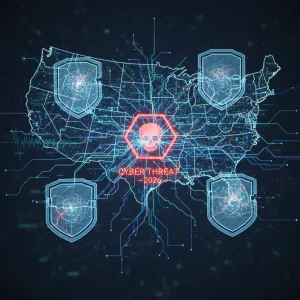
The nature of cyber threats is constantly shifting. Nation-state actors, organized crime syndicates, and even individual hackers are employing increasingly advanced techniques, including AI-powered attacks, zero-day exploits, and sophisticated social engineering campaigns. These adversaries are often well-funded, highly skilled, and persistent, making the defense of critical infrastructure a continuous and arduous battle. The sheer volume of data generated within these complex systems also presents a challenge, making it difficult for human analysts to identify subtle anomalies that could signify an impending attack.
The imperative for robust AI Cyber Defenses stems from several key factors:
Anúncios
- Speed of Attack: Cyberattacks can unfold in milliseconds, far too quickly for human intervention alone. AI systems can detect and respond to threats in real-time, often before any significant damage occurs.
- Volume of Data: Critical infrastructure generates petabytes of data daily. AI algorithms can sift through this immense data ocean, identifying patterns and anomalies that would be invisible to human eyes.
- Sophistication of Threats: Modern malware and attack vectors are designed to evade traditional security measures. AI, particularly machine learning and deep learning, can learn from past attacks and adapt to new ones, identifying novel threats based on behavioral anomalies.
- Resource Constraints: Cybersecurity talent is in high demand and short supply. AI can augment human security teams, automating routine tasks and allowing experts to focus on strategic threat intelligence and complex problem-solving.
- Proactive Defense: Beyond reactive measures, AI can predict potential attack vectors and vulnerabilities, enabling organizations to strengthen their defenses preemptively.
By 2026, the U.S. aims to have a highly resilient critical infrastructure ecosystem, and AI Cyber Defenses will be a cornerstone of this resilience. This involves not just deploying AI tools but integrating them strategically across all levels of defense.
Key Innovations in AI Cyber Defenses by 2026
The next few years will see significant advancements in AI Cyber Defenses, transforming the capabilities of critical infrastructure protection. These innovations will span various aspects of cybersecurity, from early warning systems to automated incident response.
Advanced Anomaly Detection with Machine Learning
Machine learning (ML) is at the heart of many AI Cyber Defenses. By 2026, ML algorithms will be even more sophisticated in identifying deviations from normal behavior within critical infrastructure networks. This includes:
- Behavioral Analytics: ML models will establish baselines for network traffic, user activity, and device behavior. Any significant departure from these baselines, even subtle ones, will trigger alerts. For example, an unusual data transfer volume from a SCADA system or an unauthorized access attempt during off-hours would be immediately flagged.
- Predictive Analytics: Leveraging historical data, ML can predict potential vulnerabilities and attack patterns. This allows for proactive patching and strengthening of defenses before an attack materializes.
- Unsupervised Learning: This type of ML is particularly powerful for detecting zero-day exploits, as it doesn’t require pre-labeled data. It can identify entirely new attack methods by recognizing anomalous data clusters or behaviors.
Deep Learning for Enhanced Threat Intelligence
Deep learning (DL), a subset of ML, utilizes neural networks to analyze complex patterns and relationships in vast datasets. By 2026, DL will significantly enhance threat intelligence capabilities:
- Natural Language Processing (NLP) for Open-Source Intelligence (OSINT): DL-powered NLP will be used to scour the dark web, social media, cybersecurity forums, and news feeds for mentions of vulnerabilities, attack campaigns, and emerging threats relevant to critical infrastructure. This provides early warnings and helps anticipate adversary movements.
- Image and Video Analysis for Physical Security: While primarily focused on cyber, critical infrastructure often has physical vulnerabilities. DL can analyze surveillance footage to detect suspicious activities, unauthorized access, or even unusual drone movements near facilities, integrating physical and cyber security.
- Malware Analysis: Deep learning models can analyze malware code and behavior more effectively than traditional signature-based methods, identifying polymorphic and obfuscated threats that constantly change their appearance.
Automated Incident Response and Orchestration
One of the most critical advancements will be in automated incident response. By 2026, AI Cyber Defenses will move beyond mere detection to intelligent, autonomous action:
- Security Orchestration, Automation, and Response (SOAR): AI will power SOAR platforms, automating routine security tasks such as blocking malicious IP addresses, isolating infected systems, and patching vulnerabilities. This dramatically reduces response times and minimizes the impact of attacks.
- Adaptive Security Policies: AI systems will dynamically adjust security policies based on real-time threat intelligence and network conditions. For instance, if a specific type of attack is detected, AI can automatically tighten firewall rules or increase monitoring on vulnerable systems.
- Deception Technology: AI can create sophisticated honeypots and decoy systems to lure attackers, gather intelligence on their tactics, techniques, and procedures (TTPs), and divert them from actual critical assets.
Quantum-Resistant Cryptography and AI
As quantum computing advances, the threat to current encryption standards becomes real. By 2026, research and early deployment of quantum-resistant cryptography, often guided and managed by AI, will be crucial for protecting sensitive critical infrastructure data and communications. AI can help in evaluating the strength of new cryptographic algorithms and managing their deployment.
Challenges and Considerations for Implementing AI Cyber Defenses
Despite the immense promise of AI Cyber Defenses, their implementation within U.S. critical infrastructure faces several challenges:
Data Quality and Availability
AI models are only as good as the data they are trained on. Critical infrastructure systems often have disparate data sources, legacy systems, and proprietary protocols, making it challenging to collect, clean, and standardize data for AI training. Ensuring the availability of high-quality, relevant data without compromising privacy or operational integrity is a significant hurdle.
Bias and Explainability
AI models can inherit biases from their training data, leading to skewed results or false positives/negatives. In critical infrastructure, such errors could have severe consequences. Furthermore, the ‘black box’ nature of some advanced AI models (especially deep learning) makes it difficult to understand why a particular decision was made (explainable AI or XAI). For critical infrastructure, where human oversight and accountability are vital, explainability is crucial.
Adversarial AI
Just as AI is used for defense, adversaries are increasingly employing AI to launch more sophisticated attacks. This ‘AI vs. AI’ arms race means that defensive AI systems must be constantly updated and hardened against adversarial machine learning techniques, where attackers try to trick AI models into making incorrect predictions.
Integration with Legacy Systems
Many critical infrastructure components are decades old and were not designed with modern cybersecurity in mind. Integrating cutting-edge AI Cyber Defenses with these legacy systems, often without disrupting ongoing operations, is a complex engineering and logistical challenge.
Regulatory and Policy Frameworks
The rapid evolution of AI technology often outpaces regulatory frameworks. Developing agile and effective policies that encourage innovation while ensuring security, accountability, and ethical use of AI in critical infrastructure is essential. This includes addressing issues of data governance, privacy, and liability.
Talent Gap
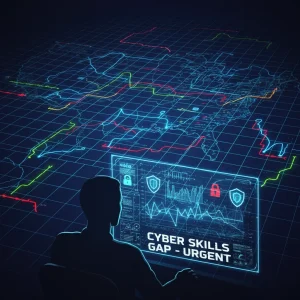
While AI can augment human capabilities, developing, deploying, and managing advanced AI Cyber Defenses requires a highly skilled workforce. There is a significant talent gap in cybersecurity professionals with expertise in AI, machine learning, and critical infrastructure systems.
Strategic Approaches for 2026 and Beyond
To overcome these challenges and fully leverage the potential of AI Cyber Defenses, a multi-faceted strategic approach is required:
Public-Private Partnerships
Collaboration between government agencies (like CISA, DOE, DHS), private sector companies operating critical infrastructure, and AI research institutions is vital. Sharing threat intelligence, best practices, and resources can accelerate the development and deployment of effective AI solutions. Joint projects can address specific sector-based vulnerabilities and tailor AI solutions accordingly.
Investment in Research and Development
Continued and increased investment in R&D for AI Cyber Defenses is crucial. This includes funding for explainable AI, adversarial AI countermeasures, quantum-resistant cryptography, and AI-driven resilience solutions. Focusing on open-source AI security tools can also foster broader adoption and community-driven improvements.
Workforce Development and Training
Addressing the talent gap requires comprehensive workforce development programs. This includes investing in STEM education, developing specialized cybersecurity training programs with an AI focus, and reskilling existing IT and security professionals. Encouraging cross-disciplinary expertise, combining operational technology (OT) knowledge with AI and cybersecurity skills, is also important.
Standardization and Interoperability
Developing industry standards for AI-driven security tools and ensuring interoperability between different systems will be key. This will allow for seamless integration of new technologies and facilitate a more cohesive defense posture across diverse critical infrastructure sectors. NIST frameworks and guidelines will play a crucial role here.
Ethical AI and Governance
Establishing clear ethical guidelines and governance frameworks for AI in critical infrastructure is paramount. This includes ensuring transparency, accountability, fairness, and human oversight in AI-driven decision-making processes. Regular audits and assessments of AI systems will be necessary to ensure they are operating as intended and not introducing new risks.
Threat Intelligence Sharing and Collaboration Platforms
Enhanced platforms for real-time threat intelligence sharing, powered by AI, will enable critical infrastructure operators to anticipate and mitigate threats more effectively. These platforms can leverage AI to analyze vast amounts of global threat data, identify relevant indicators of compromise (IOCs), and disseminate actionable intelligence to all stakeholders.
Resilience Engineering with AI
Beyond preventing attacks, AI can contribute significantly to the resilience of critical infrastructure. This involves:
- Automated Recovery: AI-driven systems can assist in the rapid recovery of systems after an attack, identifying damaged components, isolating compromised sections, and initiating automated restoration processes.
- Redundancy and Self-Healing Networks: AI can optimize network architectures for redundancy and design self-healing capabilities, allowing systems to automatically reroute traffic or switch to backup components in case of failure or attack.
- Simulation and Stress Testing: AI can run sophisticated simulations of cyberattacks and system failures, helping organizations identify weaknesses and improve their resilience strategies before real-world incidents occur.
Sector-Specific Applications of AI Cyber Defenses
While the principles of AI Cyber Defenses are broadly applicable, their implementation often requires tailoring to the specific needs and vulnerabilities of each critical infrastructure sector.
Energy Sector
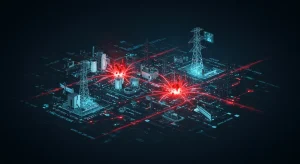
The energy sector, encompassing power grids, oil and gas pipelines, and nuclear facilities, is a prime target for cyberattacks. AI can monitor SCADA (Supervisory Control and Data Acquisition) systems for anomalies, predict equipment failures, and secure smart grid components. For example, AI can detect subtle changes in voltage or frequency that might indicate an attempted manipulation of the grid, or identify unauthorized access attempts to control systems for pipelines.
Water and Wastewater Systems
These systems are increasingly reliant on digital controls, making them vulnerable. AI can monitor water quality sensors for malicious alterations, detect unusual pump activity, and secure remote access points. Early detection of anomalies can prevent contamination or disruption of water supply, safeguarding public health.
Transportation Systems
From air traffic control to railway networks and smart roads, transportation systems are complex and interconnected. AI can secure navigation systems, detect malware in vehicle control units, and monitor traffic control networks for suspicious activities. Predictive AI can also help anticipate traffic disruptions caused by cyber incidents, aiding in rapid recovery.
Communications Sector
The communications infrastructure (telecom networks, internet service providers) is foundational to all other critical sectors. AI can detect denial-of-service (DoS) attacks, identify fraudulent activities, secure 5G networks, and analyze network traffic for malicious payloads. AI-driven network segmentation can isolate compromised sections, preventing wider outages.
Healthcare and Public Health
Hospitals and healthcare systems hold sensitive patient data and rely on interconnected medical devices. AI can protect electronic health records (EHRs) from ransomware, detect anomalies in medical device communications, and secure telehealth platforms. AI can also assist in identifying and responding to cyberattacks that could disrupt patient care or compromise critical medical equipment.
Financial Services
The financial sector is constantly under attack, facing threats like fraud, data breaches, and insider trading. AI can enhance fraud detection systems, secure online banking platforms, monitor financial transactions for suspicious patterns, and protect critical financial market infrastructure. Machine learning algorithms can analyze vast amounts of transaction data in real-time to identify and block fraudulent activities before they complete.
The Future: A Symbiotic Relationship Between AI and Human Expertise
By 2026, the landscape of AI Cyber Defenses will not be one where machines entirely replace humans. Instead, it will be a symbiotic relationship. AI will handle the heavy lifting of data analysis, threat detection, and automated response, while human experts will provide strategic oversight, make complex ethical decisions, refine AI models, and handle the most sophisticated and novel threats that require human intuition and creativity. This human-in-the-loop approach ensures accountability and adapts to unforeseen challenges.
The continuous feedback loop between human analysts and AI systems will be crucial. Humans will train AI, and AI will, in turn, empower humans with actionable intelligence and automated tools, creating a more resilient and adaptive defense ecosystem. The goal is not just to prevent attacks but to build a critical infrastructure that can withstand, adapt, and rapidly recover from any cyber assault, ensuring the continued safety and prosperity of the nation.
In conclusion, the journey to robust AI Cyber Defenses for U.S. critical infrastructure by 2026 is ambitious but achievable. By embracing innovation, fostering collaboration, investing in talent, and maintaining a vigilant stance against evolving threats, the United States can build a cyber-resilient future where its vital systems are protected by the most advanced technologies available.