Remote Work 2.0: Navigating 2026 US Tax for Digital Nomads

Anúncios
Remote Work 2.0: Navigating the Latest Tax Implications for US Digital Nomads in 2026
The allure of remote work has never been stronger, with millions of Americans embracing the freedom and flexibility of being a digital nomad. As we approach 2026, the landscape of taxation for these mobile professionals continues to evolve, presenting both opportunities and complexities. For US digital nomad taxes, understanding the nuances of federal, state, and international tax laws is paramount to ensuring compliance and optimizing your financial situation. This comprehensive guide aims to demystify the tax implications for US digital nomads in 2026, providing actionable insights and strategies to navigate this intricate terrain.
Anúncios
The dream of working from anywhere, be it a beach in Thailand, a café in Paris, or a mountain retreat in Colorado, has become a reality for many. However, this freedom comes with significant responsibilities, particularly concerning taxation. The Internal Revenue Service (IRS) maintains that US citizens and green card holders are subject to US income tax on their worldwide income, regardless of where they live or earn it. This fundamental principle forms the bedrock of US digital nomad taxes. While this might sound daunting, various provisions and strategies exist to alleviate the tax burden, making the digital nomad lifestyle financially sustainable.
Understanding Your Tax Residency Status
Before diving into specific tax provisions, it’s crucial for every US digital nomad to accurately determine their tax residency status. This isn’t always straightforward, especially when you’re constantly on the move. Your tax residency dictates which tax laws apply to you and where you owe taxes. For US federal tax purposes, if you are a US citizen or a resident alien, you are generally considered a US tax resident. This means you are liable for US taxes on your global income. However, complications arise when considering state tax residency.
Many digital nomads mistakenly believe that simply by leaving their home state, they are no longer subject to state income taxes. This is often not the case. States have varying rules for determining residency, often based on factors such as the location of your driver’s license, voter registration, bank accounts, or even the amount of time spent within the state’s borders. Some states, like Texas, Florida, and Nevada, have no state income tax, making them attractive domiciles for digital nomads. However, establishing domicile in a no-income-tax state requires careful planning and genuine intent to reside there. Simply changing your mailing address without severing ties to your previous state could lead to unexpected tax liabilities.
Anúncios
For US digital nomad taxes, it’s essential to understand the difference between ‘domicile’ and ‘residency.’ Domicile is generally considered your permanent home, the place you intend to return to, even if you are temporarily living elsewhere. Residency, on the other than, refers to where you physically live for a significant portion of the year. Some states use a ‘statutory residency’ test, meaning if you spend more than a certain number of days (e.g., 183 days) in the state, you could be considered a resident for tax purposes, regardless of your domicile. This is a critical area where professional tax advice can prevent costly errors for US digital nomad taxes.
The Foreign Earned Income Exclusion (FEIE): A Cornerstone for US Digital Nomads
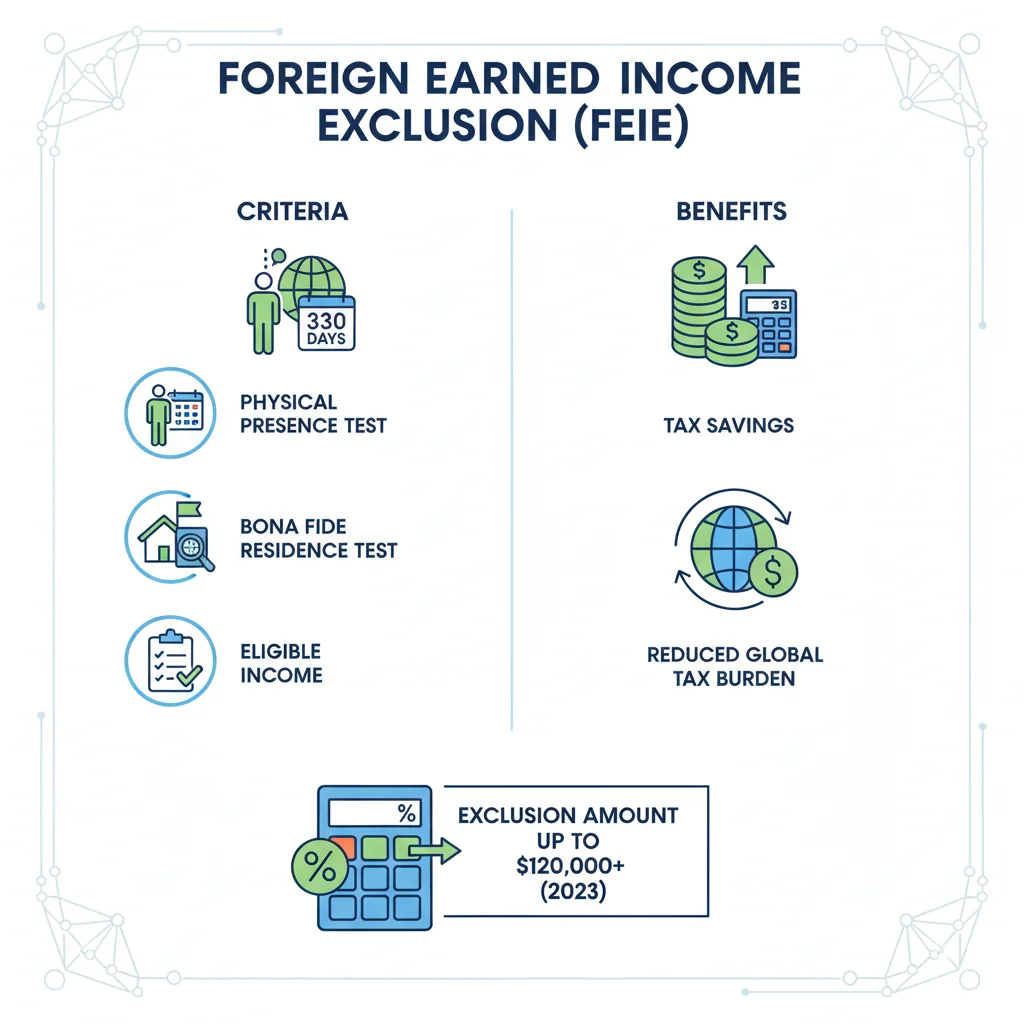
One of the most significant tax benefits available to US digital nomads living and working abroad is the Foreign Earned Income Exclusion (FEIE), outlined in IRS Tax Topic 858. The FEIE allows qualifying individuals to exclude a certain amount of their foreign earned income from US income tax. For 2026, this amount is expected to be adjusted for inflation, offering a substantial reduction in taxable income. To qualify for the FEIE, you must meet two tests:
- Tax Home Test: Your tax home must be in a foreign country throughout your period of bona fide residence or physical presence abroad. Your tax home is the general area of your main place of work, regardless of where you maintain your family home.
- One of Two Foreign Residency Tests:
- Bona Fide Residence Test: You must be a bona fide resident of a foreign country or countries for an uninterrupted period that includes an entire tax year. This generally means establishing a permanent presence in a foreign country with no immediate intent to return to the US.
- Physical Presence Test: You must be physically present in a foreign country or countries for at least 330 full days during any period of 12 consecutive months. This test is often easier for digital nomads to meet, as it focuses solely on physical location rather than intent to reside.
It’s crucial to understand that the FEIE only applies to ‘earned income’ – wages, salaries, professional fees, or other amounts received as compensation for personal services. It does not apply to passive income such as interest, dividends, or capital gains. Furthermore, while the FEIE reduces your taxable income, it does not exempt you from filing a US tax return if your worldwide income exceeds the standard filing thresholds. For US digital nomad taxes, careful tracking of your time abroad and maintaining meticulous records are essential for claiming the FEIE.
Beyond the FEIE, digital nomads may also be able to claim the Foreign Housing Exclusion or Deduction. This allows you to exclude or deduct certain housing expenses paid for by you or on your behalf by your employer. This is particularly beneficial in high-cost-of-living foreign cities and can further reduce your US tax liability. The interplay between the FEIE and foreign housing exclusions is complex, and maximizing these benefits for US digital nomad taxes often requires expert guidance.
State Tax Implications for US Digital Nomads
While federal tax obligations are generally consistent for US citizens abroad, state tax implications can be a labyrinth. As mentioned earlier, states have their own rules for determining residency. If you maintain ties to a US state, even while living abroad, you could still be considered a resident for state income tax purposes. This means you might owe state income tax in addition to your federal obligations, even if you qualify for the FEIE.
Key factors states consider include:
- Where your driver’s license is issued.
- Where your car is registered.
- Where you are registered to vote.
- The location of your primary bank accounts.
- Where your professional licenses are held.
- The address you use for official documents.
- The location of your immediate family (spouse, minor children).
- The number of days you spend in the state.
For US digital nomad taxes, it’s not enough to simply change your mailing address to a no-income-tax state. You must genuinely sever ties with your previous state of residence and establish domicile in the new state. This often involves a series of deliberate actions to demonstrate your intent to make the new state your permanent home. Some digital nomads choose to establish domicile in states with no income tax, such as Florida, Texas, or Washington, before embarking on their journeys. This proactive approach can significantly simplify their state tax situation.
It’s also important to consider that even if you successfully establish non-residency for income tax purposes in your previous state, you might still have nexus (a connection sufficient to require you to collect and remit sales tax) if you sell goods or services to customers in that state. This is more relevant for digital nomads who run their own businesses and have clients across various states. The complexity of state tax rules for US digital nomad taxes underscores the need for careful planning and potentially consulting with a tax professional specializing in multi-state taxation.
International Tax Treaties and Totalization Agreements
The US has tax treaties with many countries around the world. These treaties are designed to prevent double taxation, where you might otherwise owe taxes to both the US and a foreign country on the same income. Tax treaties often include provisions that determine which country has the primary right to tax certain types of income and specify mechanisms for claiming credits for foreign taxes paid. For US digital nomad taxes, understanding these treaties can be crucial, especially if you spend significant time in one foreign country and become a tax resident there.
Additionally, the US has Totalization Agreements with several countries. These agreements prevent double taxation of social security taxes (FICA taxes). If you are working in a country with which the US has a Totalization Agreement, you generally only pay social security taxes to one country. This can be a significant benefit for self-employed digital nomads who would otherwise be subject to self-employment taxes in both the US and their foreign country of residence.
Navigating tax treaties and Totalization Agreements can be complex, as each agreement has specific rules and conditions. It’s not uncommon for digital nomads to inadvertently pay more tax than necessary or to miss out on benefits due to a lack of understanding of these international agreements. For US digital nomad taxes, these agreements offer powerful tools to reduce overall tax liability, but they require careful application.
Self-Employment Taxes for Digital Nomads
Many digital nomads operate as independent contractors or run their own businesses. This means they are generally considered self-employed for tax purposes. Self-employed individuals are responsible for paying self-employment taxes, which cover Social Security and Medicare taxes. For 2026, the self-employment tax rate remains 15.3% on net earnings up to the Social Security wage base, plus 2.9% for Medicare on all net earnings. Half of your self-employment taxes can be deducted from your gross income when calculating your adjusted gross income (AGI).
Even if you qualify for the FEIE, it does not exempt you from self-employment taxes. You will still owe self-employment taxes on your foreign earned income, even if that income is excluded from US income tax. This is a common point of confusion for US digital nomad taxes. However, if you are a bona fide resident of a foreign country and pay social security taxes to that country, and the US has a Totalization Agreement with that country, you may be exempt from US self-employment taxes. This highlights the importance of understanding both the FEIE and Totalization Agreements.
Paying estimated taxes throughout the year is another critical aspect for self-employed digital nomads. Since taxes are not withheld from your income, you are generally required to pay estimated taxes quarterly to the IRS to avoid penalties. Failing to pay estimated taxes can result in penalties, making diligent financial planning essential for US digital nomad taxes.
Cryptocurrency and Digital Assets: A Growing Concern
The rise of cryptocurrency and other digital assets presents a unique set of tax challenges for digital nomads. The IRS generally treats cryptocurrency as property for tax purposes, meaning that selling, exchanging, or otherwise disposing of virtual currency can trigger capital gains or losses. Using cryptocurrency to pay for goods or services can also be a taxable event. For US digital nomad taxes, the complexities are compounded by international transactions and potentially different tax treatments in foreign jurisdictions.
Tracking transactions, accurately calculating basis, and reporting gains and losses can be burdensome, especially for those actively trading or using crypto for everyday expenses. The IRS has been increasing its enforcement efforts in this area, making accurate reporting more critical than ever. Digital nomads engaged with crypto need to maintain meticulous records of all transactions, including dates, amounts, and fair market values at the time of transaction. Professional guidance is highly recommended to navigate the evolving tax landscape of digital assets.
Compliance and Record-Keeping Strategies
Effective tax planning for US digital nomad taxes relies heavily on meticulous record-keeping and proactive compliance strategies. Here are some essential tips:
- Track Your Location: Keep a detailed log of your travel dates, including entry and exit stamps, flight itineraries, and accommodation receipts. This is crucial for proving your physical presence abroad for the FEIE and for state residency purposes.
- Maintain Financial Records: Keep all income statements, bank statements, receipts for business expenses, and records of foreign taxes paid. Digitalize everything for easy access and backup.
- Separate Business and Personal Finances: Use separate bank accounts and credit cards for business expenses. This simplifies expense tracking and makes it easier to substantiate deductions.
- Understand Foreign Bank Account Reporting (FBAR): If you have financial accounts in a foreign country with an aggregate value exceeding $10,000 at any point during the calendar year, you must report them to the Treasury Department via FinCEN Form 114. Failure to file FBAR can result in severe penalties.
- Familiarize Yourself with FATCA: The Foreign Account Tax Compliance Act (FATCA) requires foreign financial institutions to report information about financial accounts held by US taxpayers, or by foreign entities in which US taxpayers hold a substantial ownership interest.
- Stay Informed: Tax laws are not static. Regularly review IRS publications, tax news, and consider subscribing to updates from reputable tax advisors specializing in expat and digital nomad taxation.

Proactive compliance is your best defense against unexpected tax liabilities and penalties. For US digital nomad taxes, waiting until tax season to gather documents and understand your obligations is a recipe for stress and potential errors. Consider using accounting software or apps designed for remote workers to streamline your financial tracking.
Choosing the Right Tax Professional
Given the complexity of US digital nomad taxes, engaging a qualified tax professional is often not just a luxury but a necessity. Look for advisors who specialize in international tax, expat taxation, or digital nomad tax issues. They can provide personalized advice on:
- Determining your federal and state tax residency.
- Maximizing the Foreign Earned Income Exclusion and Foreign Housing Exclusion/Deduction.
- Navigating international tax treaties and Totalization Agreements.
- Advising on self-employment taxes and estimated payments.
- Ensuring compliance with FBAR and FATCA.
- Assisting with cryptocurrency tax reporting.
- Strategizing for state tax domicile.
A good tax advisor can help you understand your unique situation, identify potential pitfalls, and develop a robust tax strategy that minimizes your liabilities while ensuring full compliance. They can also represent you in case of an IRS inquiry or audit, providing peace of mind as you continue your adventures as a digital nomad.
Looking Ahead: Potential Changes to Tax Laws in 2026
While this guide focuses on the current understanding of tax laws leading into 2026, it’s important to acknowledge that tax legislation can change. Policymakers are continually evaluating tax codes, and adjustments can occur, especially in areas as dynamic as remote work and international taxation. Potential areas of focus for future legislation might include:
- Changes to FEIE: While the FEIE has been a staple for expats, its rules and exclusion amounts could be subject to revision.
- Digital Nomad Visas and Tax Regimes: As more countries introduce specific digital nomad visas, there might be increasing pressure for more harmonized international tax agreements or simplified reporting mechanisms.
- State Tax Nexus: States might continue to refine their definitions of residency and nexus in response to the growing remote workforce.
- Global Minimum Tax: Ongoing international discussions around a global minimum tax could indirectly affect high-earning digital nomads or those with complex international business structures.
Staying informed about potential legislative changes is crucial. Reputable tax professionals and organizations dedicated to international taxation are excellent resources for keeping abreast of these developments. For US digital nomad taxes, adaptability and a willingness to learn are key to long-term financial success.
Conclusion
The lifestyle of a digital nomad offers unparalleled freedom and adventure, but it also comes with significant tax responsibilities. For US digital nomad taxes, understanding your obligations under federal, state, and international law is not just about compliance; it’s about strategic financial planning that allows you to fully enjoy the benefits of remote work. By meticulously tracking your time, maintaining thorough records, leveraging provisions like the Foreign Earned Income Exclusion, and seeking expert advice, you can navigate the complexities of the 2026 tax landscape with confidence.
Embrace the journey, but do so with a clear understanding of your financial responsibilities. The world is your office, but the IRS still expects its share. With careful planning and the right resources, you can ensure that your digital nomad adventure remains both exciting and financially sound.