Augmented Reality in Your Home: 7 Practical Applications for 2026
Anúncios
Augmented reality in your home is set to revolutionize daily life by 2026, offering practical applications from interior design and entertainment to education and smart appliance control, seamlessly blending digital information with your physical environment for enhanced living.
Anúncios
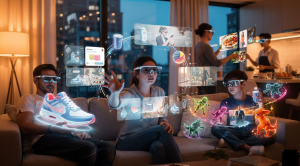
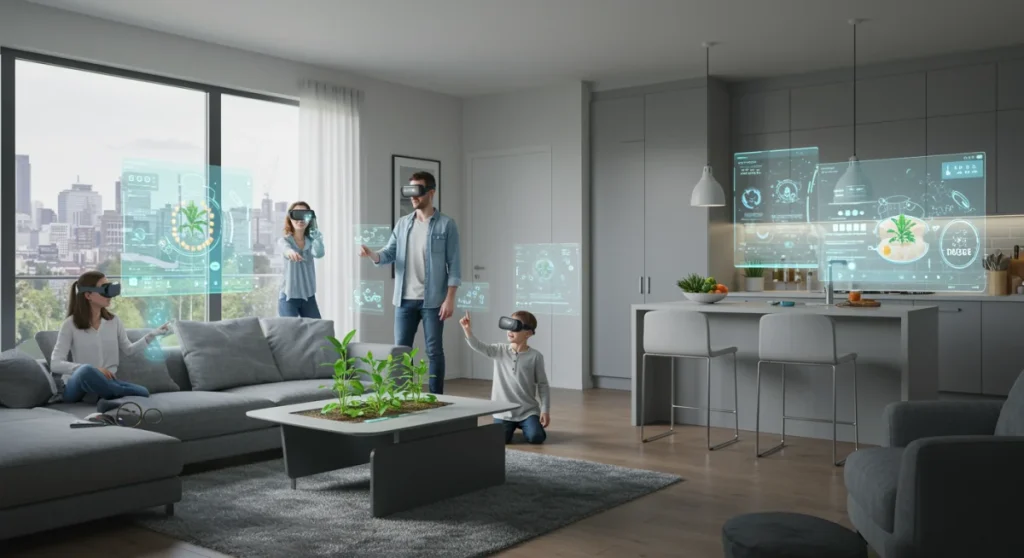
Imagine a world where your home is no longer just a physical space, but a dynamic, interactive environment that adapts to your needs and desires. This future is rapidly approaching, with augmented reality in your home poised to transform how we live, work, and play by 2026. From virtual decor to intelligent assistance, AR is set to redefine our domestic landscapes.
Virtual Interior Design and Home Staging
The days of guessing whether that new couch will fit or if a particular paint color will complement your living room are quickly fading. Augmented reality is revolutionizing interior design and home staging, allowing homeowners to visualize changes with unprecedented accuracy before making any commitments.
This technology projects realistic 3D models of furniture, decor, and even architectural modifications directly into your existing space. You can walk around a virtual sofa, examine its texture, and even change its color in real-time, all from the comfort of your living room.
Anúncios
Seamless Furniture Placement
One of the most immediate benefits of AR in home design is the ability to place virtual furniture. Apps like IKEA Place were early pioneers, but by 2026, the realism and functionality will be vastly improved. Imagine not just seeing a piece of furniture, but interacting with it, opening drawers, and testing its scale against other items in your room.
- Accurate Sizing: Ensure furniture perfectly fits your space, avoiding costly returns.
- Style Matching: Experiment with different aesthetics to find your ideal home decor.
- Material Previews: See how various fabrics and finishes look under your home’s lighting conditions.
Redecoration and Renovation Previews
Beyond individual items, AR will offer comprehensive home redecoration and renovation previews. Want to knock down a wall? AR can show you the structural implications and the new open-plan layout. Considering a new kitchen backsplash? Project various patterns and materials onto your current wall to find the perfect match.
This capability extends to exterior design as well. Visualize new landscaping, paint colors, or even a deck extension, all superimposed onto your actual property. This level of visualization minimizes risk and maximizes satisfaction for any home improvement project.
In essence, virtual interior design and home staging with AR empower consumers to make informed decisions, reducing uncertainty and enhancing the creative process for personalizing their living spaces.
Interactive Entertainment and Gaming
The concept of entertainment within our homes is about to undergo a significant transformation with augmented reality. No longer confined to a screen, games and immersive experiences will spill out into our physical environments, creating dynamic and captivating interactions for all ages.
Imagine your living room floor becoming a sprawling battlefield for a virtual army, or your kitchen counter transforming into a puzzle board that requires physical interaction to solve. This seamless blend of digital content with real-world surroundings offers a new dimension to home entertainment.
AR Gaming Revolution
By 2026, AR gaming will move beyond mobile screens to encompass entire rooms. Advanced AR headsets and projectors will allow players to turn their homes into interactive game arenas. Think of scavenger hunts where virtual clues appear on real objects, or strategy games played out on your dining table with holographic pieces.
- Immersive Environments: Transform any room into a fantasy world or a futuristic city.
- Physical Interaction: Games that encourage movement and engagement with your actual surroundings.
- Multiplayer Experiences: Play with friends and family in a shared AR space, fostering social interaction.
Interactive Storytelling and Education
Beyond traditional gaming, AR will bring interactive storytelling to life. Children can watch their favorite storybook characters animate and move around their bedroom, or historical figures appear in their study to deliver a personalized lesson. Educational content will become highly engaging and experiential.
Museums and educational institutions are already experimenting with AR, and this technology will soon be accessible for home learning. Imagine dissecting a virtual frog on your kitchen table, or exploring ancient Rome through a holographic projection in your hallway.
Interactive entertainment and gaming powered by AR will redefine leisure time at home, offering rich, personalized, and deeply engaging experiences that bridge the gap between the digital and physical worlds.
Smart Home Control and Automation
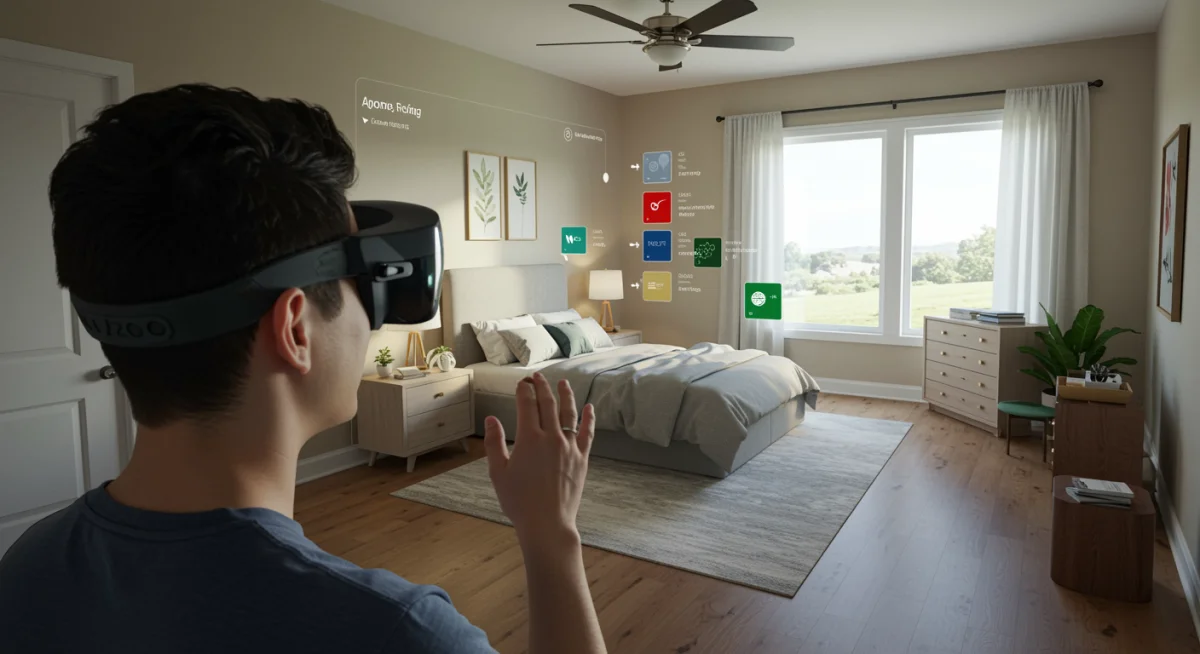
The complexity of managing multiple smart home devices often leads to a fragmented user experience. Augmented reality offers a visually intuitive solution, centralizing control and making automation more accessible and natural within your home environment.
Instead of fumbling with apps on a smartphone, AR allows you to interact with your smart devices by simply looking at them. Imagine pointing your AR glasses at a thermostat to adjust the temperature, or gesturing towards a smart light bulb to change its color.
Visualized Device Management
AR overlays can display real-time information and control options directly on or around your smart devices. For instance, an AR display might show the current energy consumption of your refrigerator, or the status of your smart lock, all without needing a separate screen.
- Intuitive Interaction: Control devices with gestures, voice commands, or direct visual selection.
- Real-time Feedback: See instant changes and data overlays on your physical devices.
- Simplified Setup: Easier configuration and troubleshooting of new smart home gadgets.
Contextual Automation and Alerts
AR can enhance smart home automation by providing contextual information and alerts. If a window is left open during a rainstorm, an AR notification might appear over the window itself, prompting you to close it. Similarly, if your smart oven finishes preheating, an AR timer could appear above it.
This contextual awareness extends to security. AR could highlight areas of your home being monitored by security cameras, or project a virtual perimeter around your property, showing any breaches in real-time. This proactive and visually integrated approach makes smart home management far more effective and less intrusive.
Ultimately, AR’s integration into smart home control and automation will streamline daily routines, enhance security, and provide a more seamless and responsive living environment.
Enhanced Learning and Educational Experiences
Our homes are increasingly becoming centers for learning, and augmented reality is set to transform these spaces into dynamic educational hubs. By bringing digital content into the physical world, AR offers engaging and personalized learning experiences for all ages, from children to adults pursuing new skills.
Imagine your kitchen counter becoming a canvas for a virtual chemistry experiment, or your living room wall displaying an interactive model of the solar system. AR makes abstract concepts tangible and learning an immersive adventure.
Interactive Textbooks and Tutorials
Traditional learning materials can be static. AR will overlay dynamic content onto physical books, posters, or even blank surfaces. A child reading about dinosaurs could see a 3D T-Rex stomping across their desk, or a medical student could explore a holographic anatomical model with unprecedented detail.
- Visual Explanations: Complex topics explained through interactive 3D models and animations.
- Personalized Pacing: Learners can explore content at their own speed, revisiting difficult sections.
- Hands-on Practice: Virtual simulations for subjects like engineering, art, or even cooking.
Skill Development and Hobbies
AR isn’t just for formal education; it’s also a powerful tool for skill development and hobbies. Learning to play a musical instrument could involve virtual guides showing finger placement on a real piano. DIY projects could come with step-by-step holographic instructions projected onto your workbench.
For fitness enthusiasts, AR can project virtual trainers or workout routines onto your floor, providing real-time feedback on your form. The possibilities for personalized, interactive learning at home are vast, making education more accessible and enjoyable.
AR’s ability to overlay digital information onto our physical surroundings will fundamentally change how we learn, making educational content more interactive, engaging, and tailored to individual needs within the home environment.
Augmented Cooking and Kitchen Assistance
The kitchen, often the heart of the home, is ripe for augmented reality innovation. By 2026, AR will transform cooking from a chore into an intuitive and enjoyable experience, offering assistance that ranges from step-by-step recipe guidance to smart appliance integration and nutritional insights.
Imagine holographic recipes appearing directly on your countertop, guiding you through each stage of meal preparation, or your smart oven projecting its internal temperature and cooking progress onto its exterior.
Holographic Recipe Guides
Forget stained cookbooks or constantly checking your phone. AR can project interactive recipes onto your cooking surface. These guides can highlight ingredients, show precise measurements, and even demonstrate cutting techniques or mixing motions with virtual overlays.
- Step-by-step Visuals: Clear, dynamic instructions for any dish.
- Ingredient Tracking: AR could identify ingredients as you add them, ensuring accuracy.
- Timer Integration: Visual timers that appear over cooking pots or ovens.
Nutritional Insights and Inventory Management
AR can also provide real-time nutritional information as you prepare food. As you select ingredients, AR overlays could display calorie counts, allergen warnings, or dietary recommendations. Furthermore, it could assist with pantry management, highlighting items nearing expiration or suggesting meal ideas based on available ingredients.
Imagine scanning a barcode with your AR device and instantly seeing its nutritional breakdown, or receiving a notification that you’re running low on milk as you open the refrigerator door, with an option to add it to your shopping list.
Augmented cooking and kitchen assistance will simplify meal preparation, promote healthier eating habits, and optimize kitchen efficiency, making the culinary experience more engaging and less daunting for everyone.
Healthcare and Wellness Monitoring
Our homes are increasingly becoming extensions of our healthcare ecosystems, and augmented reality is set to play a crucial role in empowering individuals to manage their health and wellness more effectively by 2026. AR will offer personalized monitoring, guided exercises, and accessible health information right where we live.
Imagine an AR overlay displaying your real-time heart rate during a home workout, or virtual instructions guiding you through physical therapy exercises in your living room.
Personalized Fitness and Therapy Guides
AR can overlay virtual trainers or exercise routines onto your environment, providing visual cues and real-time feedback on your form. This is particularly beneficial for home workouts, ensuring proper technique and preventing injuries. For physical therapy, AR can guide patients through specific movements, making rehabilitation more engaging and effective.
- Corrective Feedback: Visual indicators show if your posture or movement is incorrect.
- Progress Tracking: Overlay performance metrics directly onto your view.
- Motivating Visuals: Gamified elements can make exercise more enjoyable.
Health Information and Telemedicine Enhancements
AR can also enhance access to health information and telemedicine. Imagine holding up a product and seeing an AR overlay detailing its ingredients, potential allergens, or drug interactions. During a telemedicine consultation, a doctor could project anatomical diagrams or medical instructions directly into your view, making explanations clearer.
For elderly individuals or those with chronic conditions, AR could provide visual reminders for medication, or display vital signs from connected wearables directly in their line of sight, offering proactive health management and peace of mind.
Ultimately, AR in healthcare and wellness monitoring will foster greater self-management of health, provide personalized guidance, and make health information more accessible and actionable within the comfort of our homes.
Creative Expression and Art Installations
Beyond utility, augmented reality offers a powerful new medium for creative expression within the home. By 2026, AR will allow individuals to transform their living spaces into dynamic art galleries, interactive canvases, or immersive performance stages, enabling personalized aesthetic and artistic experiences.
Imagine your walls displaying ever-changing digital artwork, or your floor becoming a canvas for an interactive light show, all controlled and curated by you.
Dynamic Digital Wall Art
Static paintings or prints can be replaced by dynamic digital art projected onto your walls via AR. This could range from animated landscapes and abstract patterns to famous masterpieces that subtly shift and evolve. You could curate themes for different moods or occasions, transforming the ambiance of any room instantly.
- Customizable Displays: Change artwork with a simple gesture or voice command.
- Interactive Elements: Art that reacts to your presence or movements.
- Global Galleries: Access a vast library of digital art from around the world.
Personalized Immersive Environments
AR can create entirely immersive environments, changing the perceived architecture or atmosphere of a room. Want to feel like you’re dining in a Parisian cafe, or relaxing on a tropical beach? AR can project these scenes, complete with ambient sounds and visual depth, onto your surroundings.
For artists or designers, AR offers a new canvas. Sculptors could create virtual 3D models that appear to float in their studio, while graphic designers could test their creations in a real-world context before physical production. The home becomes a personal creative laboratory.
AR’s applications in creative expression and art installations will allow homeowners to personalize their environments like never before, blending digital aesthetics with physical space to create unique, evolving, and deeply personal living experiences.
Remote Work and Collaboration Enhancements
With the increasing prevalence of remote work, the home office has become a critical space. Augmented reality is poised to significantly enhance productivity and collaboration, transforming our home workspaces into more efficient, interactive, and less isolating environments by 2026.
Imagine having multiple virtual monitors floating in your physical space, or attending a meeting where holographic colleagues appear to be sitting around your actual dining table.
Virtual Workspaces and Monitors
One of the most immediate benefits of AR for remote work is the ability to create expansive virtual workspaces. Instead of being limited by physical monitor size, AR allows you to project multiple high-resolution virtual screens into your field of view, customized to your preferences.
- Unlimited Screen Space: Arrange virtual monitors as needed, boosting multitasking.
- Reduced Clutter: A clean physical desk with all your digital tools virtually displayed.
- Ergonomic Benefits: Position virtual screens at optimal angles to reduce strain.
Enhanced Virtual Meetings and Collaboration
Video conferencing can feel impersonal. AR will bridge this gap by bringing holographic representations of colleagues into your room for virtual meetings. This creates a sense of shared presence, fostering more natural communication and collaboration.
For collaborative projects, AR can project shared 3D models or documents into a common virtual space, allowing team members to interact with them as if they were physically present. This level of immersion will make remote collaboration more effective and engaging, reducing the feeling of isolation often associated with working from home.
AR’s integration into remote work and collaboration will redefine the home office, offering unparalleled flexibility, immersive communication, and enhanced productivity for the modern professional.
| Application Area | Brief Description |
|---|---|
| Virtual Design | Visualize furniture and decor in your home before purchase. |
| Interactive Entertainment | Transform rooms into gaming arenas or immersive story settings. |
| Smart Home Control | Manage devices and automation visually through AR overlays. |
| Augmented Cooking | Holographic recipes and nutritional insights for meal preparation. |
Frequently Asked Questions About Augmented Reality in Your Home
Augmented reality in a smart home involves overlaying digital information and interactive 3D models onto your physical environment in real-time. This can be achieved through AR glasses, smartphone apps, or projectors, enhancing your perception and interaction with your living space and its devices.
By 2026, dedicated AR glasses (like improved versions of Meta Quest or Apple Vision Pro), advanced smartphone and tablet apps, and potentially integrated smart projectors or displays embedded in home infrastructure will be key. These devices will offer more seamless and intuitive AR experiences.
AR will transform entertainment by making it interactive and spatially integrated. Instead of just a screen, your entire room can become a game board or a stage for holographic performances. Games will require physical movement, and stories will unfold in your actual surroundings, offering deeper immersion.
Yes, AR can significantly simplify smart home management. Instead of using separate apps, you can interact directly with devices by looking at them through an AR interface. Overlays provide immediate status updates and control options, making automation more intuitive and reducing the need for multiple control panels.
Privacy is a significant consideration. AR devices collect data about your environment and interactions. Users must be aware of data usage policies, encryption, and who has access to the information gathered. Strong regulations and transparent practices will be crucial to ensure user trust and data security in AR-enabled homes.
Conclusion
The integration of augmented reality in your home by 2026 is not merely a technological upgrade; it represents a fundamental shift in how we interact with our living spaces. From streamlining daily chores and enhancing our creative pursuits to revolutionizing entertainment and learning, AR promises a future where our homes are more intelligent, intuitive, and personally tailored than ever before. As the technology matures and becomes more accessible, the boundaries between the digital and physical worlds will continue to blur, ushering in an era of truly dynamic and responsive domestic environments. The practical applications discussed here are just a glimpse into a future where our homes don’t just house us, but actively engage with us, enriching every aspect of our daily lives.