Comparing Top 4 Cybersecurity Frameworks for US Compliance in 2026
Anúncios
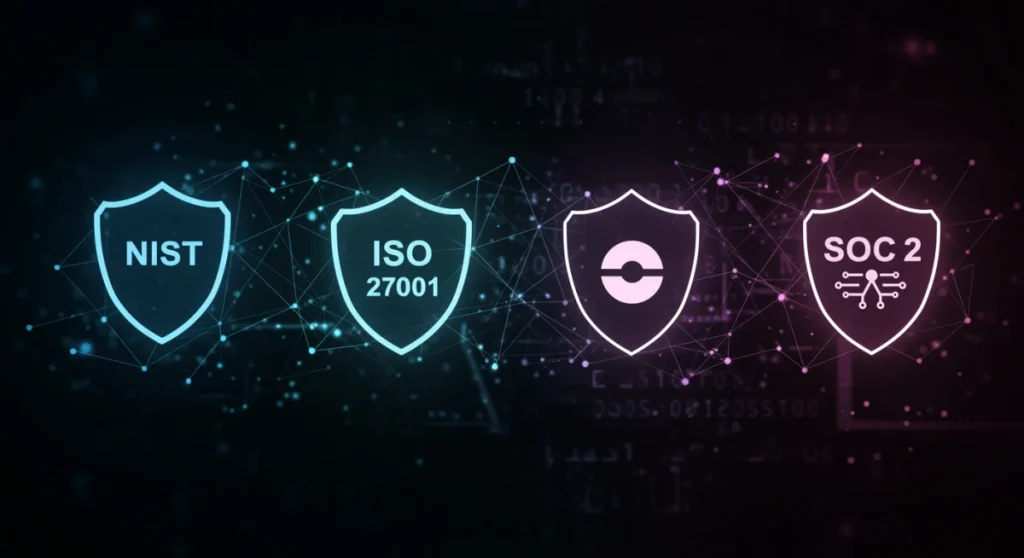
Effectively navigating US cybersecurity compliance in 2026 requires understanding key frameworks like NIST, ISO 27001, CMMC, and SOC 2, each offering distinct approaches to risk management and data protection for organizations.
Anúncios
As the digital landscape evolves, organizations in the United States face increasing pressure to bolster their cybersecurity posture and ensure compliance with a growing array of regulations. Understanding and implementing the right framework is crucial for protecting sensitive data and maintaining operational integrity. This article explores and provides a detailed comparing the top 4 cybersecurity frameworks for US compliance in 2026: NIST vs. ISO 27001, alongside CMMC and SOC 2, to help you make informed decisions.
understanding the landscape of cybersecurity frameworks
The proliferation of cyber threats necessitates a structured approach to security. Cybersecurity frameworks provide organizations with a systematic methodology to manage and reduce their cyber risk. These frameworks are not one-size-fits-all; their suitability depends heavily on an organization’s sector, size, data sensitivity, and regulatory obligations.
Anúncios
In the US, various sectors are subject to different compliance mandates, making the selection of an appropriate framework a strategic business decision. A well-chosen framework not only helps meet legal requirements but also enhances overall security posture, builds customer trust, and can even offer a competitive advantage. Ignoring these frameworks can lead to significant financial penalties, reputational damage, and operational disruptions.
why frameworks are essential for modern businesses
- Structured Risk Management: Frameworks offer a clear roadmap for identifying, assessing, and mitigating cyber risks.
- Regulatory Compliance: They assist organizations in meeting specific legal and industry-mandated security requirements.
- Improved Security Posture: By implementing controls, businesses can enhance their defenses against evolving threats.
- Stakeholder Confidence: Demonstrating adherence to recognized standards builds trust with customers, partners, and regulators.
Choosing the right framework involves a thorough evaluation of an organization’s unique operational context and risk appetite. The goal is to implement a framework that is both effective and sustainable, integrating cybersecurity deeply into business processes rather than treating it as an afterthought. This foundational understanding is vital before delving into the specifics of each framework.
NIST cybersecurity framework: a cornerstone for US organizations
The National Institute of Standards and Technology (NIST) Cybersecurity Framework (CSF) is a widely adopted set of guidelines designed to help organizations manage and reduce cybersecurity risks. It is particularly prevalent in the US, especially within government agencies and critical infrastructure sectors. The NIST CSF provides a flexible, risk-based approach to cybersecurity, making it adaptable to various organizational sizes and complexities.
Developed through collaboration between industry and government, the NIST CSF emphasizes communication and collaboration in cybersecurity risk management. It is structured around five core functions: Identify, Protect, Detect, Respond, and Recover. These functions provide a high-level, strategic view of an organization’s management of cybersecurity risk, offering a common language for both technical and non-technical stakeholders.
key components of the NIST CSF
- Framework Core: This consists of five concurrent and continuous functions that provide a high-level, strategic view of an organization’s management of cybersecurity risk.
- Framework Tiers: These describe the degree to which an organization’s cybersecurity risk management practices exhibit the characteristics defined in the Framework. Tiers range from Partial (Tier 1) to Adaptive (Tier 4).
- Framework Profiles: These represent the alignment of an organization’s requirements and objectives, risk appetite, and resources with the desired outcomes of the Framework Core.
The NIST CSF is not a prescriptive checklist but rather a guide that allows organizations to tailor its recommendations to their specific needs. Its flexibility is a major advantage, enabling organizations to prioritize actions based on their unique risk landscape. Many US federal agencies are mandated to use NIST standards, making it a critical consideration for any organization working with the government or in regulated industries.
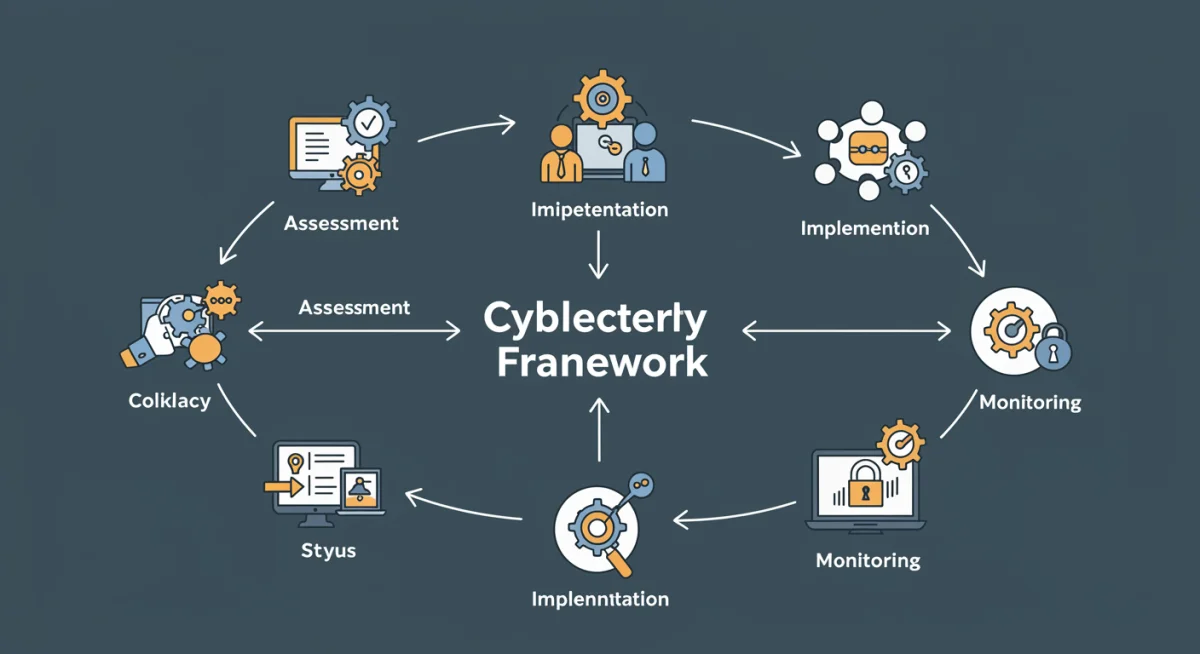
Implementing the NIST CSF often involves assessing current cybersecurity practices against the framework’s guidelines, identifying gaps, and developing a roadmap for improvement. It fosters continuous improvement, ensuring that security measures evolve with the threat landscape and business needs. This iterative process helps organizations build resilience and adapt to new challenges effectively.
ISO/IEC 27001: the international standard for information security
ISO/IEC 27001 is an internationally recognized standard for information security management systems (ISMS). Unlike NIST, which is more US-centric, ISO 27001 provides a global benchmark for managing information security. Achieving ISO 27001 certification demonstrates an organization’s commitment to protecting information assets through a systematic and risk-based approach, making it highly valued in international business contexts.
The standard specifies the requirements for establishing, implementing, maintaining, and continually improving an ISMS. It covers all types of organizations, from small businesses to multinational corporations, and addresses security across people, processes, and technology. Its comprehensive nature and emphasis on a management system approach distinguish it from frameworks that focus primarily on technical controls.
benefits of ISO 27001 certification
- Global Recognition: Enhances credibility and trust with international partners and customers.
- Systematic Approach: Provides a structured methodology for managing information security risks.
- Continuous Improvement: Requires regular reviews and updates to the ISMS, ensuring ongoing relevance.
- Competitive Advantage: Differentiates organizations in the marketplace by demonstrating a strong security posture.
While ISO 27001 is a global standard, its relevance for US compliance cannot be overstated, especially for organizations operating internationally or dealing with global partners. Many US companies pursue ISO 27001 to align with international best practices and to facilitate business relationships abroad. It requires a significant commitment to documentation, policy development, and internal audits, culminating in an external audit for certification.
The process of implementing ISO 27001 often involves a detailed risk assessment, the selection of appropriate controls from Annex A (which lists 114 controls across 14 domains), and the continuous monitoring and review of the ISMS. This rigorous approach ensures that information security is integrated into the organization’s overall governance and risk management strategies, providing a robust defense against a wide range of threats.
CMMC: securing the US defense supply chain
The Cybersecurity Maturity Model Certification (CMMC) is a unified standard for implementing cybersecurity across the defense industrial base (DIB) sector. Introduced by the US Department of Defense (DoD), CMMC is designed to protect sensitive unclassified information, specifically Federal Contract Information (FCI) and Controlled Unclassified Information (CUI), that is shared with DoD contractors and subcontractors.
CMMC is unique because it requires third-party assessments of contractors’ cybersecurity practices and capabilities. This certification is a prerequisite for bidding on DoD contracts, creating a mandatory compliance landscape for thousands of defense contractors. It moves beyond self-attestation, aiming to enhance the overall security posture of the entire defense supply chain.
understanding CMMC’s maturity levels
CMMC is structured into several maturity levels, each requiring adherence to a specific set of practices and processes:
- Level 1 (Foundational): Focuses on basic cyber hygiene practices to protect FCI.
- Level 2 (Advanced): Requires a more robust set of practices and documented processes to protect CUI.
- Level 3 (Expert): Encompasses advanced cybersecurity capabilities to protect CUI from sophisticated threats.
The progression through CMMC levels signifies an increasing capability to protect sensitive government information. Organizations must achieve the required CMMC level specified in their DoD contracts, which can vary based on the type and sensitivity of the information handled. This framework is a game-changer for the DIB, forcing a significant uplift in cybersecurity maturity across the board.
Preparing for CMMC certification involves a detailed assessment of current security controls, remediation of deficiencies, and often engaging with CMMC Third-Party Assessment Organizations (C3PAOs). The emphasis on verifiable compliance through third-party audits makes CMMC a stringent but necessary framework for any entity engaged in the defense supply chain, ensuring a more secure environment for national security assets.
SOC 2: trust services criteria for service organizations
Service Organization Control (SOC) 2 reports are designed to help service organizations demonstrate that they have appropriate controls in place relevant to security, availability, processing integrity, confidentiality, and privacy of customer data. Developed by the American Institute of Certified Public Accountants (AICPA), SOC 2 is particularly relevant for technology and cloud service providers.
Unlike NIST or ISO 27001, which are frameworks for managing risk or information security, SOC 2 is an auditing standard. It results in a report that provides detailed information and assurance about the controls at a service organization relevant to the Trust Services Criteria (TSC). This report is often requested by customers and partners to assess the security posture of their service providers.
the five trust services criteria
SOC 2 reports focus on five key areas, known as the Trust Services Criteria:
- Security: Protection against unauthorized access, use, or modification of information.
- Availability: Ensuring systems and information are available for operation and use.
- Processing Integrity: Data processing is complete, accurate, timely, and authorized.
- Confidentiality: Protection of confidential information as agreed upon.
- Privacy: Protection of personal information in accordance with privacy principles.
Organizations often choose to undergo a SOC 2 audit to build trust and confidence with their clients, particularly in industries where data protection is paramount. A Type 1 report describes the controls at a specific point in time, while a Type 2 report details the operating effectiveness of these controls over a period, typically six to twelve months. The latter provides a stronger level of assurance.
Achieving a favorable SOC 2 report requires robust internal controls, comprehensive policies, and continuous monitoring. It is a critical compliance consideration for SaaS companies, data centers, and any service provider handling sensitive customer data, as it directly addresses the concerns of their clients regarding data security and privacy. The report serves as a testament to an organization’s commitment to safeguarding client information.
choosing the right framework for your organization
The decision of which cybersecurity framework to adopt is multifaceted and depends on several factors unique to each organization. There isn’t a single ‘best’ framework; rather, it’s about selecting the one that best aligns with your business objectives, industry regulations, risk profile, and stakeholder expectations. A thorough assessment of these elements is the first step in the selection process.
For organizations primarily operating within the US, especially those in critical infrastructure or government contracting, NIST CSF and CMMC are often primary considerations. NIST provides a flexible foundation for risk management, while CMMC is a mandatory requirement for the defense supply chain. These frameworks address specific US compliance needs and are deeply integrated into the regulatory landscape.
factors to consider in framework selection
- Regulatory Requirements: Are there specific laws or industry mandates you must adhere to (e.g., HIPAA, GDPR, CMMC)?
- Industry Sector: Does your industry have a preferred or mandated framework (e.g., financial services, healthcare, defense)?
- Organizational Size and Resources: Can your organization realistically implement and maintain the chosen framework?
- Customer and Partner Expectations: What security assurances do your clients or partners require (e.g., SOC 2 report, ISO 27001 certification)?
- Risk Profile: What are the most significant cyber risks your organization faces, and which framework best addresses them?
For companies with an international footprint or those seeking global recognition, ISO 27001 offers a universally accepted standard for information security management. Its certification process provides a strong signal of commitment to security best practices. Service organizations, particularly those in the cloud and technology sectors, often find SOC 2 reports indispensable for building client trust and demonstrating control effectiveness.
It’s also important to note that these frameworks are not mutually exclusive. Many organizations choose to implement a hybrid approach, leveraging the strengths of multiple frameworks to achieve comprehensive security and compliance. For example, an organization might use NIST for internal risk management but also pursue ISO 27001 for international credibility and a SOC 2 report for client assurance. The key is to create a cohesive strategy that addresses all relevant security and compliance needs.
integrating frameworks for enhanced security and compliance
While each cybersecurity framework serves a distinct purpose, many organizations find significant benefits in integrating elements from multiple frameworks. This integrated approach allows businesses to build a more robust and comprehensive security program that addresses a wider range of risks and compliance requirements. The synergies between frameworks can lead to more efficient resource utilization and a stronger overall security posture.
For instance, an organization might use the risk management principles of the NIST CSF as its foundational cybersecurity program. Concurrently, if it deals with federal contracts, it would implement CMMC requirements. If it provides cloud services, a SOC 2 report would be essential for client assurance. And for global operations, ISO 27001 certification would provide international credibility. This layered approach ensures that all bases are covered.
strategies for framework integration
- Mapping Controls: Identify common controls across different frameworks to avoid duplication of effort. Many controls in NIST, ISO 27001, and CMMC overlap significantly.
- Risk-Based Prioritization: Use a unified risk assessment process to prioritize security investments that address requirements from multiple frameworks.
- Centralized Documentation: Maintain a single source of truth for policies, procedures, and evidence that can be leveraged for various audits and assessments.
- Continuous Monitoring: Implement tools and processes for ongoing monitoring and reporting that feed into the requirements of all adopted frameworks.
The integration process requires careful planning and a deep understanding of each framework’s nuances. It often involves creating a cross-walk or mapping document that correlates controls and requirements from different standards. This helps in identifying gaps and redundancies, leading to a more streamlined and effective implementation strategy. The goal is to build a cohesive security ecosystem rather than a patchwork of isolated compliance efforts.
Ultimately, a successful integration strategy results in a more mature and adaptable cybersecurity program. It allows organizations to respond more effectively to evolving threats, meet diverse compliance obligations, and demonstrate a consistent commitment to security to all stakeholders. This proactive stance is critical in the dynamic cybersecurity landscape of 2026 and beyond.
| Framework | Primary Focus & US Relevance |
|---|---|
| NIST CSF | Risk management guidelines for US critical infrastructure and federal agencies. Flexible, voluntary. |
| ISO 27001 | International standard for ISMS, global recognition. Essential for US firms with international operations. |
| CMMC | Mandatory for US DoD contractors to protect CUI and FCI. Focuses on supply chain security. |
| SOC 2 | Auditing standard for service organizations on security, availability, processing integrity, confidentiality, and privacy. |
frequently asked questions about cybersecurity frameworks
NIST is a US-centric, voluntary framework focused on risk management, particularly for federal agencies and critical infrastructure. ISO 27001 is a globally recognized standard for an Information Security Management System (ISMS), leading to certification and emphasizing a systematic, continuous improvement approach applicable worldwide.
No, CMMC is specifically mandatory for organizations within the Defense Industrial Base (DIB) that contract with the US Department of Defense (DoD). It aims to protect Federal Contract Information (FCI) and Controlled Unclassified Information (CUI) across the defense supply chain, not all US businesses.
Companies pursue SOC 2 compliance to demonstrate to their customers and partners that they have robust controls in place to protect sensitive data. It’s especially crucial for service organizations like cloud providers, as it builds trust regarding security, availability, processing integrity, confidentiality, and privacy.
Yes, many organizations effectively combine different frameworks to achieve comprehensive security and compliance. This often involves mapping controls, centralizing documentation, and using a risk-based approach to integrate the strengths of each framework, creating a more robust and adaptable cybersecurity program.
The NIST Cybersecurity Framework is built around five core functions: Identify, Protect, Detect, Respond, and Recover. These functions provide a strategic view of an organization’s cybersecurity risk management, guiding them through a continuous cycle of improvement and resilience against cyber threats.
conclusion
Navigating the complex world of cybersecurity frameworks is a critical endeavor for any organization aiming for robust security and compliance in 2026. Whether it’s the flexible, risk-based approach of NIST, the internationally recognized standard of ISO 27001, the mandatory requirements of CMMC for the defense sector, or the client-assurance focus of SOC 2, choosing the right framework—or combination thereof—is paramount. A strategic decision, informed by an organization’s specific operational context, regulatory obligations, and risk appetite, will not only ensure compliance but also fortify defenses against an ever-evolving threat landscape, ultimately protecting valuable assets and fostering stakeholder trust.