In an increasingly digital world, the threat of a data breach looms larger than ever for businesses across the United States. The financial implications alone are staggering, with projections indicating an average cost of a data breach in the US soaring to an alarming $9.48 million by 2026. This figure isn’t just a number; it represents a complex web of direct and indirect expenses that can cripple an organization, erode customer trust, and tarnish a meticulously built reputation. Understanding the multifaceted nature of these costs and, more importantly, implementing robust mitigation strategies is no longer optional – it’s an imperative for survival and sustained growth.
Anúncios
This comprehensive guide delves deep into the escalating data breach costs, dissecting the various components that contribute to this formidable sum. We will explore the tangible and intangible repercussions, from regulatory fines and legal fees to customer churn and reputational damage. Crucially, we will also outline actionable, cutting-edge strategies that organizations can adopt to not only prevent breaches but also to minimize their impact should they occur. The goal is to equip businesses with the knowledge and tools necessary to navigate the treacherous landscape of cyber threats and safeguard their most valuable assets.
The Alarming Rise of Data Breach Costs in the US
The trajectory of data breach costs in the United States has been on a steep upward climb for years, and all indicators suggest this trend will continue. Several factors contribute to the US consistently having the highest average cost globally. These include the sheer volume of sensitive data processed by US businesses, the stringent and often complex regulatory landscape (e.g., HIPAA, CCPA, state-specific breach notification laws), and the high cost of litigation and incident response services. The projected $9.48 million average by 2026 serves as a stark warning, emphasizing the critical need for proactive cybersecurity investments.
Why are Data Breach Costs So High in the US?
- Highly Regulated Environment: The US has a patchwork of federal and state laws governing data privacy and breach notification. Non-compliance can lead to hefty fines, adding significantly to the overall cost.
- High Value of Data: US businesses often handle vast amounts of highly valuable personal and financial data, making them prime targets for cybercriminals seeking to monetize this information.
- Sophisticated Attackers: The US market attracts highly sophisticated and well-funded threat actors, requiring equally advanced and costly defense mechanisms.
- Cost of Remediation: Forensic investigations, legal counsel, public relations, and technological upgrades post-breach are expensive endeavors.
- Litigious Society: Class-action lawsuits and individual claims from affected parties are common, driving up legal costs and potential settlements.
Deconstructing the Components of Data Breach Costs
The total cost of a data breach is not a single, monolithic figure. Instead, it’s an aggregation of numerous individual expenses, some immediately apparent, others emerging over time. Understanding these components is crucial for developing a comprehensive mitigation strategy and accurately assessing potential financial exposure.
Direct Costs: The Tangible Expenses
Direct costs are the immediate and quantifiable expenditures incurred as a direct result of a data breach. These are often the first to hit a company’s balance sheet.
Anúncios
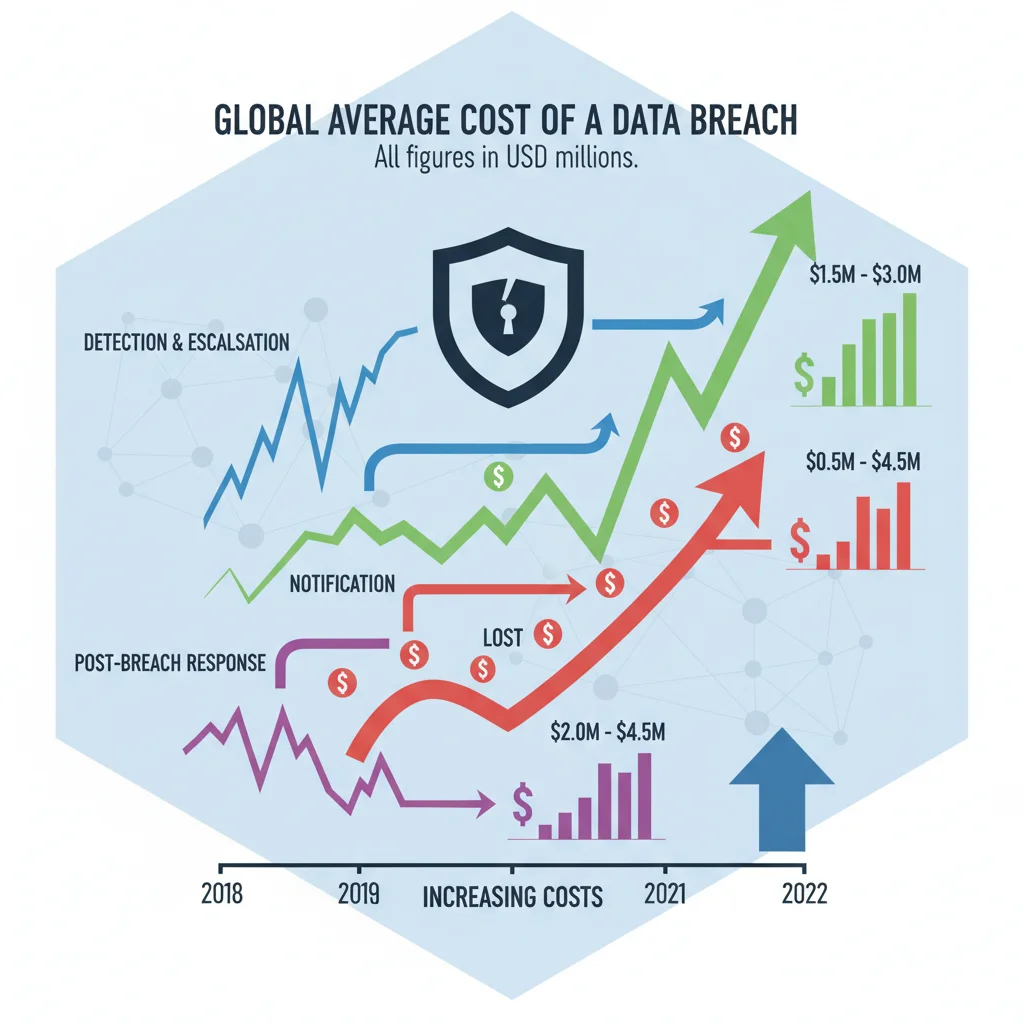
- Detection and Escalation Costs: This includes the expenses related to identifying the breach, containing it, and conducting initial forensic analysis. This involves security analysts’ time, specialized software, and potentially external incident response teams.
- Notification Costs: Mandated by law in most jurisdictions, informing affected individuals about the breach involves postage, call center support, credit monitoring services, and legal consultation to ensure compliance with notification requirements.
- Post-Breach Response and Remediation: This category encompasses a wide array of activities, including:
- Forensic Investigation: Deep dive into the breach’s root cause, extent, and impact.
- Legal and Regulatory Fees: Engaging legal counsel to navigate compliance, potential lawsuits, and regulatory inquiries.
- Public Relations and Crisis Management: Hiring PR firms to manage public perception, draft statements, and restore trust.
- Technology Upgrades: Investing in new security hardware, software, and systems to prevent future attacks.
- Identity Protection Services: Offering affected individuals credit monitoring and identity theft protection.
- Fines and Penalties: Regulatory bodies like the FTC, state attorneys general, and industry-specific regulators (e.g., HIPAA for healthcare) can impose significant fines for non-compliance with data protection laws.
- Lost Business: This includes the immediate loss of customers, diminished reputation, and reduced sales directly attributable to the breach.
Indirect Costs: The Long-Term and Intangible Impact
Indirect costs are often harder to quantify but can have a more profound and lasting impact on an organization’s financial health and market standing. These costs can linger for years after the initial incident.
- Reputational Damage: A data breach can severely damage a company’s brand image, making it difficult to attract new customers, retain existing ones, and even recruit talent. Regaining trust is a lengthy and expensive process.
- Customer Churn: Customers, particularly those whose sensitive data was compromised, may switch to competitors, leading to a direct loss of revenue.
- Loss of Intellectual Property: If trade secrets, proprietary algorithms, or confidential business strategies are stolen, the long-term competitive advantage of the company can be severely undermined.
- Increased Insurance Premiums: Cybersecurity insurance premiums are likely to skyrocket after a breach, adding to operational costs.
- Employee Morale and Productivity: Employees may experience decreased morale, increased stress, and reduced productivity in the aftermath of a breach, especially if they feel their own data was compromised or if the company’s future seems uncertain.
- Opportunity Costs: Resources diverted to breach response and recovery could have been used for innovation, growth initiatives, or market expansion.
Key Factors Influencing Data Breach Costs
While the average cost provides a benchmark, the actual expense of a data breach can vary wildly depending on several critical factors. Understanding these variables allows organizations to prioritize their mitigation efforts more effectively.
1. Type of Data Compromised
The nature of the data stolen significantly impacts the cost. Highly sensitive data, such as personally identifiable information (PII), protected health information (PHI), or financial records, carries a much higher cost per record due to stricter regulatory requirements, higher potential for identity theft, and greater reputational damage.
2. Industry Sector
Certain industries are inherently more susceptible to higher data breach costs. Healthcare and financial services, for instance, consistently report the highest average costs per breach due to the sensitive nature of the data they handle and the intense regulatory scrutiny they face.
3. Size of the Breach
Unsurprisingly, larger breaches involving more compromised records generally incur higher costs. Each additional record adds to notification expenses, potential legal liabilities, and the scale of remediation efforts.
4. Time to Identify and Contain
The longer a breach goes undetected and uncontained, the more expensive it becomes. Rapid detection and swift containment are critical in minimizing the damage. Organizations with mature incident response plans typically fare better in this regard.
5. Root Cause of the Breach
The origin of the breach also plays a role. Malicious attacks (e.g., ransomware, phishing, insider threats) tend to be more expensive than breaches caused by human error or system glitches, often due to the sophisticated nature of the attack and the potential for data exfiltration.
6. Security Posture and Incident Response Preparedness
Companies with a strong security posture, including advanced security technologies, well-trained staff, and a tested incident response plan, can significantly reduce the financial impact of a breach. Conversely, organizations with weak defenses and poor preparedness face higher costs.
Mitigation Strategies: How to Reduce Data Breach Risks and Costs
Given the escalating data breach costs, proactive and comprehensive mitigation strategies are indispensable. A multi-layered approach, combining technological solutions, policy implementation, and human factor training, is key to building resilience against cyber threats.
1. Robust Cybersecurity Framework and Technologies
Investing in and maintaining a strong cybersecurity infrastructure is the first line of defense.
- Endpoint Detection and Response (EDR) / Extended Detection and Response (XDR): These solutions provide advanced threat detection, investigation, and response capabilities across endpoints, networks, and cloud environments.
- Security Information and Event Management (SIEM): SIEM systems collect and analyze security logs from various sources, helping to detect and respond to security incidents in real-time.
- Data Loss Prevention (DLP): DLP tools prevent sensitive data from leaving the organizational network, whether intentionally or accidentally.
- Firewalls and Intrusion Prevention Systems (IPS): Essential for controlling network traffic and blocking malicious intrusions.
- Encryption: Encrypting data at rest and in transit renders it unreadable to unauthorized parties, significantly reducing the impact of a breach even if data is exfiltrated.
- Multi-Factor Authentication (MFA): Implementing MFA across all systems and applications adds a critical layer of security, making it much harder for attackers to gain unauthorized access even with stolen credentials.
- Regular Security Audits and Penetration Testing: Proactively identify vulnerabilities in systems and applications before attackers can exploit them.
2. Comprehensive Data Governance and Management
Effective data management is fundamental to reducing breach exposure.
- Data Classification: Identify and classify data based on its sensitivity (e.g., public, internal, confidential, restricted). This helps prioritize protection efforts.
- Access Controls and Least Privilege: Implement strict access controls, ensuring that employees only have access to the data necessary for their roles (Principle of Least Privilege). Regularly review and revoke unnecessary access.
- Data Minimization: Collect and retain only the data that is absolutely necessary for business operations and legal compliance. The less data you have, the less there is to lose.
- Data Retention Policies: Implement clear policies for how long data is stored and securely dispose of data that is no longer needed.
3. Employee Training and Awareness
The human element remains one of the weakest links in cybersecurity. Continuous training can significantly reduce the risk of breaches caused by human error or social engineering.
- Regular Cybersecurity Awareness Training: Educate employees on common threats like phishing, ransomware, and social engineering tactics.
- Phishing Simulations: Conduct simulated phishing attacks to test employee vigilance and reinforce training.
- Strong Password Policies: Enforce the use of strong, unique passwords and encourage password manager usage.
- Reporting Mechanisms: Establish clear and easy-to-use channels for employees to report suspicious activities without fear of reprisal.
4. Incident Response Planning and Testing
A well-defined and regularly tested incident response plan is crucial for minimizing the impact and cost of a breach.
- Develop a Detailed Incident Response Plan (IRP): Outline clear roles, responsibilities, communication protocols, and steps for detection, containment, eradication, recovery, and post-incident analysis.
- Form an Incident Response Team: Designate a dedicated team with diverse expertise (IT, legal, PR, HR) to handle breaches.
- Regularly Test the IRP: Conduct tabletop exercises and simulated breaches to identify gaps and refine the plan. This ensures the team can execute the plan effectively under pressure.
- Establish Communication Protocols: Define how and when to communicate with stakeholders, including customers, regulators, law enforcement, and the media.

5. Third-Party Risk Management
Many data breaches originate from vulnerabilities in a third party’s systems. Managing this risk is paramount.
- Vendor Due Diligence: Thoroughly vet all third-party vendors who will have access to your data or systems, assessing their security posture.
- Contractual Agreements: Include robust data protection clauses in all vendor contracts, outlining security requirements, breach notification obligations, and liability.
- Regular Audits of Vendors: Periodically audit third-party vendors to ensure ongoing compliance with security standards.
6. Cyber Insurance
While not a prevention strategy, cyber insurance can help mitigate the financial fallout of a breach.
- Evaluate Coverage: Understand what your policy covers (e.g., legal fees, forensic costs, notification expenses, business interruption, regulatory fines).
- Review Exclusions: Be aware of any exclusions that might limit your coverage.
- Work with Insurers: Many insurers offer resources and expertise that can aid in breach prevention and response.
The Future Landscape of Data Breach Costs: What to Expect by 2026
The projection of $9.48 million as the average data breach costs in the US by 2026 is not an arbitrary figure. It reflects several trends that are likely to intensify over the coming years.
Emerging Threats
New and more sophisticated cyber threats are constantly evolving. Artificial intelligence and machine learning are being leveraged by both defenders and attackers, leading to an arms race in cybersecurity. Ransomware attacks are becoming more targeted and disruptive, often coupled with data exfiltration, increasing their financial impact.
Increased Regulatory Scrutiny
Governments worldwide, including in the US, are enacting more stringent data privacy and security regulations. We can expect more comprehensive federal privacy laws, similar to GDPR, which will likely increase compliance costs and potential fines for non-compliance.
Supply Chain Attacks
The interconnectedness of businesses means that a breach in one organization can quickly cascade through its supply chain. Attacks targeting software supply chains or critical infrastructure are becoming more prevalent and can have widespread, costly implications.
The Rise of Cloud Breaches
As more organizations migrate to cloud environments, securing these complex infrastructures becomes critical. Misconfigurations and vulnerabilities in cloud services can lead to massive data exposures, and the cost of remediating such breaches is often substantial.
Economic Impact
The global economic climate can also influence breach costs. As businesses face tighter budgets, cybersecurity investments might be deprioritized, potentially leading to more frequent or severe breaches. Conversely, the rising cost of living and inflation can impact the cost of resources needed for breach response, such as expert cybersecurity consultants.
Building a Culture of Security
Ultimately, mitigating data breach costs extends beyond technology and policies; it requires cultivating a robust culture of security within the entire organization. This means fostering an environment where every employee understands their role in protecting sensitive information, where security is seen as a shared responsibility, and where continuous learning and adaptation are encouraged.
- Leadership Buy-In: Security must be a top-down initiative, with senior leadership actively championing cybersecurity and allocating necessary resources.
- Cross-Functional Collaboration: Break down silos between IT, legal, HR, and other departments to ensure a holistic approach to security.
- Continuous Improvement: Cybersecurity is not a static state but an ongoing process. Regular reviews, updates, and adaptations to evolving threats are essential.
- Transparency and Accountability: Foster an environment where security incidents are reported without fear, and accountability for security practices is clear.
By embedding security into the organizational DNA, businesses can not only reduce their financial exposure to data breaches but also enhance their overall resilience, protect their reputation, and build lasting trust with their customers and stakeholders. The $9.48 million projection for 2026 is a wake-up call, but it also presents an opportunity for organizations to re-evaluate their security strategies and invest wisely in a future where data protection is paramount.
Conclusion: Proactive Defense is the Best Offense
The escalating data breach costs in the US, projected to reach an average of $9.48 million by 2026, paint a clear picture: cybersecurity is no longer merely an IT concern but a critical business imperative. The financial, reputational, and operational fallout from a data breach can be catastrophic, making proactive defense and robust mitigation strategies essential for every organization.
By understanding the complex components of these costs – from direct remediation expenses and regulatory fines to long-term reputational damage and customer churn – businesses can develop more effective and targeted security investments. Implementing a multi-layered defense that includes advanced cybersecurity technologies, comprehensive data governance, continuous employee training, a well-tested incident response plan, and diligent third-party risk management is paramount.
The future cyber landscape will undoubtedly present new challenges, with evolving threats and increased regulatory scrutiny. However, by fostering a strong culture of security, driven by leadership commitment and cross-functional collaboration, organizations can significantly reduce their risk exposure and minimize the financial impact of potential breaches. The time to act is now. Investing in robust cybersecurity today is not just about protecting data; it’s about safeguarding the very future and sustainability of your business in an increasingly digital and threat-laden world.