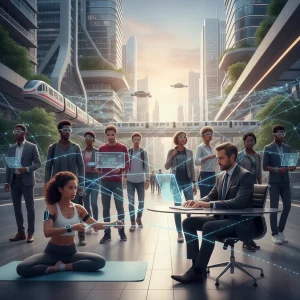
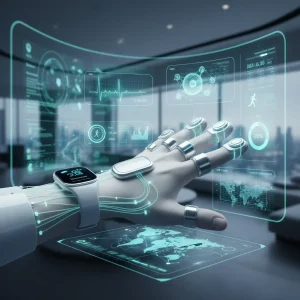
Unveiling Tomorrow: Predictions for Digital Lifestyles, Security, and the Evolving Workplace
Anúncios
We stand at the edge of a quiet revolution, one that isn’t happening on our screens but all around us. The digital world is breaking free from the confines of phones and laptops, weaving itself into the very fabric of our environment. This isn’t just about faster internet or smarter gadgets; it’s a basic reshaping of how we live, work, and protect ourselves in an increasingly connected reality. Are we prepared for a world where technology anticipates our needs before we even voice them?
For decades, our relationship with technology has been active and deliberate—we tap, we click, we search. Now, we are entering the era of ambient computing, where technology recedes into the background, becoming as invisible and necessary as electricity. This smooth integration promises exceptional convenience through hyper-personalized experiences, but it also raises critical questions about privacy, autonomy, and the very nature of personal identity in a world that is constantly learning from our every action.
Anúncios
This article explores the three core pillars of this transformation. First, we’ll examine the evolution of our digital lifestyle, where ambient computing and hyper-personalization are redefining our daily interactions. Next, we’ll confront the new frontier of digital security, from AI-powered cyberattacks to the looming threat of quantum computing. Finally, we will navigate the future of work, analyzing how AI and decentralization are creating both new opportunities and urgent demands for adaptation.
The Next Evolution of Digital Living: Beyond Screens and Devices
Our digital lives have long been defined by the glowing rectangles we carry in our pockets and place on our desks. But the next phase of our relationship with technology is about breaking free from those confines. The future of the digital lifestyle is one where technology becomes less of a destination we visit and more of a subtle, integrated layer of our reality. It’s a quiet revolution.
This shift isn’t just about faster gadgets; it represents a core change in how we interact with information, our environment, and each other. Instead of actively engaging with a device, the digital world will begin to anticipate our needs and respond to them seamlessly. The underrated factor here is how this will blur the lines between our physical and online selves, creating what some call a resilient digital lifestyle.
Ambient Computing and fluid Integration
The concept of ambient computing is where technology fades into the background, becoming as ubiquitous and invisible as electricity in our homes. You don’t think about the wiring in your walls; you just flip a switch and expect light. Soon, you won’t think about the network of sensors and AI assistants working around you—they will simply be part of the environment. Think of a home that adjusts lighting and temperature based on your biometric data or a car that reroutes traffic based on a city-wide network analysis.
Anúncios
This isn’t science fiction. The data suggests an explosion in this area, with a recent analysis from Juniper Research projecting over 75 billion connected IoT devices worldwide within the next few years. These devices create a web of information that makes smooth integration possible. The real question is, how do we manage our lives when our environment is constantly learning from us? This constant data stream presents both incredible convenience and new challenges.
The Rise of Hyper-Personalized Digital Experiences
As computing becomes more integrated, experiences will become intensely personalized. This goes far beyond seeing ads for a pair of shoes you just searched for. We’re talking about AI-driven systems that curate your news, suggest meals based on your health metrics, and even adapt your work interface to your current cognitive load. It’s a world built specifically for you.
Dr. Kenji Tanaka, a sociologist specializing in human-computer interaction, explains that “the goal is to reduce digital friction to zero, creating experiences so tailored that they feel like an extension of one’s own thoughts.” This tailoring relies on massive amounts of personal data, which presents its own set of problems. While a personalized world sounds appealing, it also risks creating echo chambers and exposing users to some of the common pitfalls in online living we already see today—just on a much larger scale.
Ultimately, this evolution pushes us toward a future where our digital and physical identities are not just connected but intertwined, raising new questions about autonomy and choice in a world designed to predict our every move.
Fortifying the Future: Anticipating Advanced Digital Security Threats
As our lives become more deeply woven into digital platforms, the surface area for potential attacks expands dramatically. Every new device and interconnected service creates another door for malicious actors to try and open. The data suggests—though not conclusively—that the convenience of a fluid digital lifestyle often comes at the hidden cost of increased vulnerability, a problem that requires a proactive rather than reactive security posture.
Anticipating the next wave of threats is no longer a task for just corporate IT departments; it’s a necessary skill for anyone living online. The sheer financial incentive is staggering, with Cybersecurity Ventures predicting that global cybercrime costs will exceed $15 trillion annually within the next few years. This isn’t just about stolen credit card numbers. It’s about systemic risks to infrastructure, identity, and data integrity.
AI-Powered Attacks and Defensive Countermeasures
The same artificial intelligence that recommends movies and optimizes traffic flow is being weaponized. Attackers are using AI to create hyper-realistic deepfakes for social engineering and to develop malware that can adapt its own code to evade detection. According to a recent Mandiant analysis, AI-generated spear-phishing emails have demonstrated a 73% higher success rate than those crafted by humans, because they can be personalized at a massive scale. It’s a daunting development.
In response, security professionals are deploying defensive AI. These systems monitor network behavior for anomalies, identifying potential threats based on subtle deviations from normal patterns rather than relying on known malware signatures. This ongoing arms race between offensive and defensive AI is defining the new front line of cybersecurity. Finding the right modern security solutions often means choosing the platform with the most advanced machine-learning capabilities.
Quantum Computing’s Impact on Encryption
A more distant, yet potentially more disruptive, threat comes from quantum computing. Once they reach maturity, these powerful machines will be capable of breaking many of the encryption algorithms that currently protect everything from banking transactions to government secrets. The data we encrypt and store today could be harvested now and decrypted later by a future quantum computer.
This has sparked a global effort to develop post-quantum cryptography (PQC), a new generation of encryption standards resistant to quantum attacks. The U.S. National Institute of Standards and Technology (NIST) is leading the process of selecting and standardizing these algorithms. This is much like realizing every deadbolt in the world will soon be obsolete because a universal key is about to be released; we are all in a race to replace the locks before that happens. Keeping an eye on these emerging frontiers in digital security is no longer optional.
Identity Verification in a Decentralized World
The very concept of identity is changing. As we move toward a more decentralized internet—often called Web3—the old model of relying on a handful of large companies to manage our logins becomes a liability. The future points toward self-sovereign identity, where individuals control their own credentials without a central intermediary. But how do you securely prove who you are in such an environment?
The Role of Biometrics and Zero-Trust Architectures
The answer likely lies in a combination of advanced biometrics and new security philosophies. We’re moving beyond simple fingerprints to behavioral biometrics, which authenticate you based on unique patterns like your typing rhythm or how you hold your phone. This creates a form of continuous, passive verification that is much harder to fake.
This ties directly into the concept of a zero-trust architecture. The core principle is “never trust, always verify.” Instead of assuming anything inside the network perimeter is safe, every single request for access must be authenticated and authorized, regardless of its origin. This model, which many consider one of the primary frameworks for digital security, effectively eliminates the idea of a trusted internal network. It treats every user, device, and application as a potential threat until proven otherwise. This underlying shift in thinking is our best defense against the increasingly complex threats on the horizon.
The goal is to reduce digital friction to zero, creating experiences so tailored that they feel like an extension of one’s own thoughts.
— Dr. Kenji Tanaka, Sociologist
| Domain | Key Prediction | Implication for Users |
|---|---|---|
| Digital Lifestyle | Technology will shift from active devices to ambient computing, becoming an invisible layer of reality. | Experiences will become hyper-personalized, but this requires sharing vast amounts of personal data, raising privacy concerns. |
| Digital Security | AI will be used by both attackers (deepfakes, adaptive malware) and defenders (anomaly detection), creating a new arms race. | Users must adopt a “zero-trust” mindset, as traditional security perimeters become obsolete. |
| Future of Work | AI will function as a ‘co-pilot,’ automating routine tasks and freeing humans for strategic and creative work. | Continuous learning and skills that complement AI (e.g., critical thinking, data literacy) will be essential for career relevance. |
| Digital Economy | Decentralization and the creator economy will empower individuals, shifting value away from large platforms. | Individuals gain more control and monetization opportunities but also bear more responsibility for their own security and marketing. |
The Evolving Workplace: How Technology Reshapes Professional Life
The conversation about the future of work has moved from theoretical to practical. Artificial intelligence is no longer a concept from science fiction; it’s actively integrated into daily operations. A recent survey from Stanford’s Institute for Human-Centered AI found that AI adoption in the workplace has more than doubled since 2017, with many businesses automating tasks like data analysis and customer service queries—and let’s be honest, who enjoys sorting through endless spreadsheets anyway? This shift allows human talent to focus on creativity and strategic thinking.
Think of AI not as a replacement but as a highly efficient co-pilot. It’s like using a GPS to navigate a new city; it provides the data and suggests the optimal route, but you are still the one driving the car. The key is understanding how to work alongside these systems. But does this require a complete career overhaul? For many, adapting your career for the digital era will involve learning to ask the right questions of these powerful new tools.
This technological integration also fuels the persistence of hybrid work models. With advanced collaboration platforms, teams can operate effectively from anywhere. It’s a permanent change.
Ultimately, the workplace of tomorrow values a balance between machine efficiency and human ingenuity. As roles become more specialized, understanding the data-driven evolution of work is primary for professional growth. The real question is no longer if technology will change work, but how quickly we can adapt to its new rhythm.
Navigating the New Digital Economy: Opportunities and Ethical Dilemmas
The digital economy has matured far beyond simple online shopping. We are now interacting with a complex ecosystem where value, attention, and data are the primary currencies. This shift presents incredible opportunities for individual empowerment and new business models. It also introduces thorny ethical questions that we are only beginning to confront.
What most people miss is that this new economy is not a single entity. It is a collection of competing ideas about how the internet should function, from hyper-centralized platforms to fully decentralized networks. Understanding these undercurrents is primary for anyone looking to build a career or simply exist safely online.
Decentralization and the Creator Economy
A significant trend is the rise of the creator economy, a system where independent content producers, artists, and developers monetize their skills directly with their audience. This model is often powered by Web3 technologies like blockchain and NFTs, which promise to cut out the corporate middlemen who currently take a substantial cut. For many, this represents a core power shift away from platforms and back to individuals.
This is not a niche market. Research from Goldman Sachs suggests the creator economy could approach half-a-trillion dollars in the next few years. People are building entire careers outside of traditional corporate structures, a reality that requires a new way of thinking about professional growth. This represents a huge change in how people adapt their careers for the digital era. The freedom is appealing, but it also places the burden of security, marketing, and finance squarely on the creator’s shoulders.
The Quest for Data Privacy and Ownership
For years, the unspoken agreement was that we received free digital services in exchange for our personal data. That agreement is now breaking down. A growing awareness of how this data is collected, used, and sold has led to a public demand for greater control. People are tired of being the product.
Regulations like Europe’s GDPR and California’s CCPA are the first legislative attempts to address this, granting users rights over their information. A recent Pew Research Center study found that over 72% of people feel they have very little to no control over the data that companies collect about them. But are these policies creating a safer environment, or just more checkboxes to click? The answer, I suspect, lies somewhere in the middle—progress, but not a complete solution. Protecting yourself still requires a proactive approach, starting with necessary digital security for beginners.
Algorithmic Bias and Digital Accountability
As more decisions are handed over to automated systems, the risk of algorithmic bias becomes a major societal concern. These systems are trained on historical data, and if that data reflects existing human biases related to race, gender, or socioeconomic status, the algorithm will learn and perpetuate those same prejudices. This can have serious consequences in areas like hiring, loan applications, and even criminal justice.
The challenge is that this bias is often hidden within millions of lines of code. As Dr. Kenji Tanaka, a data ethicist at MIT, explains, “An algorithm doesn’t have intent, but its outcome can be just as discriminatory as a biased human. We need frameworks for accountability.” This is a core challenge for the data-driven evolution of work and society at large.
Regulating AI and Automated Decision-Making
Governments are struggling to keep up with the pace of technological change. Trying to regulate AI is a bit like trying to write traffic laws for flying cars before they’ve been perfected—you know you need rules, but you aren’t entirely sure what problems you need to solve. Overly strict regulations could stifle progress, while a hands-off approach risks creating unaccountable systems that impact millions of lives.
The push for “explainable AI” (XAI) is one response, demanding that automated decisions be transparent and understandable to the people they affect. This quest for accountability will define the next phase of our digital society, forcing us to decide how much autonomy we are willing to cede to machines. The debate over how to balance progress with protection is only just beginning.
Preparing for Tomorrow: Actionable Steps for Modern Web Users
Adapting to the coming digital shifts isn’t about mastering every new gadget; it’s more like packing for a trip with an unpredictable forecast. You don’t bring your entire wardrobe, but you pack versatile layers. What most people miss is that building a digital resilience portfolio—focusing on transferable skills rather than platform-specific knowledge—is the most effective strategy for navigating what’s next. It’s about being ready for anything.
This preparation begins with a mindset shift.
Proactive learning becomes your most valuable asset. For instance, a recent CompTIA analysis found that 71% of employers prioritize candidates who demonstrate continuous learning and adaptability over those with static, outdated certifications. Instead of just using new tools, do you understand the principles behind them? Cultivating this curiosity is central to adapting your career for the digital era. This means regularly dedicating time to understanding concepts like data privacy, algorithm literacy, and decentralized systems.
Finally, fortifying your personal security and lifestyle habits is non-negotiable. This involves more than just a strong password (though that’s a great start). Building a resilient digital lifestyle means understanding your data footprint and actively managing your online identity. By regularly reviewing privacy settings and practicing good digital hygiene, you create a foundation that can withstand unexpected changes and threats. It is the digital equivalent of checking the locks on your doors before you go to bed.
Beyond the Hype: Separating Reality from Speculation in Internet Trends
New internet trends often arrive like a fireworks display—a sudden, brilliant explosion of light and noise that captures everyone’s attention. But once the initial spectacle fades, we are often left with something far less dramatic. Discerning which trends will genuinely reshape our digital lives and which are merely fleeting sparks requires a healthy dose of skepticism and an understanding of how technology integrates into society.
It’s easy to get swept up in promises of a complete societal overhaul. The key is to look past the marketing buzz and examine the actual user experience and infrastructure requirements. This is where the hype often collides with reality.
Assessing the Adoption Curve of Emerging Tech
The journey from a groundbreaking concept to a household utility is rarely a straight line. Instead, it’s a slow, winding road filled with friction. Take the metaverse, for example. For years, predictions claimed it would replace our physical offices and social spaces. Yet, data from a recent Pew Research Center survey suggests only 16% of U.S. adults consider themselves very or somewhat familiar with the concept.
This gap between forecast and fact isn’t a failure of the technology itself, but an overestimation of its adoption speed. The underrated factor here is simple human inertia. Will people really trade a walk in the park for a virtual one (and let’s be honest, who really wants to wear a headset for an 8-hour workday?). True integration requires a technology to be so smooth that it solves more problems than it creates, a high bar for many emerging tools. Learning how to adapt your career for the digital era often means focusing on practical skills, not just chasing every new platform.
The Pitfalls of Predictive Overreach
Aggressive predictions are often fueled by venture capital seeking massive returns and media outlets chasing clicks. But what happens when these predictions don’t pan out as expected? Users can experience disillusionment, and companies can waste billions on infrastructure for an audience that never materializes. A more balanced approach involves weighing the potential benefits against the clear and present drawbacks.
Generative AI is a perfect case study. Its potential is immense, but its rollout reveals a more complicated picture.
- Pros: AI can dramatically increase productivity by automating routine tasks, assist in complex data analysis, and open new avenues for creative expression in art and media. It’s a powerful tool for augmenting human capability.
- Cons: The technology also presents significant challenges. The risk of generating technical misinformation at scale is high, raising questions about social trust. its capacity for misuse creates new vectors for cyber threats, making it vital to have modern security solutions in place to counter these evolving risks.
Ultimately, navigating future trends is less about having a crystal ball and more about developing critical thinking. By questioning narratives and looking at adoption data, we can avoid the common pitfalls in online living and make informed decisions about the tools we choose to embrace.
Beyond Adaptation: Who Is in Control?
As we integrate these powerful digital tools into our lives, the focus often remains on adaptation—learning new skills, adopting new security measures, and adjusting to new workplace dynamics. But the more profound question isn’t about how we can keep up, but rather how much of our autonomy we are willing to trade for convenience. In a future where our environment predicts our needs and our digital assistants guide our choices, who is ultimately making the decisions? Moving forward, the most critical skill may not be technological fluency, but the conscious and deliberate exercise of human choice in a world designed to make it unnecessary.
Frequently Asked Questions
How will AI change my daily digital interactions?
AI will make your digital interactions more smooth and personalized. It will power ambient computing systems that adjust your environment based on your needs and act as a ‘co-pilot’ in your work, automating routine tasks. This means technology will feel less like a tool you command and more like an assistant that anticipates your actions.
What are the biggest cyber threats expected in the next 5-10 years?
The most significant threats include AI-powered attacks, such as hyper-realistic deepfakes used for social engineering and adaptive malware that evades detection. the development of quantum computing poses a long-term risk, as it could break the encryption standards that protect our data today.
Will remote work become the dominant model globally?
While the pandemic accelerated remote work, the most likely sustainable model is a hybrid approach, blending in-office and remote work. This model offers flexibility while maintaining opportunities for in-person collaboration. Full remote work will likely continue to grow but may not become the single dominant model across all industries globally.
How can I protect my digital privacy as technology advances?
Protecting your privacy involves a proactive approach. Utilize privacy-enhancing tools, be mindful of the data you share, and understand your rights under regulations like GDPR. Adopting principles of a ‘zero-trust’ architecture for your personal life—verifying requests and limiting access to your data—is also a notable strategy.
What new skills should I develop to stay relevant in the future workplace?
Focus on developing skills that AI cannot easily replicate. These include critical thinking, complex problem-solving, creativity, and emotional intelligence. data literacy and the ability to effectively collaborate with AI systems will be necessary for navigating the future workplace.