5 Internet Trends 2026: Reshaping Digital Marketing for US Small Businesses

Anúncios
5 Internet Trends 2026: Reshaping Digital Marketing for US Small Businesses
The digital landscape is in a perpetual state of flux, a dynamic ecosystem where innovation is the only constant. For small businesses across the United States, understanding and adapting to these shifts isn’t just an advantage; it’s a necessity for survival and growth. As we gaze into the near future, specifically towards 2026, several Internet Trends 2026 are emerging that promise to fundamentally reshape the way digital marketing is conceived, executed, and measured. These trends are not mere technological novelties; they are foundational shifts that will redefine customer engagement, operational efficiency, and competitive advantage.
This comprehensive guide will delve into five critical Internet Trends 2026, offering insights into their potential impact on US small businesses and providing actionable strategies to leverage them for sustained success. From the proliferation of AI-driven personalization to the immersive experiences of the metaverse, we will explore how these trends will influence everything from search engine optimization (SEO) to social media marketing, content creation, and customer relationship management.
Anúncios
The Accelerating Rise of Hyper-Personalization Driven by AI
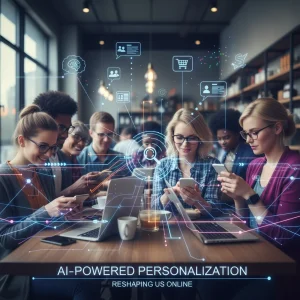
In the current digital era, personalization has moved beyond simply addressing customers by their first name. By 2026, hyper-personalization, powered by advanced artificial intelligence (AI) and machine learning (ML), will be the standard, not the exception. This trend represents one of the most significant Internet Trends 2026, dramatically altering how small businesses interact with their clientele.
What is Hyper-Personalization?
Hyper-personalization involves using real-time data to deliver highly relevant, individualized experiences to customers across all touchpoints. This goes beyond segmenting audiences; it’s about understanding individual preferences, behaviors, and even emotional states to anticipate needs and offer tailored solutions. AI algorithms will analyze vast amounts of data—from browsing history and purchase patterns to social media interactions and demographic information—to create dynamic, evolving customer profiles.
Anúncios
Impact on Digital Marketing for Small Businesses:
- Targeted Content Delivery: Imagine a customer visiting your e-commerce site. Instead of a generic homepage, they see products specifically recommended based on their past purchases, items they’ve viewed, and even their current location or weather. AI will enable small businesses to deliver highly relevant blog posts, email campaigns, and product recommendations, increasing engagement and conversion rates.
- Dynamic Pricing and Promotions: AI can analyze market demand, competitor pricing, and individual customer willingness to pay to offer dynamic pricing or personalized discounts, optimizing revenue for small businesses.
- Enhanced Customer Service: AI-powered chatbots will evolve to provide more sophisticated, context-aware support, resolving complex queries and offering proactive assistance, freeing up human staff for more intricate tasks. This seamless, personalized support will significantly boost customer satisfaction.
- Predictive Analytics: Small businesses will leverage AI to predict future customer behavior, identify potential churn risks, and anticipate upcoming trends, allowing for proactive marketing strategies.
Strategies for Small Businesses:
- Invest in CRM and AI Tools: Adopt customer relationship management (CRM) systems with integrated AI capabilities. These tools will be essential for collecting, analyzing, and acting on customer data.
- Data Collection and Analysis: Focus on ethical and transparent data collection. Understand your customer journey thoroughly and identify key data points that can inform personalization efforts.
- Segment Beyond Demographics: Move beyond basic demographic segmentation to behavioral and psychographic segmentation. Understand not just who your customers are, but how they behave and what motivates them.
- A/B Testing and Optimization: Continuously test and optimize your personalized content and offers. AI can assist in identifying the most effective strategies.
The ability to speak directly to the individual needs and desires of each customer will be a cornerstone of successful digital marketing in 2026. Small businesses that embrace AI-driven hyper-personalization will build stronger customer relationships, foster loyalty, and significantly improve their return on investment (ROI).
The Pervasiveness of Voice Search and Conversational AI
Voice search has been steadily growing, and by 2026, it will transcend a niche search method to become a dominant mode of interaction for consumers. This shift is another monumental entry in the list of Internet Trends 2026, demanding a complete re-evaluation of SEO and content strategies for small businesses.
Why Voice Search Matters:
- Natural Language Queries: People speak differently than they type. Voice queries are often longer, more conversational, and phrased as questions. For example, instead of typing ‘best coffee shop NYC’, a user might ask, ‘Hey Google, where’s the best coffee shop near me that’s open now?’
- Device Proliferation: Smart speakers, smartphones, smart cars, and other IoT devices are making voice assistants ubiquitous, integrating them into daily life.
- Local Search Dominance: Voice search is particularly prevalent for local queries, making it crucial for brick-and-mortar small businesses.
Impact on Digital Marketing for Small Businesses:
- SEO Transformation: Traditional keyword optimization will evolve. Small businesses will need to optimize for long-tail keywords, natural language questions, and conversational phrases.
- Featured Snippets and Position Zero: Voice assistants often pull answers directly from featured snippets (position zero) in search results. Optimizing for these will be paramount.
- Content Structure: Content will need to be structured to directly answer common questions concisely and clearly, making it easily digestible by AI.
- Local SEO Emphasis: Ensuring accurate and up-to-date Google My Business profiles, consistent NAP (Name, Address, Phone) information, and positive reviews will be more critical than ever for voice-activated local searches.
Strategies for Small Businesses:
- Optimize for Conversational Keywords: Identify common questions your target audience might ask using voice search. Use tools to find long-tail keywords and natural language queries.
- Create Q&A Content: Develop dedicated FAQ pages, blog posts structured as Q&As, and content that directly answers specific questions related to your products or services.
- Improve Local SEO: Regularly update your Google My Business profile, encourage customer reviews, and ensure your business information is consistent across all online directories.
- Focus on Semantic Search: Understand the intent behind user queries, not just the keywords. Google’s algorithms are increasingly sophisticated at understanding context.
- Schema Markup: Implement schema markup (structured data) to help search engines better understand your content and its relevance to voice queries.
Embracing voice search optimization is not just about staying relevant; it’s about opening a new, increasingly popular channel for customers to discover and interact with your small business. The Internet Trends 2026 clearly indicate a future where spoken commands dictate much of our digital navigation.

The Immersive Web: Metaverse, AR, and VR for Customer Engagement
While the metaverse is still in its nascent stages, by 2026, its foundational elements—augmented reality (AR) and virtual reality (VR)—will become more integrated into digital marketing strategies, presenting exciting opportunities for small businesses. This immersive web represents a significant frontier among the Internet Trends 2026.
Understanding the Immersive Web:
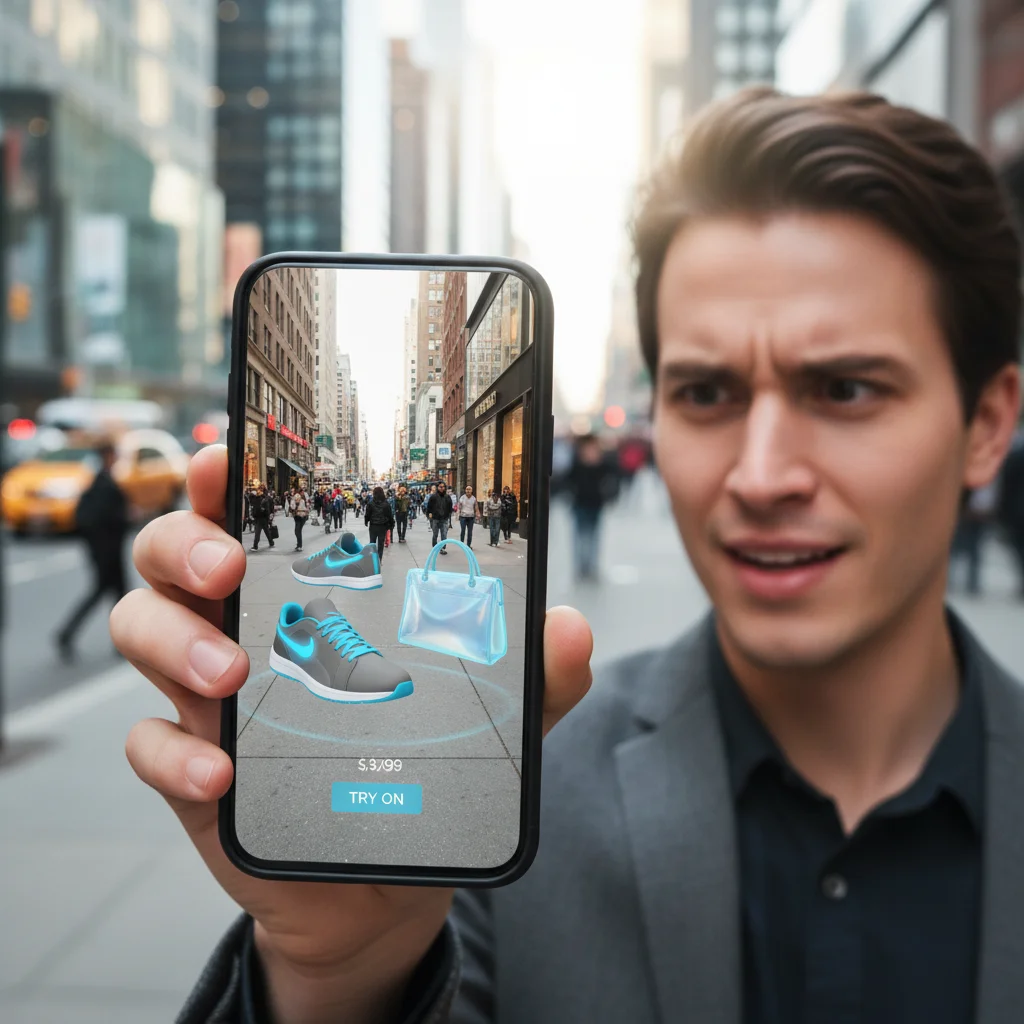
- Augmented Reality (AR): Overlays digital information onto the real world (e.g., trying on clothes virtually, seeing furniture in your home before buying).
- Virtual Reality (VR): Creates fully immersive, simulated environments (e.g., virtual store tours, interactive product demonstrations).
- Metaverse Concepts: A persistent, interconnected set of virtual spaces where users can interact with each other, digital objects, and AI avatars in real-time.
Impact on Digital Marketing for Small Businesses:
- Enhanced Product Visualization: AR tools will allow customers to virtually ‘try on’ products or ‘place’ them in their environment, reducing returns and increasing purchase confidence. For a small furniture store, customers could see a couch in their living room.
- Interactive Experiences: VR can offer virtual tours of real estate properties, showrooms, or even behind-the-scenes glimpses of a small business’s operations, building trust and engagement.
- New Advertising Channels: As the metaverse develops, new advertising opportunities will emerge within these virtual spaces, allowing small businesses to reach audiences in novel, immersive ways.
- Community Building: Small businesses could host virtual events, workshops, or product launches in metaverse-like environments, fostering a stronger sense of community among their customers.
Strategies for Small Businesses:
- Experiment with AR Filters: Leverage social media platforms (like Instagram or Snapchat) to create branded AR filters that allow users to interact with your brand in a fun, engaging way.
- Develop AR Product Previews: If applicable, explore developing simple AR apps or web-based AR features that let customers visualize products in their own space. Platforms like Shopify are already integrating these capabilities.
- Consider Virtual Storefronts/Experiences: For businesses with unique offerings, explore creating basic VR experiences or 3D models of your products that can be viewed in virtual environments.
- Stay Informed: Keep an eye on the development of metaverse platforms and tools. While a full metaverse strategy might be costly now, understanding the direction of these Internet Trends 2026 will allow you to be an early adopter when the time is right.
The immersive web offers a paradigm shift from passive content consumption to active participation, promising deeper engagement and more memorable brand experiences for small businesses willing to explore these new frontiers.
The Primacy of Privacy and Data Ethics
As digital interactions become more sophisticated, so too does public awareness and concern regarding data privacy. By 2026, stringent data privacy regulations and heightened consumer expectations will make data ethics a central pillar of digital marketing strategy, positioning it as a crucial one of the Internet Trends 2026.
The Evolving Privacy Landscape:
- Stricter Regulations: Expect more comprehensive data protection laws similar to GDPR and CCPA to emerge globally and within the US, affecting how small businesses collect, process, and store customer data.
- Browser and Platform Changes: Major browsers are phasing out third-party cookies, and platforms are giving users more control over their data, limiting traditional tracking methods.
- Consumer Demand for Transparency: Customers are increasingly demanding transparency about how their data is used and expect businesses to uphold high ethical standards.
Impact on Digital Marketing for Small Businesses:
- First-Party Data Focus: Small businesses will need to rely more heavily on first-party data (data collected directly from customer interactions) rather than third-party data.
- Trust as a Competitive Advantage: Businesses that prioritize privacy and demonstrate ethical data practices will build greater trust, leading to stronger customer loyalty and a competitive edge.
- Consent-Based Marketing: Explicit consent for data collection and marketing communications will become non-negotiable.
- Ad Targeting Adjustments: Traditional retargeting and personalized ad delivery will require more creative, privacy-compliant approaches.
Strategies for Small Businesses:
- Prioritize First-Party Data: Focus on building direct relationships with customers to gather data through sign-ups, loyalty programs, surveys, and direct interactions.
- Ensure Transparency: Clearly communicate your data privacy policies. Use plain language in privacy notices and cookie consent banners.
- Obtain Explicit Consent: Implement clear opt-in mechanisms for all marketing communications and data collection. Make it easy for users to manage their preferences.
- Invest in Privacy-Enhancing Technologies: Explore tools that allow for data analytics and personalization while respecting user privacy (e.g., privacy-preserving analytics, contextual advertising).
- Stay Compliant: Educate yourself and your team on relevant data privacy laws and ensure your practices are compliant. Consider consulting legal experts if necessary.
For small businesses, demonstrating a commitment to privacy is not just a legal obligation but a powerful brand differentiator. In a world increasingly wary of data exploitation, ethical data practices will be a cornerstone of customer trust and a key among the Internet Trends 2026.
The Ascendance of Sustainable and Ethical Brand Messaging
Consumers, particularly younger generations, are increasingly making purchasing decisions based on a brand’s commitment to sustainability and ethical practices. By 2026, this will not be a niche concern but a mainstream expectation, making sustainable and ethical brand messaging a powerful force among the Internet Trends 2026.
Why Sustainability and Ethics Matter:
- Consumer Values: A growing segment of consumers is willing to pay more for products and services from companies that align with their values regarding environmental protection, social responsibility, and fair labor practices.
- Brand Reputation: Brands perceived as sustainable and ethical enjoy higher trust, stronger loyalty, and a more positive public image.
- Competitive Differentiation: For small businesses, authentic commitment to these values can be a strong differentiator against larger competitors.
Impact on Digital Marketing for Small Businesses:
- Content Marketing Focus: Content will need to authentically highlight sustainable practices, ethical sourcing, community involvement, and fair labor. This includes blog posts, social media stories, and website sections dedicated to these topics.
- Transparency in Supply Chains: Customers will expect transparency regarding where products come from, how they are made, and their environmental footprint. Digital marketing can be used to communicate this information clearly.
- Partnerships and Certifications: Collaborations with ethical suppliers, non-profits, and obtaining relevant certifications (e.g., B Corp, Fair Trade) will become valuable marketing assets.
- Influencer Marketing: Partnering with influencers who genuinely advocate for sustainability and ethical consumption can lend credibility to your brand.
Strategies for Small Businesses:
- Integrate Values into Your Business Model: True sustainable marketing starts with genuine sustainable business practices. Assess your operations, supply chain, and employee policies.
- Communicate Authentically: Don’t just greenwash. Share your sustainability journey, including challenges and successes, in an honest and transparent manner across all digital channels.
- Show, Don’t Just Tell: Use visuals, videos, and testimonials to demonstrate your commitment to ethical practices. For example, showcase your eco-friendly packaging or your team participating in a community clean-up.
- Engage with Your Community: Support local causes, use local suppliers, and participate in community events. Highlight these efforts in your digital marketing.
- Educate Your Audience: Use your platform to educate customers about sustainable choices and the positive impact of their purchasing decisions.
As one of the most impactful Internet Trends 2026, integrating sustainable and ethical messaging into your digital marketing is no longer optional. It’s an opportunity for small businesses to resonate deeply with their target audience, build a loyal customer base, and contribute positively to the world.
Conclusion: Navigating the Future with Internet Trends 2026
The digital marketing landscape of 2026 will be characterized by profound shifts driven by these five pivotal Internet Trends 2026. For small businesses in the US, the imperative is clear: embrace change, innovate constantly, and prioritize the evolving needs and values of your customers. From the precision of AI-driven hyper-personalization to the immersive possibilities of AR/VR, the conversational interfaces of voice search, the foundational importance of data privacy, and the undeniable draw of sustainable brand messaging, each trend presents both challenges and unparalleled opportunities.
To thrive in this future, small businesses must:
- Be Agile: The pace of technological change will only accelerate. Develop a culture of continuous learning and adaptation within your marketing team.
- Prioritize Data (Ethically): Leverage data to understand your customers deeply, but always with a strong commitment to privacy and transparency.
- Invest in New Technologies (Strategically): You don’t need to adopt every new gadget, but strategically invest in tools that enhance customer experience and operational efficiency, like advanced CRM systems or AR capabilities where relevant.
- Focus on Value and Authenticity: In a crowded digital space, genuine value, personalized experiences, and authentic brand values will cut through the noise.
- Think Beyond Traditional Channels: Explore new avenues for engagement, from voice search optimization to immersive virtual experiences.
The journey to 2026 promises an exciting evolution in how small businesses connect with their audiences. By proactively understanding and integrating these Internet Trends 2026 into their digital marketing strategies, US small businesses can not only survive but truly flourish, building resilient brands and fostering deep, meaningful connections with their customers in the digital age.