Smart Home Ecosystems 2026: Apple, Google, Amazon, Samsung Compared

Anúncios
Smart Devices, Smarter Living: Comparing 4 Top Ecosystems for Your Connected Home in 2026
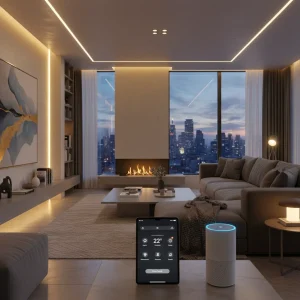
Welcome to the future of living, where your home anticipates your needs, responds to your voice, and manages itself with remarkable efficiency. In 2026, the concept of a ‘smart home’ is no longer a futuristic fantasy but a tangible reality, powered by sophisticated smart home ecosystems that seamlessly integrate a myriad of devices. As technology advances, so does the complexity and capability of these systems, making the choice of the right ecosystem more crucial than ever. This comprehensive guide will delve into the leading smart home ecosystems of 2026: Apple HomeKit, Google Home, Amazon Alexa, and Samsung SmartThings. We will dissect their strengths, weaknesses, device compatibility, security features, and overall user experience to help you make an informed decision for your connected abode.
Anúncios
The landscape of smart home technology is constantly evolving. What was cutting-edge last year might be standard today, and tomorrow’s innovations are already on the horizon. Choosing a smart home ecosystem isn’t just about picking a brand; it’s about investing in a platform that will grow with your needs, offer robust security, and provide a truly integrated and intuitive experience. Whether you’re a tech enthusiast eager to automate every aspect of your life or someone simply looking for convenience and energy savings, understanding these ecosystems is the first step towards a truly smarter living experience.
The Evolution of Smart Home Ecosystems
Before we dive into the specifics of each platform, let’s briefly consider how far smart home technology has come. Early smart homes often involved disparate devices that rarely communicated with each other. Users found themselves juggling multiple apps and struggling with complex setups. Today, the emphasis is on ecosystems – interconnected platforms that act as a central hub, allowing various devices from different manufacturers to work together harmoniously. This shift has been driven by advancements in AI, machine learning, and standardized communication protocols like Matter and Thread, which are playing an increasingly vital role in ensuring interoperability.
In 2026, the leading ecosystems have matured significantly, offering more sophisticated automation, enhanced security, and a wider array of compatible devices. They are no longer just about turning lights on and off with your voice; they encompass everything from advanced climate control and robust security systems to intelligent entertainment setups and proactive health monitoring.
Apple HomeKit: The Epitome of Privacy and Simplicity
Apple HomeKit has carved out a niche for itself by prioritizing privacy, security, and a seamless user experience, especially for those already entrenched in the Apple ecosystem. In 2026, HomeKit continues to leverage Apple’s powerful software and hardware integration, offering a polished and reliable smart home experience.
Anúncios
Strengths of Apple HomeKit
- Unmatched Privacy and Security: Apple’s commitment to user privacy is a cornerstone of HomeKit. All communications between HomeKit accessories are end-to-end encrypted, and data is processed locally whenever possible, minimizing reliance on cloud services. This makes it a top choice for privacy-conscious users.
- Intuitive User Interface: The Home app on iOS, iPadOS, and macOS provides a clean, intuitive, and consistent interface for managing all your smart devices. Siri integration is deep, allowing for natural language commands and complex scene activations.
- Seamless Apple Integration: For users with iPhones, iPads, Apple Watches, and Apple TVs, HomeKit offers unparalleled integration. Control your home from any Apple device, receive notifications, and even automate actions based on your location or schedule.
- Robust Automation and Scenes: HomeKit excels at creating powerful automations and scenes. You can set up triggers based on time, location, sensor input (e.g., motion detection), or the state of other accessories.
- Strict Device Certification: Apple maintains stringent certification requirements for HomeKit-compatible devices, ensuring a high level of quality, security, and reliability. This reduces the risk of encountering unreliable or insecure devices.
Weaknesses of Apple HomeKit
- Limited Device Compatibility (Historically): While growing, the selection of HomeKit-compatible devices has historically been smaller and often more expensive than those for other ecosystems. However, the adoption of Matter is significantly expanding this.
- Higher Cost: HomeKit-certified devices often come with a premium price tag due to the rigorous certification process.
- Requires Apple Device: To set up and manage HomeKit, you need an Apple device (iPhone, iPad). While guests can control devices, the primary setup and administration are tied to the Apple ecosystem.
Key Features in 2026
In 2026, HomeKit has fully embraced the Matter standard, dramatically increasing its device compatibility. Advanced machine learning on-device allows for more personalized and predictive automations. Enhanced secure video recording with intelligent detection and facial recognition continues to be a standout feature. Furthermore, deeper integration with Apple’s health ecosystem allows for subtle environmental adjustments based on user wellness data, with explicit user consent, of course.
Google Home: The Power of AI and Voice Assistant
Google Home, powered by Google Assistant, stands as a formidable competitor, leveraging Google’s prowess in AI, search, and voice recognition. It’s an excellent choice for users who prioritize intelligent automation, extensive device support, and a powerful voice assistant.
Strengths of Google Home
- Superior Voice Assistant: Google Assistant is widely regarded as one of the most intelligent and capable voice assistants, understanding complex commands, natural language, and context with remarkable accuracy.
- Broad Device Compatibility: Google Home boasts one of the largest ecosystems of compatible smart devices, ranging from smart speakers and displays to thermostats, lighting, and security cameras. The integration of Matter further solidifies this lead.
- Deep Google Services Integration: Seamlessly integrates with other Google services like Calendar, Gmail, Google Maps, and YouTube, offering personalized routines and information at your fingertips.
- Affordable Entry Point: Google’s range of smart speakers and displays offers accessible entry points into the smart home world, often at competitive prices.
- Personalized Routines: Google Home allows for highly customizable routines that can be triggered by voice commands, time, or specific events, providing a tailored experience for each user in the household.
Weaknesses of Google Home
- Privacy Concerns: While Google has made strides in privacy, some users remain wary of the amount of data collected by Google services. Users need to be proactive in managing their privacy settings.
- Can be Complex: With its vast array of features and integrations, setting up advanced automations can sometimes be more complex for novice users compared to the simplicity of HomeKit.
- Reliance on Cloud: Many of Google Home’s advanced AI features rely heavily on cloud processing, which can be a concern for some users regarding data privacy and potential latency.

Key Features in 2026
In 2026, Google Home has advanced its predictive AI capabilities, allowing the home to anticipate needs even more accurately. For instance, the system might learn your morning routine and automatically adjust lighting and temperature before you even wake up. Enhanced local processing for common commands improves responsiveness and reduces reliance on the cloud. Advanced multi-modal interaction, combining voice, touch, and gesture controls on smart displays, offers a truly intuitive experience. The ‘Home Hub Max’ of 2026 features even more sophisticated facial and voice recognition for personalized greetings and content delivery.
Amazon Alexa: The Ubiquitous Voice Assistant and Expansive Ecosystem
Amazon Alexa remains a dominant force in the smart home arena, primarily due to its widespread adoption, extensive device compatibility, and the sheer number of ‘Skills’ available. For many, Alexa is synonymous with smart home control, offering unparalleled accessibility and a vast ecosystem.
Strengths of Amazon Alexa
- Massive Device Compatibility: Alexa boasts the largest number of compatible devices and services, often encompassing nearly every smart home product on the market. This makes it incredibly versatile for existing smart home owners or those looking for maximum choice.
- Extensive Skills Library: The Alexa ‘Skills’ store offers thousands of integrations, allowing users to customize their smart home experience and interact with a multitude of third-party services.
- Affordable Hardware: Amazon offers a wide range of Echo devices at various price points, making it easy and affordable to integrate Alexa into every room of your home.
- User-Friendly Setup: Setting up new devices with Alexa is generally straightforward, often involving a simple discovery process.
- Robust Routines: Alexa’s routines allow for complex automations triggered by voice, time, device state, or even motion, providing significant flexibility.
Weaknesses of Amazon Alexa
- Privacy Concerns: Similar to Google, Amazon’s data collection practices raise privacy concerns for some users. While Amazon has improved privacy controls, vigilance is still required.
- Can be Overwhelming: The sheer number of devices and skills can sometimes lead to a less cohesive or more fragmented user experience compared to the curated simplicity of HomeKit.
- Voice Assistant Accuracy: While powerful, some users find Alexa’s natural language processing slightly less nuanced than Google Assistant, occasionally requiring more precise phrasing.
- Advertising Integration: Amazon’s business model means there can be subtle (and sometimes not-so-subtle) integrations of Amazon’s retail services and advertising within the Alexa experience.
Key Features in 2026
By 2026, Alexa has become even more proactive, with advanced anomaly detection for security and energy efficiency. For example, it might notify you of unusual energy consumption patterns or suggest optimal times to run appliances. Its ‘Ambient Intelligence’ initiative aims to make interactions even more seamless and less reliant on explicit commands. Enhanced local processing for core commands, similar to Google Home, improves speed and reliability. Furthermore, Alexa’s integration with Amazon’s vast entertainment and retail empire continues to deepen, offering personalized shopping suggestions and content delivery.
Samsung SmartThings: The Hub for Connected Appliances and Beyond
Samsung SmartThings distinguishes itself as a highly versatile and open platform, particularly strong for users with Samsung appliances and a desire for deep customization. It acts as a universal hub, bridging various communication protocols and offering extensive control.
Strengths of Samsung SmartThings
- Broadest Protocol Support: SmartThings is renowned for its support of multiple communication protocols, including Zigbee, Z-Wave, Wi-Fi, and now Matter and Thread. This makes it incredibly flexible for integrating a wide array of devices from different manufacturers.
- Excellent for Samsung Appliance Owners: If you own Samsung smart TVs, refrigerators, washing machines, or other appliances, SmartThings offers unparalleled integration and control.
- Deep Customization and Automation: For advanced users, SmartThings provides powerful automation capabilities through its ‘Rules Engine’ and community-developed ‘SmartApps.’ This allows for intricate and highly personalized smart home logic.
- Local Processing Capabilities: Many automations can be processed locally on the SmartThings Hub, reducing reliance on cloud services and improving responsiveness.
- Open Ecosystem: SmartThings has historically been very open, attracting a large community of developers and enthusiasts who contribute to its expanding capabilities.
Weaknesses of Samsung SmartThings
- Steeper Learning Curve: The sheer flexibility and depth of customization can make SmartThings more challenging for beginners to set up and master compared to the more streamlined experiences of HomeKit or Alexa.
- Requires a Hub for Full Functionality: While some SmartThings devices can function without a dedicated hub, the full power and versatility of the ecosystem, especially for Zigbee/Z-Wave devices and local processing, require a physical SmartThings Hub.
- User Interface Can be Less Polished: While functional, the SmartThings app’s user interface has sometimes been criticized for being less intuitive or visually appealing than its competitors.
- Reliance on Community Support: While a strength, the reliance on community-developed SmartApps means that official support for certain integrations might vary.

Key Features in 2026
By 2026, SmartThings has further solidified its position as a truly universal translator for the smart home. Its AI-driven ‘SmartThings Energy’ feature provides hyper-personalized energy consumption insights and automation, proactively saving users money. Integration with Bixby (Samsung’s voice assistant) has improved significantly, offering more natural language processing and contextual understanding within the SmartThings environment. Furthermore, the platform has expanded its enterprise solutions, allowing businesses to leverage SmartThings for smart building management.
Cross-Platform Compatibility and the Rise of Matter/Thread
One of the most significant developments impacting all these ecosystems by 2026 is the widespread adoption of Matter and Thread. These new standards aim to solve the long-standing problem of interoperability in the smart home. Matter, an open-source connectivity standard, allows smart devices to work seamlessly across different ecosystems. Thread, a low-power mesh networking protocol, provides a reliable and scalable foundation for these devices to communicate.
- What this means for you: You are no longer as locked into a single ecosystem as you once were. A Matter-certified smart bulb, for example, can be controlled by Apple HomeKit, Google Home, Amazon Alexa, or Samsung SmartThings simultaneously. This greatly simplifies device selection and future-proofs your smart home investment.
- Impact on Ecosystems: While Matter addresses device compatibility, the unique strengths of each ecosystem (e.g., voice assistant intelligence, privacy focus, deep appliance integration) remain important differentiators. The competition shifts from who has the most compatible devices to who offers the best user experience and most intelligent features atop this shared foundation.
Choosing Your Smart Home Ecosystem in 2026
With a clearer understanding of each platform, how do you decide which smart home ecosystem is right for you? Consider the following factors:
1. Your Existing Devices and Ecosystem Preference
- Apple User? If your life revolves around Apple products (iPhone, iPad, Mac), HomeKit offers the most seamless and private experience.
- Google Services User? If you rely heavily on Google Assistant, Google Search, and other Google services, Google Home will feel like a natural extension.
- Amazon Shopper/Alexa User? If you’re already using an Echo device or frequently shop on Amazon, Alexa provides an incredibly broad and accessible entry point.
- Samsung Appliance Owner/DIY Enthusiast? If you own many Samsung smart appliances or want maximum flexibility and customization, SmartThings is a powerful choice.
2. Prioritized Features
- Privacy and Security: Apple HomeKit leads here with its strong encryption and local processing.
- Voice Assistant Intelligence: Google Assistant often takes the crown for its contextual understanding and natural language processing.
- Device Compatibility: Amazon Alexa and Samsung SmartThings offer the broadest range of compatible devices, especially with Matter.
- Automation Complexity: Samsung SmartThings offers the deepest level of customization for advanced users, while HomeKit and Google Home provide excellent, user-friendly automation.
- Ease of Use: Apple HomeKit and Amazon Alexa are generally considered the easiest to set up and use for beginners.
3. Budget Considerations
- Entry Level: Amazon Echo and Google Nest Mini devices offer very affordable ways to start your smart home journey.
- Premium Experience: HomeKit-certified devices often come at a higher price point, reflecting Apple’s stringent quality control.
- Scalability: Consider the long-term cost of expanding your system. While initial hubs might be inexpensive, the cumulative cost of devices can add up.
4. Future-Proofing with Matter and Thread
The good news is that with Matter and Thread becoming standard, your choice of ecosystem is less about being locked in and more about your preferred user interface and voice assistant. Most new smart devices will be Matter-compatible, meaning they should work with all four major platforms. Focus on the ecosystem that offers the best control experience and integrates best with your digital life.
The Future is Integrated and Intelligent
As we look beyond 2026, the trend towards more integrated, intelligent, and predictive smart homes will only accelerate. AI will play an even larger role, allowing our homes to not just react to commands but to anticipate our needs and act proactively. Energy efficiency will be paramount, with smart homes autonomously optimizing consumption. Health and wellness integration will become more sophisticated, with environmental factors being adjusted to promote well-being. Security systems will leverage advanced biometrics and AI to provide unparalleled protection.
Ultimately, the best smart home ecosystem is the one that seamlessly integrates into your life, enhancing convenience, security, and comfort without adding complexity. By carefully considering your priorities and understanding the unique strengths of Apple HomeKit, Google Home, Amazon Alexa, and Samsung SmartThings, you can build a connected home that truly makes your living smarter.
The choice is no longer about which system can do the most, but which system does what you need, in a way that feels natural and intuitive to you. The smart home revolution is here, and 2026 offers an exciting array of powerful, interconnected options to transform your living space.