Web3 Adoption in the US: 15% Growth Forecast for Mainstream Platforms by Q3 2026
Anúncios
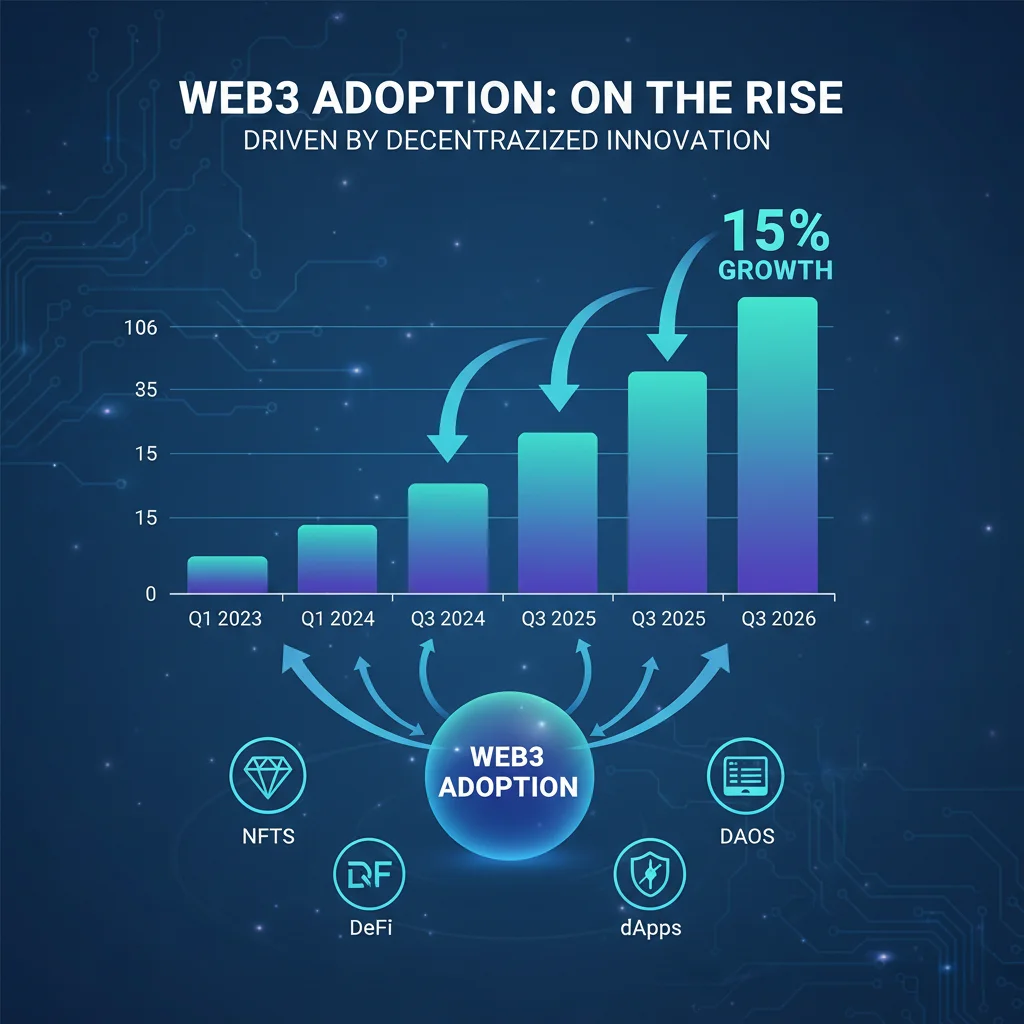
The digital landscape is in constant flux, and few shifts promise as profound an impact as the rise of Web3. This next iteration of the internet, built on decentralized blockchain technologies, is poised to reshape how we interact, transact, and own digital assets. A recent forecast indicates a significant milestone for the United States: a projected 15% growth in Web3 Adoption US across mainstream platforms by Q3 2026. This isn’t just a marginal increase; it represents a substantial leap towards widespread integration of decentralized applications (dApps), non-fungible tokens (NFTs), decentralized finance (DeFi), and the metaverse into the daily lives of millions of Americans.
This comprehensive article will delve into the intricacies of this forecast, exploring the underlying drivers, the technological advancements making it possible, and the potential challenges that lie ahead. We will examine how various sectors, from entertainment and gaming to finance and supply chain, are embracing Web3 principles, and what this means for businesses, developers, and everyday users. Understanding this trajectory is crucial for anyone looking to navigate the future of the internet.
Anúncios
Understanding the Web3 Paradigm Shift
Before diving into the growth forecast, it’s essential to grasp what Web3 truly entails. Unlike Web2, which is characterized by centralized platforms controlled by a few tech giants, Web3 emphasizes decentralization, user ownership, and transparency. It leverages blockchain technology to create a peer-to-peer network where data and value can be exchanged without intermediaries. This fundamental shift empowers users with greater control over their data and digital identities, fostering a more equitable and open internet.
Key Pillars of Web3
- Decentralization: Information and control are distributed across a network, rather than residing with a single entity.
- User Ownership: Through tokens (fungible and non-fungible), users can own digital assets and even participate in the governance of decentralized autonomous organizations (DAOs).
- Transparency: Transactions and data on public blockchains are immutable and verifiable by anyone.
- Interoperability: The goal is for different blockchain networks and dApps to communicate seamlessly.
- Trustlessness: Interactions can occur without requiring trust in a central authority, relying instead on cryptographic proofs.
These pillars collectively lay the groundwork for a new digital economy and social fabric. The projected 15% growth in Web3 Adoption US signifies a growing public and institutional acceptance of these principles, moving beyond the niche cryptocurrency enthusiast community into broader mainstream consciousness.
Drivers Behind the 15% Growth Forecast
Several converging factors are propelling the anticipated surge in Web3 Adoption US. These drivers range from technological maturity to evolving consumer behaviors and strategic investments by major corporations.
Anúncios
Technological Advancements and Infrastructure
The underlying technology for Web3 is maturing rapidly. Scalability solutions for blockchains (like Layer 2 networks), improved user interfaces for dApps, and more energy-efficient consensus mechanisms are addressing some of the early criticisms and barriers to entry. Better infrastructure means faster transactions, lower fees, and a smoother user experience, which are critical for attracting a mainstream audience. The development of more robust wallets and secure identity solutions also plays a crucial role in building trust and ease of use.
Increased Awareness and Education
While still nascent, public awareness of Web3 concepts is growing. News cycles, social media, and educational initiatives are slowly demystifying terms like NFTs, metaverse, and DeFi. As more mainstream media outlets cover successful Web3 projects and applications, the general public becomes more comfortable exploring these new digital frontiers. Universities and online courses are also beginning to offer curricula focused on blockchain and Web3 development, creating a skilled workforce to build the future.
Mainstream Platform Integration
Perhaps the most significant driver for the 15% growth is the increasing integration of Web3 functionalities into existing mainstream platforms and the emergence of user-friendly Web3-native applications. Gaming platforms are incorporating NFTs for in-game assets, social media networks are exploring decentralized identities and content monetization, and even traditional finance institutions are experimenting with blockchain for various services. When users can access Web3 features through familiar interfaces, the barrier to adoption significantly lowers.
Investment and Corporate Buy-in
Venture capital firms and large corporations are pouring billions into Web3 startups and initiatives. This influx of capital fuels innovation, product development, and marketing efforts, bringing Web3 solutions to a wider audience. Tech giants like Meta (formerly Facebook), Microsoft, and Google are investing heavily in metaverse technologies and blockchain research, signaling a long-term commitment to the Web3 vision. This corporate endorsement lends credibility and resources to the ecosystem, accelerating Web3 Adoption US.
The Rise of Creator Economy and Digital Ownership
Web3 empowers creators with new ways to monetize their content and directly engage with their audience, bypassing traditional intermediaries. NFTs allow artists, musicians, and content creators to establish verifiable ownership of their digital works and earn royalties from secondary sales. This direct connection and potential for greater financial autonomy are highly attractive, drawing a new wave of users and creators into the Web3 space. The desire for true digital ownership, whether of art, music, or virtual land, resonates deeply with many users.
Sectors Leading the Charge in Web3 Adoption US
The 15% growth forecast isn’t uniform across all sectors. Certain industries are naturally more amenable to Web3 integration and are currently leading the charge in Web3 Adoption US.
Gaming and Entertainment
The gaming industry is a natural fit for Web3, particularly with the concept of play-to-earn (P2E) games and in-game asset ownership via NFTs. Players can truly own their digital swords, skins, or virtual land, and even trade them on open marketplaces, creating new economic opportunities within virtual worlds. Major gaming studios are experimenting with blockchain integration, and dedicated Web3 gaming platforms are attracting millions of users. The metaverse, often closely linked with gaming, promises immersive virtual experiences where digital ownership and decentralized economies will be central.
Decentralized Finance (DeFi)
DeFi continues to be a cornerstone of Web3, offering alternatives to traditional financial services like lending, borrowing, and trading without intermediaries. While still complex for many, user-friendly DeFi platforms and improved regulatory clarity are slowly bringing these services to a broader audience. Stablecoins, decentralized exchanges (DEXs), and yield farming protocols are becoming more accessible, attracting individuals seeking greater control over their financial assets and potentially higher returns.
Digital Collectibles and Art (NFTs)
NFTs have garnered significant media attention, bringing the concept of digital ownership to the forefront. Beyond speculative art pieces, NFTs are finding utility in ticketing, loyalty programs, digital identity, and even real estate. Brands are leveraging NFTs to create unique customer experiences and build communities, driving mainstream engagement with Web3 concepts. The cultural impact of NFTs has been immense, sparking curiosity and participation from new demographics.
Supply Chain and Logistics
Blockchain’s inherent transparency and immutability make it ideal for supply chain management. Tracking goods from origin to consumer, verifying authenticity, and ensuring ethical sourcing can be streamlined and made tamper-proof. While not as consumer-facing as gaming or NFTs, enterprise adoption in this sector contributes significantly to the overall Web3 ecosystem and its underlying infrastructure, paving the way for more widespread commercial use cases.
Social Media and Digital Identity
The concept of decentralized social networks, where users own their data and control their online identity, is gaining traction. Platforms are exploring ways to integrate self-sovereign identity solutions, allowing users to manage their digital personas across various applications without relying on a single corporate entity. This shift promises to address concerns about data privacy and censorship prevalent in Web2 social media.
Challenges to Widespread Web3 Adoption US
Despite the optimistic forecast, the path to mainstream Web3 Adoption US is not without its hurdles. Addressing these challenges will be critical for achieving and surpassing the 15% growth target.
User Experience (UX) and Accessibility
Many Web3 applications still suffer from complex user interfaces, requiring users to navigate unfamiliar concepts like seed phrases, gas fees, and wallet management. For mainstream adoption, the UX needs to be as seamless and intuitive as Web2 applications. Simplifying onboarding processes, abstracting away blockchain complexities, and providing robust customer support will be essential.
Regulatory Uncertainty
The regulatory landscape for Web3 technologies in the US remains fragmented and evolving. Lack of clear guidelines for cryptocurrencies, NFTs, and DeFi products creates uncertainty for businesses and investors. Clear, comprehensive, and innovation-friendly regulations are needed to foster a secure environment for growth and protect consumers, without stifling technological progress.
Scalability and Performance
While significant progress has been made, some blockchain networks still struggle with scalability, leading to slow transaction times and high fees during periods of heavy usage. For mainstream applications that demand high throughput and instantaneity, further advancements in blockchain architecture and Layer 2 solutions are necessary to handle the volume of transactions a mass user base would generate.
Security Concerns and Education
The decentralized nature of Web3 also places a greater responsibility on users for their own security. Hacks, scams, and phishing attempts are unfortunately common, and many users lack the technical knowledge to protect their digital assets effectively. Comprehensive user education on security best practices, robust auditing of smart contracts, and improved wallet security features are vital to building trust and preventing financial losses.
Environmental Impact
The energy consumption of certain blockchain networks, particularly those relying on Proof-of-Work consensus mechanisms, has been a significant concern. While newer, more energy-efficient Proof-of-Stake networks are gaining dominance, the perception of Web3 as environmentally damaging persists. Continued innovation in sustainable blockchain technologies and transparent reporting on energy usage will be crucial for public acceptance.

The Future Beyond 2026: What 15% Growth Means
Achieving a 15% growth in Web3 Adoption US by Q3 2026 would be a significant indicator of the technology’s readiness for prime time. This milestone suggests that Web3 is moving beyond early adopters and into the early majority phase, setting the stage for even more rapid expansion in the subsequent years.
Economic Impact
A more widespread Web3 ecosystem would unlock new economic opportunities, fostering innovation in various industries. New business models, job roles, and investment avenues would emerge, contributing to economic growth. The tokenization of real-world assets could revolutionize traditional markets, making them more liquid and accessible.
Social and Cultural Shifts
The decentralization ethos of Web3 could lead to profound social and cultural changes. Greater user control over data and identity might shift power dynamics away from centralized corporations. The rise of DAOs could redefine organizational structures and collective decision-making. The metaverse, powered by Web3, promises new forms of social interaction, entertainment, and commerce in virtual spaces.
Policy and Governance
As Web3 gains traction, governments and international bodies will increasingly need to adapt their policies and legal frameworks. The distributed nature of Web3 poses challenges for traditional regulatory approaches, necessitating new models for governance and international cooperation. The US, in particular, will play a critical role in shaping global Web3 policy through its approach to regulation and innovation.
Enhanced Digital Security and Privacy
While security remains a challenge, the underlying cryptographic principles of Web3 offer the potential for enhanced digital security and privacy compared to current Web2 models. Self-sovereign identity, end-to-end encryption, and transparent ledger systems can empower users with greater control and protection of their personal information, reducing reliance on vulnerable centralized databases.
Strategies for Accelerating Web3 Adoption US
To not only meet but exceed the 15% growth forecast, several strategic approaches will be crucial for stakeholders across the Web3 ecosystem.
Focus on User-Centric Design
Developers and entrepreneurs must prioritize user experience. This means designing dApps that are intuitive, aesthetically pleasing, and require minimal technical knowledge to operate. Onboarding flows should be streamlined, and complex blockchain interactions should be abstracted away where possible. Think of how early internet interfaces evolved into the sleek, user-friendly applications we use today.
Industry Collaboration and Standardization
Collaboration among different blockchain projects, industry players, and regulatory bodies is essential. Establishing common standards for interoperability, security, and data formats will foster a more cohesive and efficient ecosystem. This reduces fragmentation and allows for more seamless integration of Web3 services across various platforms.
Targeted Education and Awareness Campaigns
Beyond general awareness, there’s a need for targeted educational initiatives that explain the practical benefits of Web3 to specific demographics and industries. Highlighting real-world use cases and demonstrating how Web3 solves existing problems can resonate more effectively than abstract technical explanations. Public-private partnerships could play a role in funding and disseminating this education.
Regulatory Clarity and Support for Innovation
Policymakers in the US have a critical role to play. Providing clear, predictable, and supportive regulatory frameworks can significantly de-risk Web3 development and investment. A balanced approach that protects consumers while fostering innovation is paramount. Engaging with industry experts and adopting a technology-agnostic stance will be beneficial.
Emphasis on Real-World Utility
While speculative aspects often dominate headlines, the long-term success of Web3 depends on its ability to deliver tangible utility. Focusing on applications that solve real-world problems, improve efficiency, create new value, or enhance user experiences will drive sustainable Web3 Adoption US. This includes solutions in supply chain, healthcare, identity management, and more.
Conclusion
The forecast of a 15% growth in Web3 Adoption US across mainstream platforms by Q3 2026 is a strong indicator of the burgeoning potential of decentralized technologies. It signifies a pivotal moment where Web3 transitions from a niche interest to a significant force shaping the digital future. While challenges related to user experience, regulation, and scalability persist, the rapid pace of innovation, increasing corporate investment, and growing public awareness are powerful counter-forces propelling this growth.
As we move towards 2026, the integration of Web3 into gaming, finance, entertainment, and other sectors will become increasingly visible. This shift promises not just technological evolution, but a fundamental redefinition of digital ownership, privacy, and interaction. Businesses, developers, and individuals alike must pay close attention to these developments, as the opportunities presented by a decentralized internet are vast and transformative. The journey to a truly mainstream Web3 is well underway, and the US is poised to be at its forefront.