Securing Remote Workforces: 5 Essential Digital Security Practices
Anúncios
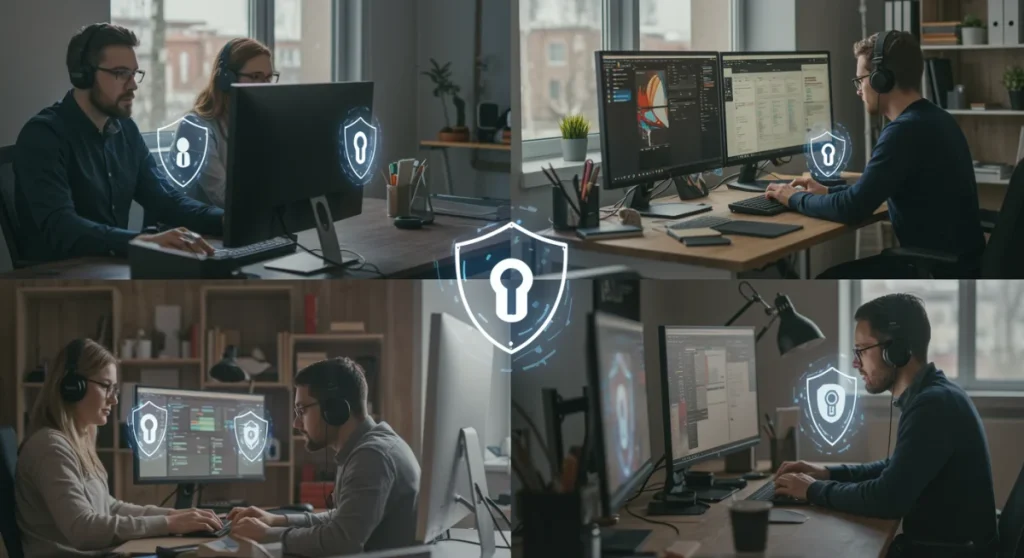
Implementing robust digital security practices is critical for US companies to protect their remote workforce security, ensuring data integrity and business continuity against evolving cyber threats.
Anúncios
In today’s dynamic business landscape, the shift to remote work has introduced unprecedented challenges and opportunities for US companies. While offering flexibility and expanded talent pools, this paradigm also magnifies digital security risks. Securing remote workforces: 5 essential digital security practices for US companies in the current climate is no longer just a recommendation but a foundational pillar for operational resilience and trust. Understanding and implementing these practices is crucial for safeguarding sensitive data and maintaining business integrity.
Establishing Robust Access Control and Multi-Factor Authentication
The foundation of any strong remote security strategy lies in stringent access control. With employees accessing corporate resources from various locations and devices, verifying user identity and limiting access to only necessary systems are paramount. This proactive approach significantly reduces the attack surface for malicious actors.
Anúncios
Implementing multi-factor authentication (MFA) is a non-negotiable step in enhancing access security. MFA adds an extra layer of verification beyond just a password, making it significantly harder for unauthorized individuals to gain entry, even if they compromise credentials. This is particularly vital for remote environments where traditional perimeter defenses are less effective.
The Imperative of Strong Password Policies
While MFA provides a critical second line of defense, strong password policies remain essential. Educating employees on creating complex, unique passwords and regularly updating them is a basic yet effective measure against brute-force attacks and credential stuffing.
- Mandate minimum password length and complexity requirements (e.g., mix of uppercase, lowercase, numbers, symbols).
- Enforce regular password changes, typically every 60-90 days.
- Prohibit the reuse of old passwords or common, easily guessable sequences.
- Utilize password managers to help employees securely store and generate strong passwords.
Ultimately, a layered approach combining robust access controls, mandatory MFA for all critical systems, and strong password hygiene creates a formidable barrier against unauthorized access. This protects not only corporate data but also the personal information of employees working remotely, fostering a more secure and trustworthy digital environment.
Implementing Comprehensive Endpoint Security Measures
Remote work means company data often resides on or passes through personal devices and home networks, which may lack the security protocols of a corporate office. Therefore, comprehensive endpoint security is crucial to protect every device that connects to your organization’s network.
Endpoint security encompasses a suite of tools and practices designed to secure individual devices such as laptops, desktops, and mobile phones. This includes antivirus software, anti-malware, host-based firewalls, and intrusion detection systems. The goal is to detect, prevent, and respond to threats directly at the point of interaction.
The Role of Device Management and Patching
Effective device management ensures that all remote devices are configured securely and remain compliant with company policies. This involves tracking devices, enforcing security settings, and ensuring timely software updates. Unpatched software is a common vulnerability exploited by cybercriminals.
- Deploy endpoint detection and response (EDR) solutions for advanced threat monitoring.
- Automate software patching and updates across all remote devices.
- Implement mobile device management (MDM) for company-issued smartphones and tablets.
- Require encryption for all remote devices to protect data at rest.
By prioritizing comprehensive endpoint security, US companies can extend their digital defenses beyond the traditional office perimeter, effectively protecting sensitive data and systems from the myriad of threats targeting remote workers. This proactive stance is vital for maintaining a secure and productive remote workforce.
Securing Network Connections with VPNs and Firewalls
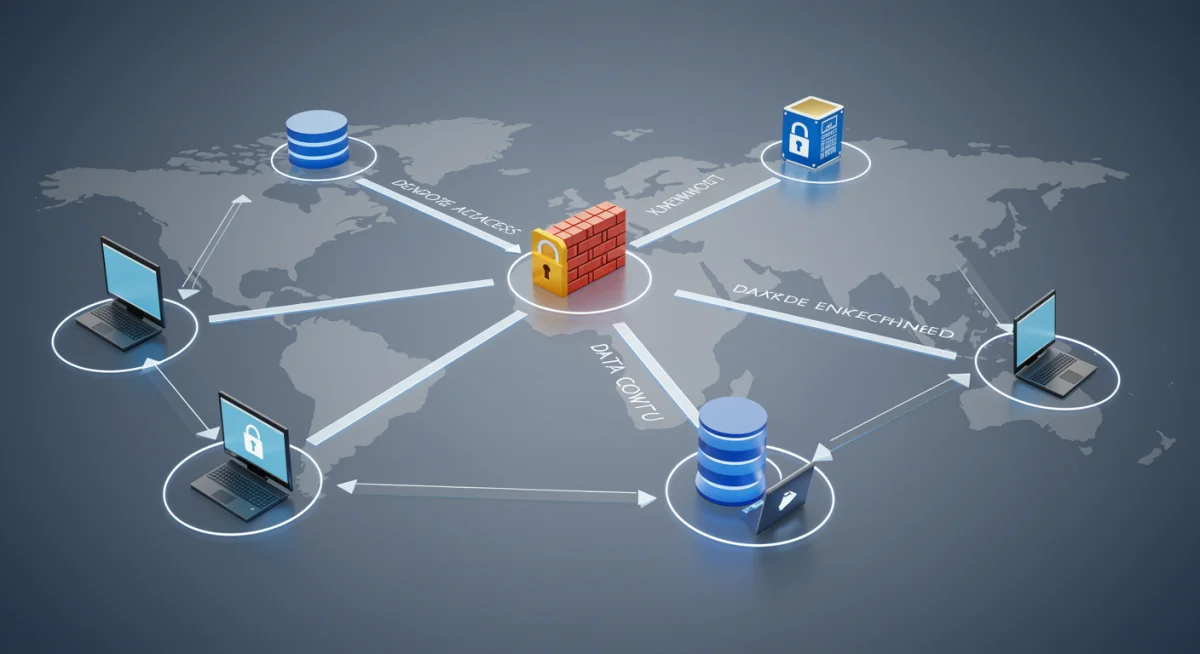
The home network, often less secure than an office network, becomes the primary gateway for remote employees accessing corporate resources. Securing these connections is fundamental to preventing eavesdropping, data interception, and unauthorized access to company systems. Virtual Private Networks (VPNs) and personal firewalls play a critical role in establishing a secure communication channel.
A VPN creates an encrypted tunnel between the remote worker’s device and the company’s network. This encryption ensures that all data transmitted through the tunnel is secure from interception, even if the underlying public network is compromised. For US companies, mandating VPN usage for all corporate access is a baseline security requirement.
Configuring Firewalls for Remote Protection
While VPNs secure the data in transit, firewalls act as a barrier, controlling incoming and outgoing network traffic on the remote worker’s device. Properly configured firewalls can block unauthorized access attempts and prevent malicious software from communicating with external servers.
- Ensure all remote employees use a company-approved VPN for all corporate access.
- Configure firewalls on remote devices to restrict unnecessary inbound connections.
- Regularly audit VPN access logs for unusual activity or unauthorized connection attempts.
- Educate employees on the importance of not disabling their firewalls or VPNs.
By combining the power of VPNs for secure data transmission and robust firewalls for network traffic control, US companies can significantly enhance the security posture of their remote workforce. This dual approach provides critical protection against network-based cyber threats, ensuring the integrity and confidentiality of corporate communications.
Regular Employee Training and Awareness Programs
Technology alone cannot guarantee complete security; the human element remains a primary vulnerability. Remote employees, often working in less controlled environments, are frequently targets for social engineering attacks such as phishing, which exploit human trust and oversight. Therefore, continuous and comprehensive employee training is indispensable for remote workforce security.
Security awareness programs should not be a one-time event but an ongoing process that adapts to new threats and technologies. These programs empower employees to recognize and report suspicious activities, understand company security policies, and practice safe computing habits.
Key Topics for Security Awareness Training
Effective training covers a range of topics, from identifying phishing attempts to understanding the risks associated with public Wi-Fi. It should be engaging, relevant, and easy to understand, avoiding overly technical jargon.
- Phishing and social engineering recognition and reporting.
- Best practices for password management and MFA usage.
- Safe use of company devices and approved software.
- Understanding data privacy regulations and compliance (e.g., HIPAA, CCPA).
- Protocols for reporting security incidents and suspicious activities.
Investing in regular and effective employee training transforms your workforce into your strongest defense against cyber threats. For US companies, this means fostering a culture of security awareness where every employee understands their role in protecting the organization’s digital assets, ultimately bolstering overall remote workforce security.
Implementing Data Encryption and Data Loss Prevention (DLP)
Even with robust access controls, endpoint security, and secure networks, data can still be vulnerable if not properly encrypted or if it leaves the company’s control. Data encryption and Data Loss Prevention (DLP) strategies are crucial for protecting sensitive information both in transit and at rest, especially within a remote work model.
Encryption transforms data into an unreadable format, rendering it useless to unauthorized individuals even if they gain access. This applies to data stored on devices (encryption at rest) and data being transmitted over networks (encryption in transit). DLP solutions, on the other hand, monitor, detect, and block sensitive data from leaving the corporate network or being used inappropriately.
Strategies for Effective Data Protection
Implementing a comprehensive data protection strategy requires a combination of technological tools and clear policy enforcement. This ensures that sensitive information is protected throughout its lifecycle, regardless of where employees are working.
- Enforce full disk encryption on all company-issued laptops and external storage devices.
- Utilize encrypted communication channels for all sensitive data transfers (e.g., secure email, HTTPS for web applications).
- Deploy DLP solutions to prevent unauthorized sharing or leakage of sensitive data.
- Regularly back up critical data to secure, encrypted cloud storage or offsite servers.
By prioritizing data encryption and implementing robust DLP measures, US companies can significantly mitigate the risks associated with data breaches and unauthorized data access in a remote work environment. These practices are fundamental to maintaining compliance with data protection regulations and preserving customer trust.
Regular Security Audits and Incident Response Planning
Even with the most robust security measures in place, incidents can still occur. A proactive approach includes regular security audits and a well-defined incident response plan. These are essential for identifying vulnerabilities before they are exploited and for minimizing the impact of any security breach.
Security audits involve systematically reviewing an organization’s security posture, policies, and controls to identify weaknesses and ensure compliance. This can include vulnerability assessments, penetration testing, and compliance audits to meet industry standards and regulatory requirements.
Developing a Comprehensive Incident Response Plan
An incident response plan outlines the steps an organization will take in the event of a security breach. This plan should cover identification, containment, eradication, recovery, and post-incident analysis. For remote workforces, the plan needs to specifically address the challenges of geographically dispersed teams and diverse home network environments.
- Conduct regular vulnerability scans and penetration tests on all internet-facing assets.
- Establish a clear chain of command and communication protocols for security incidents.
- Provide training to a dedicated incident response team on handling remote breaches.
- Regularly test the incident response plan through tabletop exercises and simulations.
- Maintain detailed logs and forensic capabilities to aid in post-incident investigation.
For US companies, maintaining a strong security posture for their remote workforce requires continuous vigilance. Regular audits reveal potential weaknesses, while a well-rehearsed incident response plan ensures a swift and effective reaction to any security event, minimizing disruption and protecting the company’s reputation and assets.
| Key Practice | Brief Description |
|---|---|
| Access Control & MFA | Verify user identity and limit access to necessary systems using multi-factor authentication. |
| Endpoint Security | Protect individual devices with antivirus, anti-malware, and regular software updates. |
| Secure Network Connections | Utilize VPNs for encrypted data transmission and firewalls to control network traffic. |
| Employee Training | Educate staff on cybersecurity best practices, phishing, and incident reporting. |
Frequently Asked Questions About Remote Workforce Security
MFA adds an essential layer of security beyond just passwords, making it significantly harder for unauthorized users to access accounts. Even if a password is stolen, the second factor (like a code from a phone) prevents access, protecting sensitive corporate data from breaches and enhancing overall remote workforce security.
The primary threats include phishing attacks, malware infections from unsecured home networks, unpatched software vulnerabilities, and the use of personal devices for corporate work without proper security. These all contribute to potential data breaches and compromise of company systems, directly impacting remote workforce security.
Companies should implement comprehensive endpoint security solutions, enforce full disk encryption, utilize mobile device management (MDM), and ensure regular software patching. These measures protect devices from malware and unauthorized access, creating a more secure environment for remote workforce security and data handling.
Absolutely. Regular and engaging security awareness training is highly effective. It empowers employees to recognize social engineering tactics, understand company policies, and practice safe computing habits. A well-informed workforce is often the strongest defense against cyber threats, significantly boosting remote workforce security.
DLP solutions monitor and prevent sensitive data from leaving the corporate network or being used inappropriately. For remote work, DLP is critical because it helps protect confidential information from accidental exposure or malicious exfiltration, ensuring compliance and safeguarding intellectual property, which is vital for robust remote workforce security.
Conclusion
The landscape of work has fundamentally shifted, making securing remote workforces: 5 essential digital security practices for US companies in the current climate an ongoing and critical endeavor. By diligently implementing robust access controls, comprehensive endpoint security, secure network connections, continuous employee training, and advanced data protection measures, US companies can build a formidable defense against evolving cyber threats. These practices are not merely technical requirements but strategic investments in business continuity, data integrity, and the trust of employees and customers alike. Prioritizing these security frameworks ensures that the benefits of remote work can be fully realized without compromising the organization’s digital health. The journey to a truly secure remote environment is continuous, demanding adaptability and a proactive mindset from every level of the organization.