Top 5 Green Jobs US 2026: Emerging Opportunities Outlook

Anúncios
The 5 Hottest Green Jobs in the US for 2026: A 3-Month Outlook on Emerging Opportunities
Anúncios
The landscape of the American job market is undergoing a profound transformation, driven by an accelerating global commitment to sustainability and environmental responsibility. As we look towards 2026, the demand for professionals in what are commonly known as green jobs outlook is not just growing; it’s exploding. This isn’t merely a trend; it’s a fundamental shift in economic priorities, fueled by technological advancements, regulatory pressures, and increasing consumer awareness. From renewable energy to sustainable agriculture, from electric vehicle infrastructure to eco-conscious urban planning, the opportunities are vast and varied. Understanding this evolving landscape is crucial for job seekers, career changers, and educational institutions alike.
In this comprehensive article, we will delve into the top 5 hottest green jobs in the US for 2026, providing a focused 3-month outlook on the emerging opportunities within each sector. We’ll explore the core responsibilities, required skills, educational pathways, and the projected growth trajectory for these pivotal roles. Our aim is to equip you with the insights needed to navigate this burgeoning market, whether you’re planning your next career move or simply seeking to understand the future of work. The transition to a green economy is creating millions of new jobs, many of which require specialized skills and a forward-thinking mindset. By identifying these key roles now, you can strategically position yourself for success in a rapidly expanding and vitally important industry.
The urgency of climate change and the push for sustainable practices have propelled the green sector into the forefront of economic development. Government incentives, private investments, and a cultural shift towards environmental stewardship are collectively creating a fertile ground for green innovations and, consequently, green employment. This isn’t just about saving the planet; it’s about building a resilient, sustainable economy that offers meaningful and well-paying jobs. Let’s explore the roles that are shaping this exciting future and how you can become a part of it, focusing on the immediate 3-month horizon for actionable insights into the green jobs outlook.
Anúncios
Understanding the Green Jobs Outlook: What Defines a Green Job?
Before we dive into specific roles, it’s essential to define what constitutes a ‘green job.’ The Bureau of Labor Statistics (BLS) broadly defines green jobs as those that produce goods or services that benefit the environment or conserve natural resources, or those that have a green component added to an existing job. This definition encompasses a wide array of occupations, from scientists and engineers developing renewable energy solutions to technicians installing energy-efficient systems, and even educators promoting environmental awareness.
The scope of green jobs is incredibly broad, touching almost every sector of the economy. They are found in manufacturing, construction, transportation, agriculture, waste management, scientific research, and professional services. The common thread is a direct contribution to environmental protection, resource conservation, or the transition to a more sustainable economic model. This includes reducing greenhouse gas emissions, improving energy efficiency, minimizing waste and pollution, protecting ecosystems, and restoring natural habitats.
The growth of the green jobs outlook is not uniform across all sectors. Some areas are experiencing more rapid expansion due to technological breakthroughs, policy changes, and market demand. For instance, the renewable energy sector, particularly solar and wind power, has seen phenomenal growth, directly translating into a high demand for skilled labor. Similarly, advancements in electric vehicle technology and smart grid systems are creating entirely new categories of jobs that didn’t exist a decade ago.
Moreover, ‘green skills’ are becoming increasingly valuable across all industries. Even traditional roles are evolving to incorporate sustainable practices, requiring professionals to understand concepts like life cycle assessments, carbon footprint reduction, and circular economy principles. This means that even if your current role isn’t explicitly ‘green,’ acquiring these skills can significantly enhance your career prospects and make you a more valuable asset in the modern workforce. The next three months will likely see an accelerated demand for these foundational green competencies.
1. Renewable Energy Technicians (Solar & Wind)
Role Overview and Responsibilities
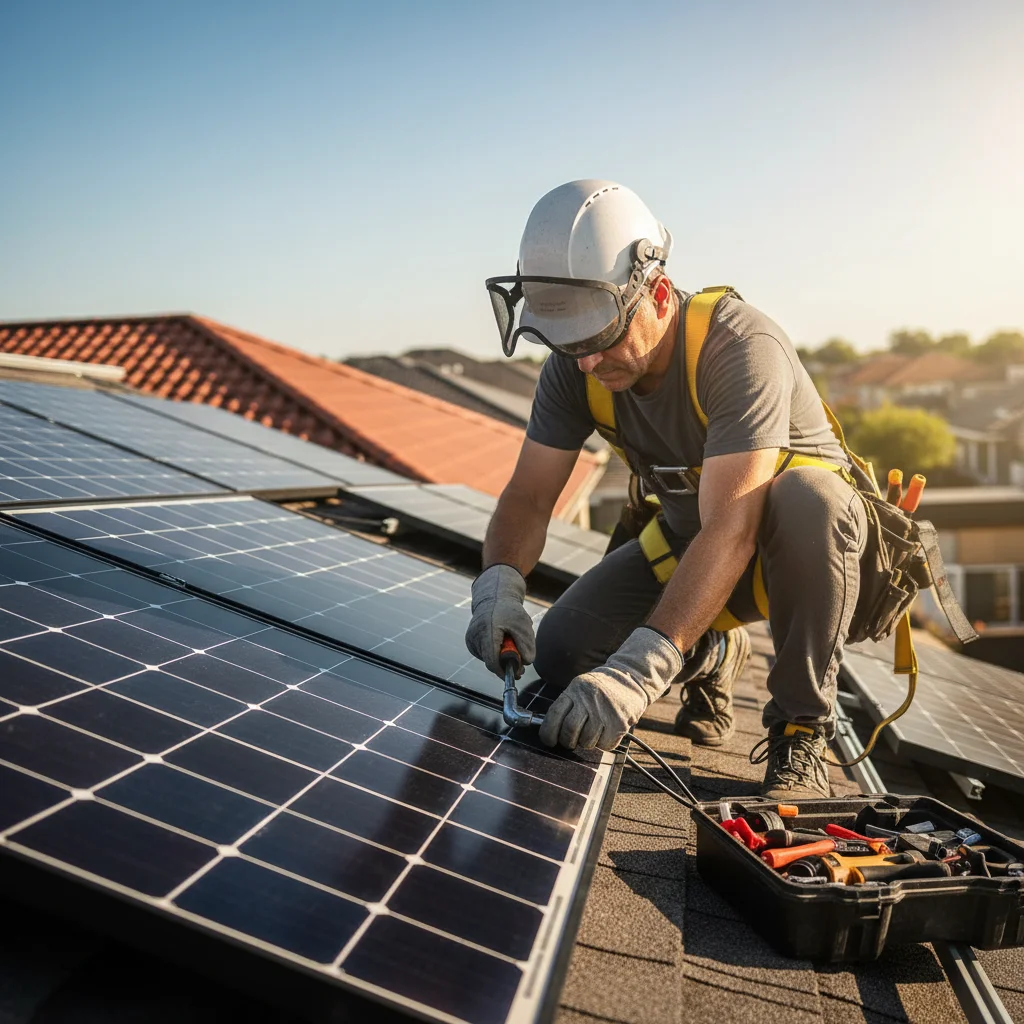
At the forefront of the green revolution are Renewable Energy Technicians, specifically Solar Photovoltaic (PV) Installers and Wind Turbine Technicians. These roles are critical for the deployment and maintenance of renewable energy infrastructure, which is expanding at an unprecedented rate across the US. Solar PV Installers assemble, install, and maintain solar panel systems on rooftops or other structures, ensuring they operate efficiently and safely. Wind Turbine Technicians, on the other hand, inspect, troubleshoot, repair, and maintain wind turbines, often working at significant heights.
Both roles require a blend of technical skills, physical stamina, and a strong understanding of electrical and mechanical systems. They are hands-on jobs that directly contribute to reducing reliance on fossil fuels and mitigating climate change. The daily tasks can vary widely, from routine inspections and preventative maintenance to complex repairs and system upgrades. Safety protocols are paramount, given the nature of the work, especially for wind turbine technicians who operate in challenging environments.
Skills and Education Required
A high school diploma or equivalent is typically the minimum educational requirement, followed by technical training or an associate’s degree in a relevant field such as electrical technology, renewable energy, or wind energy technology. Many employers also provide on-the-job training. Key skills include electrical knowledge, mechanical aptitude, troubleshooting abilities, strong problem-solving skills, and adherence to safety regulations. Certifications, such as those from the North American Board of Certified Energy Practitioners (NABCEP) for solar installers, can significantly boost employment prospects. The green jobs outlook for these roles is exceptionally bright.
3-Month Outlook and Growth Projections
The Bureau of Labor Statistics projects a staggering 27% growth for Solar PV Installers and 45% for Wind Turbine Technicians from 2022 to 2032, much faster than the average for all occupations. Over the next three months, this sector will continue to see robust hiring, particularly in states with aggressive renewable energy mandates and incentives like California, Texas, Florida, and the Northeast. Companies are actively recruiting to meet the demand from new utility-scale projects and increasing residential and commercial installations. Expect entry-level positions to be plentiful, with opportunities for rapid advancement for skilled individuals.
2. Sustainability Managers/Consultants
Role Overview and Responsibilities
Sustainability Managers and Consultants are strategic thinkers who help organizations integrate environmental, social, and governance (ESG) principles into their operations and business models. Their primary goal is to minimize environmental impact, enhance social responsibility, and improve economic performance. This can involve developing sustainability strategies, conducting environmental impact assessments, managing waste reduction programs, optimizing supply chains for efficiency, and ensuring compliance with environmental regulations.
These professionals often work across various departments, collaborating with engineering, marketing, finance, and legal teams to implement sustainable practices. They might be responsible for reporting on sustainability performance, engaging with stakeholders, and identifying opportunities for green innovation. For consultants, the work often involves advising multiple clients on best practices and helping them achieve specific sustainability goals, such as achieving net-zero emissions or obtaining green certifications.
Skills and Education Required
A bachelor’s degree in environmental science, business administration, engineering, or a related field is typically required, with many professionals holding master’s degrees in sustainability or an MBA with a focus on sustainable business. Essential skills include strong analytical abilities, project management, communication (both written and verbal), strategic thinking, and a deep understanding of environmental regulations and sustainability frameworks (e.g., GRI, SASB). Experience with data analysis and reporting tools is also highly valued. The green jobs outlook for these roles is increasingly corporate-driven.
3-Month Outlook and Growth Projections
As corporations face increasing pressure from investors, regulators, and consumers to demonstrate their commitment to sustainability, the demand for Sustainability Managers and Consultants is soaring. While specific BLS data for this exact title is limited, roles under ‘Environmental Scientists and Specialists’ are projected to grow 6% from 2022 to 2032, and ‘Management Analysts’ (which often encompass consultants) are projected to grow 10%. Over the next three months, expect a surge in hiring, particularly in large corporations and consulting firms across all industries, from finance to manufacturing. Companies are actively seeking experts to develop ESG reports, implement decarbonization strategies, and navigate evolving compliance landscapes. This is a high-growth area with significant potential for impact and leadership.
3. Environmental Engineers
Role Overview and Responsibilities
Environmental Engineers apply principles of engineering, soil science, biology, and chemistry to develop solutions to environmental problems. They are crucial in protecting public health by improving recycling, waste disposal, public health, and water and air pollution control. Their work often involves designing and implementing water and wastewater treatment systems, managing hazardous waste disposal, developing air pollution control systems, and creating sustainable infrastructure designs.
These engineers play a vital role in ensuring that new construction projects comply with environmental regulations and that existing industrial processes minimize their ecological footprint. They conduct site assessments, develop remediation plans for contaminated sites, and work on projects aimed at preventing pollution and promoting resource efficiency. Their expertise is essential in both the public and private sectors, working for government agencies, consulting firms, and manufacturing companies.
Skills and Education Required
A bachelor’s degree in environmental engineering or a related engineering field is typically required. Many positions, especially those involving research or specialized design, may require a master’s degree. Professional licensure (Professional Engineer or PE) is often necessary for those who oversee projects or work for public agencies. Key skills include strong analytical and problem-solving abilities, knowledge of environmental regulations, proficiency in CAD software and modeling tools, and excellent communication skills. A solid foundation in mathematics, physics, and chemistry is also essential. The green jobs outlook for engineers remains strong.
3-Month Outlook and Growth Projections
The BLS projects a 6% growth for Environmental Engineers from 2022 to 2032, which is about as fast as the average for all occupations. However, this growth is often concentrated in specific areas driven by regulatory changes and infrastructure investments. Over the next three months, expect continued demand from state and federal agencies for infrastructure projects, especially those related to water quality and waste management. Private consulting firms will also be actively recruiting to support clients in navigating increasingly complex environmental regulations and in developing sustainable industrial processes. Opportunities will be particularly strong in urban development, resource management, and pollution control across various industries.
4. Urban & Regional Planners (with a Green Focus)
Role Overview and Responsibilities
Urban and Regional Planners develop land use plans and programs that help create communities, accommodate population growth, and revitalize physical facilities. Those with a green focus specifically integrate sustainability principles into these plans, designing eco-friendly cities, promoting public transportation, developing green spaces, and implementing policies that encourage energy efficiency and waste reduction in urban environments.
Their work involves analyzing environmental data, assessing community needs, collaborating with public officials and citizens, and developing proposals for zoning ordinances, public works projects, and environmental protection programs. They aim to create resilient, livable, and sustainable communities that balance economic development with environmental stewardship. This often includes planning for climate change adaptation, promoting renewable energy integration at a municipal level, and designing walkable, bikeable communities.
Skills and Education Required
A master’s degree in urban or regional planning, environmental planning, or a related field is typically required. Some entry-level positions may accept a bachelor’s degree. Strong analytical skills, spatial reasoning, knowledge of geographic information systems (GIS), excellent communication and negotiation skills, and an understanding of environmental policy and urban design principles are crucial. Experience with community engagement and public policy development is also highly valued. This role is central to the broader green jobs outlook for community development.
3-Month Outlook and Growth Projections
The BLS projects a 3% growth for Urban and Regional Planners from 2022 to 2032. However, the demand for planners with a strong focus on sustainability and climate resilience is expected to outpace this average. Over the next three months, cities and regional governments, particularly those in climate-vulnerable areas or those committed to aggressive climate goals, will be seeking planners to develop and implement green infrastructure projects, update zoning codes for sustainability, and plan for renewable energy integration. Consulting firms specializing in smart growth and sustainable development will also see increased demand. This role is vital for shaping the physical environment of our future in a sustainable manner.

5. Environmental Data Scientists/Analysts
Role Overview and Responsibilities
In an increasingly data-driven world, Environmental Data Scientists and Analysts are essential for understanding, monitoring, and predicting environmental trends and impacts. They collect, process, and analyze vast amounts of environmental data from various sources – satellite imagery, sensors, climate models, and regulatory reports. Their work helps organizations make informed decisions about resource management, pollution control, climate change mitigation, and biodiversity conservation.
These professionals use statistical methods, machine learning, and advanced analytical tools to identify patterns, build predictive models, and create compelling visualizations of environmental data. They might work on projects ranging from tracking deforestation rates and monitoring air quality to optimizing energy consumption in buildings and predicting the impact of climate policies. Their insights are critical for scientists, policymakers, businesses, and non-profits alike, providing the evidence needed to drive effective environmental action.
Skills and Education Required
A bachelor’s or master’s degree in environmental science, data science, statistics, computer science, or a related quantitative field is typically required. Strong programming skills (Python, R), expertise in statistical modeling, experience with big data platforms, knowledge of GIS, and a solid understanding of environmental science principles are crucial. Excellent communication skills are also vital for translating complex data insights into actionable recommendations for diverse audiences. The green jobs outlook for data specialists is exploding.
3-Month Outlook and Growth Projections
While the BLS doesn’t have a specific category for ‘Environmental Data Scientist,’ the overarching field of Data Scientists is projected to grow 35% from 2022 to 2032, much faster than the average. The environmental sector is rapidly adopting data science methodologies, making this a high-growth niche. Over the next three months, expect significant hiring in research institutions, environmental consulting firms, government agencies (e.g., EPA, NOAA), and technology companies developing environmental monitoring solutions. Companies focused on ESG reporting, climate risk assessment, and sustainable supply chain management will also be actively seeking these professionals. This role represents the convergence of cutting-edge technology and environmental stewardship.
Preparing for the Green Jobs Outlook: Tips for Job Seekers
The rapid expansion of the green economy presents incredible opportunities, but also requires strategic preparation. Here are some key tips for positioning yourself for success in the evolving green jobs outlook:
- Upskill and Reskill: Identify the specific technical and soft skills required for your target green job. Consider online courses, certifications, or vocational training programs. For instance, if you’re eyeing renewable energy, look into NABCEP certifications. For sustainability roles, consider courses in ESG reporting or life cycle assessment.
- Network Extensively: Attend industry conferences, webinars, and local meetups related to sustainability, renewable energy, and environmental technology. Connect with professionals on LinkedIn. Networking can open doors to opportunities that aren’t publicly advertised and provide invaluable insights into the industry.
- Gain Practical Experience: Internships, volunteer work, or entry-level positions can provide crucial hands-on experience. Even personal projects, like building a small solar array or conducting an energy audit of your home, can demonstrate initiative and practical understanding.
- Tailor Your Resume and Cover Letter: Highlight any relevant experience, skills, and passion for sustainability. Use keywords from job descriptions to ensure your application stands out to recruiters and applicant tracking systems. Quantify your achievements whenever possible (e.g., ‘reduced energy consumption by X%’).
- Stay Informed: The green sector is dynamic. Follow industry news, publications, and policy changes. Understanding the latest trends and challenges will not only make you a more informed candidate but also help you identify emerging niches.
- Emphasize Transferable Skills: Many green jobs require skills common to other industries, such as project management, data analysis, communication, and problem-solving. Frame your existing experience to highlight these transferable competencies.
- Consider a Niche: While broad sustainability knowledge is good, specializing in a particular area (e.g., green building, sustainable finance, carbon accounting) can make you a more attractive candidate for specific roles.
The next three months offer a prime window to begin or accelerate your transition into a green career. With focused effort and strategic planning, you can capitalize on the robust green jobs outlook and contribute to a more sustainable future.
The Broader Impact of Green Jobs on the US Economy
The growth of green jobs extends far beyond the direct employment in renewable energy or environmental protection. It has a cascading effect throughout the economy, stimulating innovation, creating new businesses, and fostering economic resilience. Investments in green infrastructure, for example, not only create jobs for technicians and engineers but also drive demand for manufacturing of components, research and development of new technologies, and a myriad of support services.
Moreover, the transition to a green economy can lead to significant cost savings in the long run, particularly through energy efficiency and reduced resource consumption. These savings can be reinvested, further boosting economic activity. The emphasis on local production of renewable energy components and sustainable goods also strengthens domestic supply chains, reducing reliance on volatile international markets and creating more stable, well-paying jobs within the US.
Beyond the economic benefits, green jobs contribute to improved public health outcomes by reducing pollution, enhancing air and water quality, and creating healthier living environments. They also foster a sense of purpose and contribution among workers, as they are directly involved in solving some of the most pressing challenges facing humanity. This positive social impact further underscores the importance and value of investing in the green jobs outlook.
Government policies, such as the Inflation Reduction Act, are playing a crucial role in accelerating this growth by providing tax credits, grants, and incentives for renewable energy projects, electric vehicles, and energy-efficient technologies. These policies create a stable and predictable investment environment, encouraging both established companies and startups to innovate and expand their green offerings, thereby generating more job opportunities across the country.
Conclusion: Seizing the Moment in the Green Economy
The green jobs outlook for 2026 and beyond is undeniably promising. The five roles we’ve highlighted – Renewable Energy Technicians, Sustainability Managers/Consultants, Environmental Engineers, Urban & Regional Planners (with a Green Focus), and Environmental Data Scientists/Analysts – represent just a segment of a rapidly expanding and diversifying job market. These roles are not just about employment; they are about building a sustainable future, addressing climate change, and fostering innovation.
For individuals, this presents a unique opportunity to align personal values with professional aspirations, entering a field that offers both significant career growth and a profound sense of purpose. The next three months serve as a critical period to assess your skills, identify gaps, and proactively pursue the education and experience needed to thrive in these emerging roles. Whether you are a recent graduate, a seasoned professional looking for a career change, or an educator preparing the next generation, understanding this evolving landscape is paramount.
The shift to a green economy is not a distant future; it is happening now, and at an accelerated pace. By focusing on the roles detailed in this article and strategically developing the necessary skills, you can become a vital part of this transformative movement. The time to invest in a green career is now, as the opportunities are abundant and the impact is profound. Embrace the green jobs outlook and contribute to a healthier planet and a more sustainable economy for generations to come.