AI-Powered Content: 3 Key Shifts for US Creators by Mid-2026
Anúncios
The digital world is in constant flux, but few forces are reshaping it as profoundly as artificial intelligence. For US creators, the horizon of mid-2026 isn’t just a date on the calendar; it’s a demarcation line where the landscape of content creation will have undergone a significant metamorphosis. The rise of AI-powered content is not merely an incremental improvement; it represents a paradigm shift, fundamentally altering how content is conceived, produced, distributed, and consumed. This article delves into three pivotal shifts that every US creator must understand and adapt to if they wish to remain relevant and thrive in this evolving ecosystem. From automating mundane tasks to hyper-personalizing audience experiences, AI is poised to redefine the very essence of creativity and engagement. Understanding these shifts is not about fearing the future, but about strategically positioning oneself to harness the immense power of AI content creation.
Anúncios
The Rise of AI-Powered Content: 3 Key Shifts for US Creators by Mid-2026
The dawn of artificial intelligence has ushered in an era of unprecedented innovation, particularly within the realm of content creation. For US creators, this isn’t a distant future but a present reality that is rapidly accelerating. By mid-2026, the landscape of content production and consumption will have been irrevocably transformed by AI. This transformation isn’t just about tools; it’s about fundamental shifts in strategy, workflow, and the very definition of creativity. As AI content creation becomes more sophisticated, it promises to unlock new efficiencies, personalize experiences on an unprecedented scale, and challenge traditional notions of authorship. This comprehensive guide explores three critical shifts that will define the era of AI-powered content for US creators, offering insights into how to navigate these changes and leverage them for sustained success.
Shift 1: Hyper-Personalization at Scale – Redefining Audience Engagement
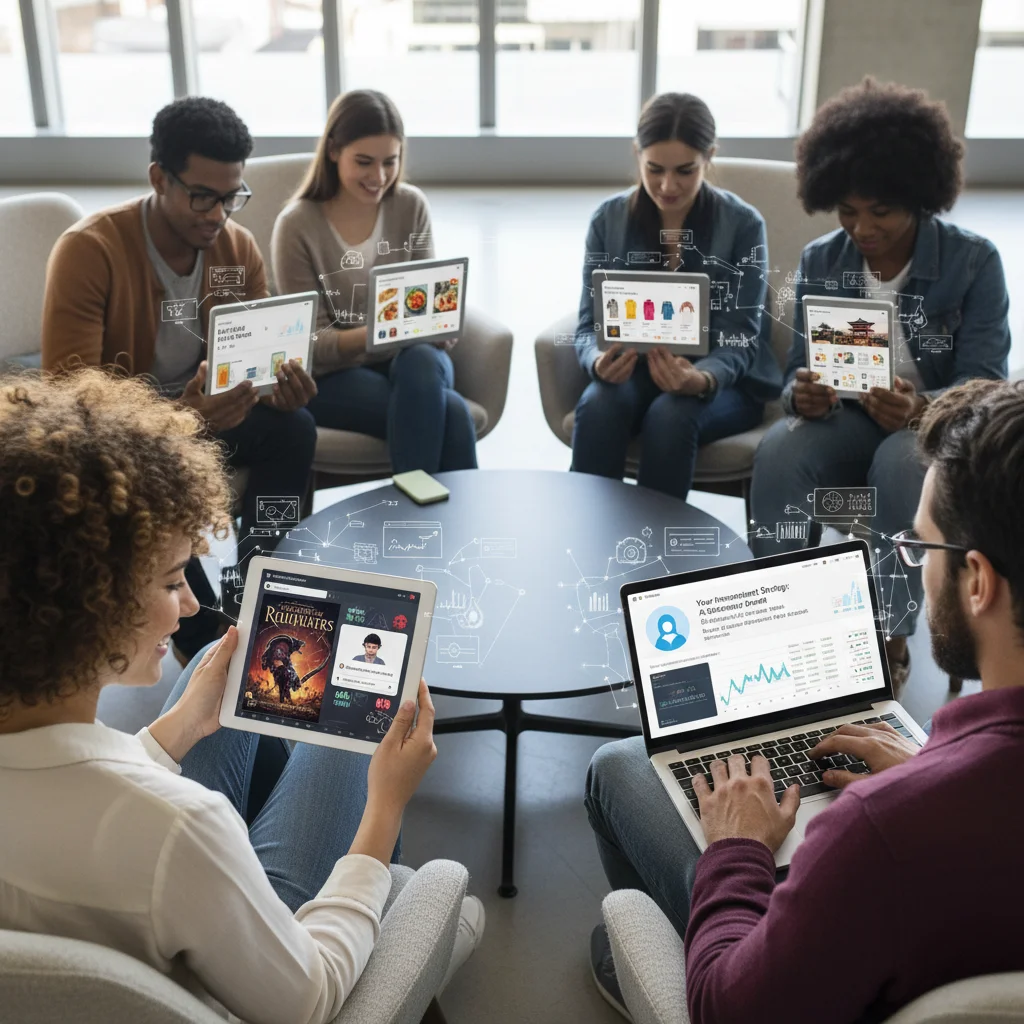
One of the most profound impacts of AI-powered content will be its ability to deliver hyper-personalized experiences at an unprecedented scale. Traditional content strategies often rely on segmenting audiences into broad categories. While effective to a degree, this approach pales in comparison to what AI can achieve. By mid-2026, AI algorithms will be capable of analyzing vast amounts of individual user data – including browsing history, consumption patterns, demographic information, and even emotional responses – to generate content that resonates deeply with each unique consumer. This isn’t just about recommending a YouTube video; it’s about dynamically altering narratives, adjusting visual styles, and tailoring messaging to fit an individual’s preferences in real-time. The implications for US creators are immense. Instead of creating one-size-fits-all content, creators will need to think about creating adaptable frameworks that AI can then customize. This shift moves beyond mere customization to a true one-to-one content experience, making AI content creation a powerhouse for engagement.
The Mechanics of Hyper-Personalization
At its core, hyper-personalization relies on sophisticated machine learning models that can identify patterns and predict user preferences. These models ingest data from various sources: social media interactions, website analytics, past purchases, and even biometric data where ethically permissible. For instance, an AI could learn that a particular user prefers long-form, analytical articles in the morning and short, visually-driven summaries in the evening. It could also discern their preferred tone of voice, level of technical detail, and even their preferred emotional register. This granular understanding allows AI to generate or modify content that feels almost prescient in its relevance. For a news publisher, this might mean delivering a uniquely curated news feed to every subscriber, prioritizing stories and perspectives that align with their interests and values. For an e-commerce brand, it could involve dynamic product descriptions and advertisements that speak directly to an individual’s needs and aspirations. The key to successful AI content creation in this context lies in feeding these algorithms rich, diverse, and clean data.
Anúncios
Challenges and Opportunities for US Creators
While the promise of hyper-personalization is exciting, it presents both challenges and opportunities. Creators will need to become adept at data interpretation and understanding the ethical implications of using personal data. The focus will shift from simply creating content to creating content *systems* that can be dynamically adapted by AI. This means developing modular content elements – paragraphs, images, video clips, sound bites – that an AI can assemble and reassemble. The opportunity lies in building incredibly loyal audiences. When content feels tailor-made, it fosters a deeper connection and significantly boosts engagement rates. Creators who master this aspect of AI content creation will see their audience retention soar, transforming casual viewers into dedicated followers. Furthermore, it opens new avenues for niche content that might not be economically viable to produce manually for small segments but becomes feasible when AI handles the personalization at scale. Embracing AI content creation for hyper-personalization is no longer optional; it’s a strategic imperative.
Shift 2: The Blurring Lines Between Human and AI Authorship – A New Creative Partnership
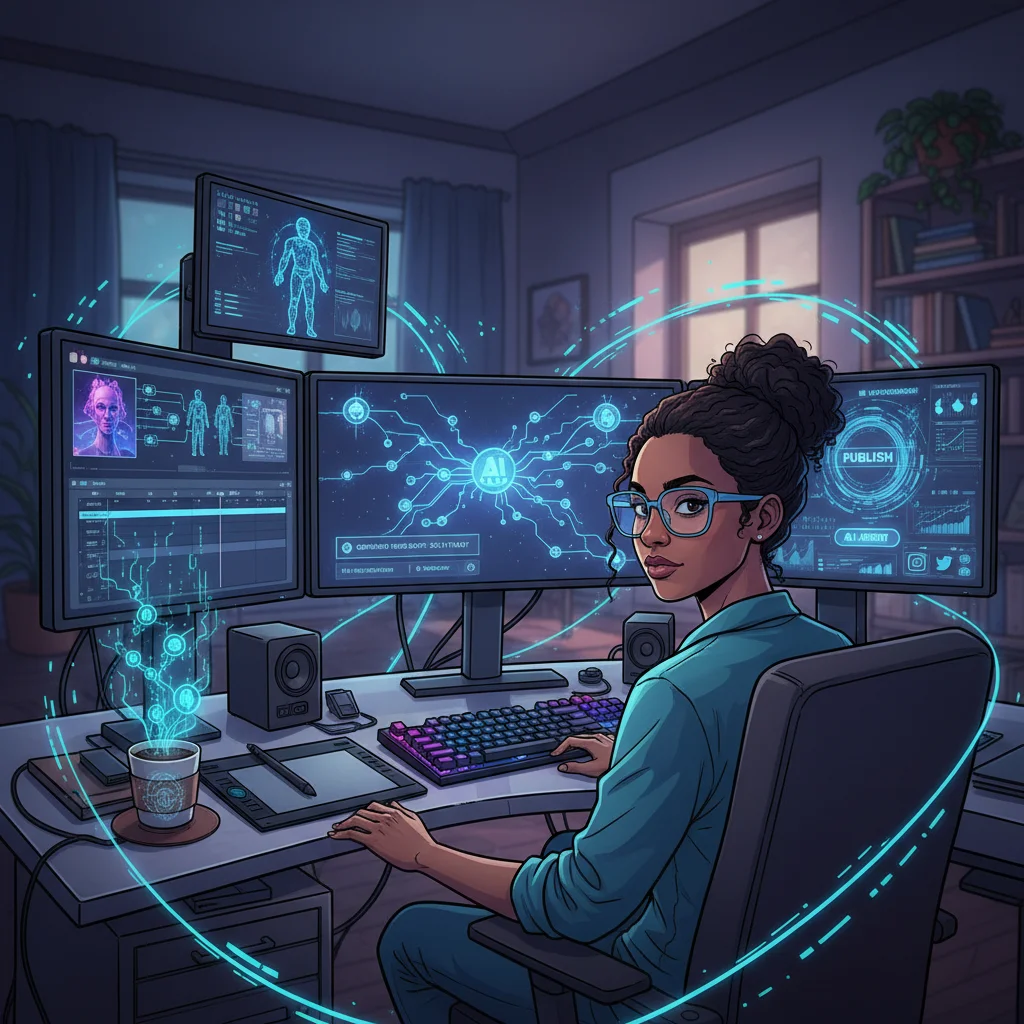
The second significant shift by mid-2026 will be the further blurring of lines between content generated by humans and that generated by AI. Gone are the days when AI was relegated to simple text generation or basic data analysis. Advanced generative AI models are now capable of producing highly sophisticated, nuanced, and even emotionally resonant content across various mediums – text, images, audio, and video. This doesn’t mean the end of human creativity; rather, it signals the emergence of a new creative partnership. US creators will increasingly collaborate with AI, leveraging its capabilities to augment their own creative processes, overcome creative blocks, and scale their output in ways previously unimaginable. This fundamental change in how content is produced will redefine what it means to be a creator in the digital age, making AI content creation an integral part of the creative workflow.
AI as a Creative Assistant and Collaborator
Imagine a novelist using AI to brainstorm plot twists, develop character backstories, or even generate entire draft chapters that they then refine and imbue with their unique voice. Consider a graphic designer using AI to generate hundreds of variations of a logo or illustration, allowing them to rapidly iterate and find the perfect aesthetic. Or a musician using AI to compose intricate melodies or arrangements that complement their own compositions. These scenarios are already becoming reality. By mid-2026, AI will be an indispensable creative assistant, handling the tedious, repetitive, or computationally intensive aspects of content creation, freeing human creators to focus on higher-level strategic thinking, conceptualization, and infusing their work with authentic emotion and unique perspective. The role of the creator will evolve from sole author to curator, editor, and director of AI-generated content, making AI content creation a powerful tool for efficiency and innovation.
Ethical and Attribution Considerations
This blurring of lines also brings significant ethical and attribution challenges. How do we define authorship when a substantial portion of content is AI-generated? What are the implications for copyright? US creators will need to grapple with these questions and contribute to developing new norms and standards. Transparency will be key. Audiences may increasingly demand to know when content has been AI-assisted, and creators who are upfront about their use of AI are likely to build greater trust. Furthermore, the ethical implications of AI bias in content generation – where AI might perpetuate or amplify existing societal biases based on its training data – will require careful consideration and proactive measures from creators to ensure fairness and inclusivity. Navigating these complexities while embracing the power of AI content creation will be crucial for maintaining credibility and ethical standing.
Shift 3: The Democratization of Advanced Content Production – Lowering Entry Barriers
The third critical shift, driven by AI-powered content, is the unprecedented democratization of advanced content production tools. Historically, high-quality content creation – especially in areas like video production, animation, or professional-grade writing – required significant technical skills, expensive software, and often, large teams. AI is rapidly dismantling these barriers, making sophisticated content creation accessible to a much wider array of individuals and small businesses. By mid-2026, even a single creator with limited technical expertise will be able to produce content that rivals that of large studios, thanks to intuitive AI tools that automate complex processes. This shift will unleash a new wave of creativity and entrepreneurship among US creators, fostering a more diverse and vibrant content landscape, with AI content creation at its heart.
AI Tools for Every Creator
Consider the power of AI tools that can automatically edit video footage, adding professional transitions, color grading, and even generating background music. Imagine AI-driven platforms that can turn a simple text prompt into a fully animated sequence or a realistic voiceover in multiple languages. These tools are already emerging and will become more powerful and user-friendly. For aspiring podcasters, AI can handle audio mastering and transcription. For independent filmmakers, AI can assist with visual effects and scene optimization. For bloggers, AI can generate outlines, research topics, and even draft entire articles, which they can then refine and inject with their unique perspective. This accessibility means that the barrier to entry for producing high-quality content is significantly lowered, allowing more voices to be heard and more stories to be told. The impact of AI content creation on the independent creator economy will be transformative.
The Rise of the ‘Super Creator’ and Niche Content
This democratization will empower what might be termed the ‘super creator’ – individuals or small teams who can leverage AI to achieve output and quality levels previously reserved for large organizations. This will lead to an explosion of niche content, as creators can now economically produce highly specific content for smaller, dedicated audiences. The need for generalist content will diminish as AI enables hyper-specialization. Furthermore, AI can help creators with the often-overlooked aspects of content creation, such as SEO optimization, social media scheduling, and performance analytics, ensuring their content not only gets made but also gets seen by the right people. The focus shifts from the arduous process of production to the strategic planning, creative direction, and community building aspects of content. AI content creation will be the engine driving this new era of empowered independent creators.
Navigating the Future: Strategies for US Creators
As these three shifts take hold, US creators must adopt proactive strategies to not just survive but thrive. The key is to view AI not as a replacement but as a powerful co-pilot. Here are some actionable strategies:
1. Embrace Continuous Learning and Adaptation
The AI landscape is evolving at a breakneck pace. Creators must commit to continuous learning, experimenting with new AI tools, and understanding the underlying principles of AI content creation. This involves staying updated on ethical guidelines, best practices for AI collaboration, and emerging technologies. Attending webinars, joining communities, and experimenting with beta versions of AI tools will be crucial. The creators who are most adaptable will be the ones who lead the charge in this new era.
2. Focus on Uniquely Human Attributes
While AI can mimic creativity, it still lacks genuine human experience, empathy, and a unique worldview. US creators should double down on developing and emphasizing these uniquely human attributes in their content. Authenticity, personal storytelling, emotional depth, and original critical thinking will become even more valuable differentiators. AI can generate facts; humans provide perspective and soul. This is where the true value of human-led AI content creation lies.
3. Master Prompt Engineering and AI Workflow Integration
As AI becomes more integral, the ability to effectively communicate with AI models – known as prompt engineering – will become a core skill. Creators will need to learn how to craft precise, detailed prompts that yield the desired AI output. Furthermore, integrating AI tools seamlessly into existing creative workflows will be essential for maximizing efficiency. This means understanding how AI can assist at every stage, from ideation and research to drafting, editing, and distribution. Becoming proficient in these areas will make AI content creation a natural extension of your creative process.
4. Prioritize Data Ethics and Transparency
With the rise of hyper-personalization, understanding and adhering to data privacy and ethical guidelines will be paramount. Creators must be transparent with their audience about how AI is used in their content, especially when personalization involves user data. Building trust through ethical AI practices will be a significant competitive advantage. This includes being aware of potential biases in AI models and actively working to mitigate them in the content produced.
5. Cultivate a Community-Centric Approach
Even with personalized content, the human desire for connection remains strong. AI can help identify and target niche communities, but it’s the human creator’s role to foster genuine engagement, facilitate discussions, and build loyal communities around their content. AI can provide the content, but the creator provides the community. This symbiotic relationship between AI content creation and human connection will define future success.
Conclusion: The Future is a Collaborative Canvas
By mid-2026, the world of content creation for US creators will be dramatically different, shaped by the three profound shifts of hyper-personalization at scale, the blurring of human and AI authorship, and the democratization of advanced production. The future of AI-powered content is not one where machines replace humans, but where humans and AI collaborate to achieve unprecedented levels of creativity, efficiency, and audience engagement. Those who embrace these shifts, educate themselves, and strategically integrate AI into their creative processes will not only survive but thrive, leading the charge in a new golden age of content creation. The canvas is vast, the tools are powerful, and the opportunity for US creators to redefine their craft through AI content creation is immense. It’s time to adapt, innovate, and create the future.