Enhancing Digital Accessibility: 5 Key Features for New Devices in 2026
Anúncios
Enhancing Digital Accessibility: 5 Key Features to Look for in New Devices in 2026
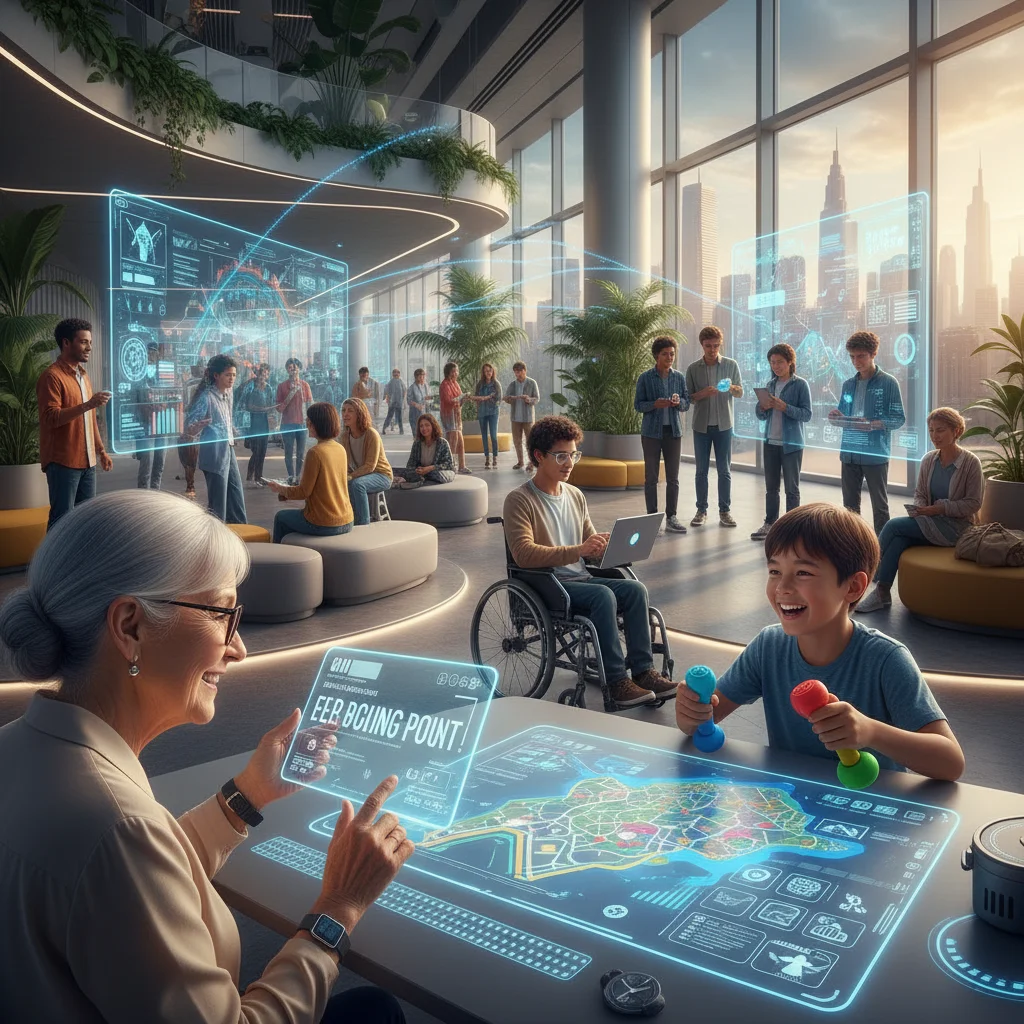
In an increasingly digitized world, access to technology is no longer a luxury but a fundamental right. Yet, for millions globally, digital barriers persist, preventing full participation. As we look towards 2026, the demand for truly inclusive technology is reaching a crescendo. This article delves into the critical digital accessibility features that will define the next generation of devices, ensuring that everyone, regardless of ability, can navigate, interact, and thrive in the digital landscape. Understanding these advancements is crucial for consumers, developers, and policymakers alike, as they pave the way for a more equitable future.
Anúncios
The pace of technological innovation is relentless, but true progress is measured not just by speed or power, but by inclusivity. For too long, accessibility has been an afterthought, a feature added on rather than built in. However, a significant shift is underway. Industry leaders and regulatory bodies are increasingly recognizing the immense value of universal design, pushing for devices that are inherently accessible from their inception. This proactive approach ensures that the benefits of technology are extended to everyone, fostering independence, productivity, and social connection for individuals with diverse needs. From enhanced sensory feedback to intuitive control mechanisms, the future of devices promises a paradigm shift in how we interact with our digital world.
The Imperative of Digital Accessibility in Modern Society
The digital realm has become an indispensable part of daily life, encompassing everything from communication and education to employment and entertainment. For individuals with disabilities, however, this realm can often feel like a series of insurmountable obstacles. Websites that lack proper alt-text for images, applications with inaccessible navigation, or hardware devices without adequate input options can effectively exclude a significant portion of the population. This exclusion not only limits opportunities but also perpetuates inequalities, creating a digital divide that mirrors real-world disparities. Addressing these challenges is not merely an act of compliance or charity; it is a strategic imperative that unlocks innovation, expands market reach, and fosters a more inclusive global society.
The concept of digital accessibility features extends beyond simple compliance with regulations like the Americans with Disabilities Act (ADA) or Section 508. It embodies a commitment to universal design principles, where products and services are conceived and designed to be usable by all people, to the greatest extent possible, without the need for adaptation or specialized design. This holistic approach benefits not only individuals with permanent disabilities but also those with temporary impairments (e.g., a broken arm) or situational limitations (e.g., using a device in bright sunlight or a noisy environment). By prioritizing accessibility, manufacturers create more robust, versatile, and user-friendly products for everyone.
Anúncios
Looking ahead to 2026, the integration of advanced digital accessibility features will be a hallmark of cutting-edge technology. This integration will move beyond basic screen readers and captions, delving into sophisticated AI-driven solutions, haptic feedback systems, and highly customizable user interfaces. The goal is to create an ecosystem where devices intuitively adapt to the user’s needs, rather than requiring the user to adapt to the device. This shift represents a profound evolution in human-computer interaction, promising a future where technology truly empowers all individuals.
1. Advanced AI-Powered Voice and Conversational Interfaces
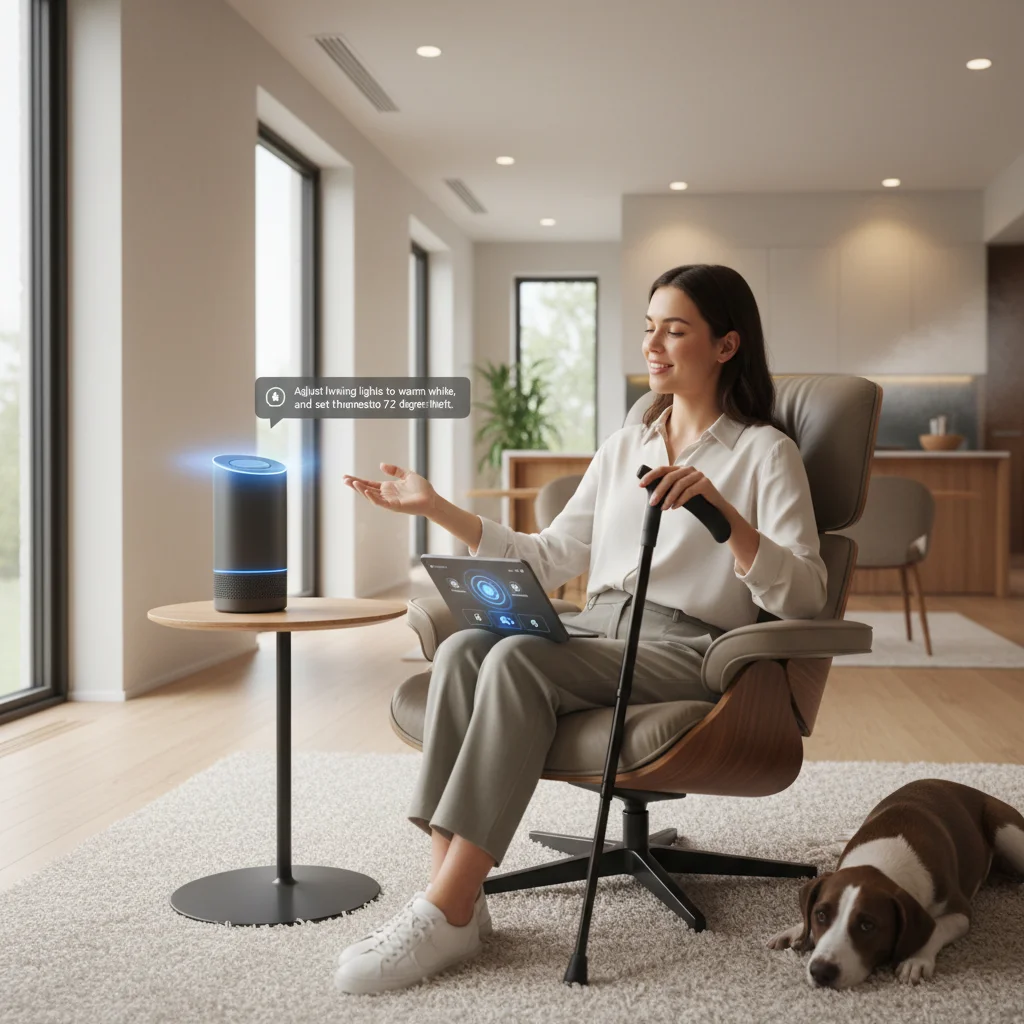
One of the most transformative digital accessibility features we can expect by 2026 is the widespread adoption and sophistication of AI-powered voice and conversational interfaces. While voice assistants like Siri, Alexa, and Google Assistant are already commonplace, their capabilities are set to expand dramatically. Future devices will feature more natural language processing (NLP), allowing for more nuanced conversations and better understanding of diverse accents, speech patterns, and even emotional cues. This means individuals with motor impairments, visual impairments, or cognitive disabilities will be able to interact with their devices with unprecedented ease and efficiency, performing complex tasks through simple verbal commands.
Imagine a scenario where a user can dictate an entire email, schedule complex meetings, or navigate intricate applications purely through voice, with the AI anticipating needs and offering intelligent suggestions. This goes beyond basic command recognition; it involves context-aware understanding and proactive assistance. Furthermore, these interfaces will likely integrate with other assistive technologies seamlessly. For instance, a voice command could trigger a haptic feedback sequence, or a visual prompt could be accompanied by an auditory description, creating a truly multimodal interaction experience. The advancements in AI will make these interactions not just functional, but genuinely intuitive and empowering, reducing cognitive load and increasing independence for a wide array of users.
The development will also focus on personalized voice profiles, allowing devices to learn and adapt to individual speech characteristics over time, further enhancing accuracy and reducing frustration. This level of personalization is a crucial aspect of next-generation digital accessibility features, moving away from a one-size-fits-all approach to truly individualized user experiences. The ability to control an entire digital ecosystem – from smart home devices to complex software – using only voice will be a game-changer for many.
2. Hyper-Customizable Sensory Feedback Systems
The second key area of innovation in digital accessibility features will be hyper-customizable sensory feedback systems. This includes advanced haptics, enhanced auditory cues, and dynamic visual displays that can be tailored precisely to individual sensory preferences and needs. For those with visual impairments, sophisticated haptic feedback could translate on-screen elements into tactile sensations, allowing for navigation and interaction without relying solely on audio. Imagine feeling the texture of an icon or the direction of a scroll through vibrations in your device.
Auditory feedback will also evolve beyond simple beeps and chimes. Devices will offer a rich palette of customizable sounds, spoken alerts with adjustable voices and speeds, and even spatial audio cues that help users orient themselves in digital environments. For individuals with hearing impairments, visual feedback will become even more critical. This means not just captions, but dynamic visualizers for sound, real-time sign language avatars, and customizable notification light patterns that are easily distinguishable. The goal is to provide redundant and adaptable feedback channels, ensuring that information is conveyed effectively regardless of a user’s sensory profile.
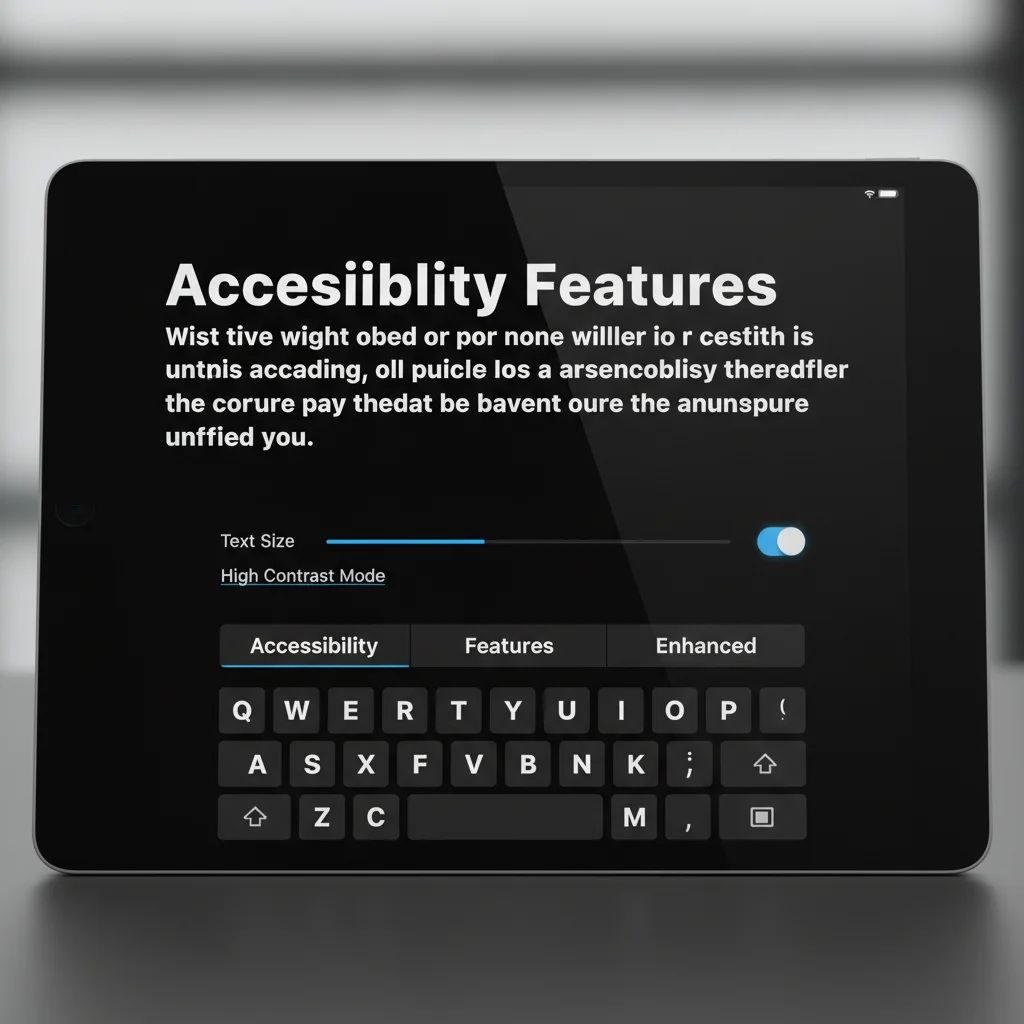
The concept of hyper-customization also extends to visual elements. Devices will offer granular control over contrast ratios, text sizes, font styles, and color palettes, moving beyond predefined themes to allow users to create their ideal visual environment. This level of control is essential for individuals with low vision, color blindness, or photosensitivity, enabling them to reduce eye strain and improve readability. These granular controls, combined with intelligent ambient light sensors, will allow devices to dynamically adjust their display settings in real-time to optimize visibility and comfort, making them truly adaptive and inclusive.
3. Integrated Assistive Technology with Predictive Intelligence
By 2026, we anticipate a seamless integration of assistive technologies directly into device operating systems, powered by predictive intelligence. This means that features like screen readers, magnifiers, and alternative input methods will not be standalone applications but core components of the device’s functionality, learning and adapting to user behavior over time. Predictive intelligence will play a crucial role, anticipating user needs and proactively offering assistance. For example, if a user frequently struggles with a particular button, the device might automatically enlarge it or offer an alternative voice command.
This goes beyond simple automation. The system will learn from user interactions, preferences, and even biometric data (with appropriate privacy safeguards) to create a truly personalized and adaptive experience. For individuals with cognitive disabilities, predictive text and smart suggestions could significantly reduce the effort required for communication and task completion. For those with motor challenges, predictive input could complete words or phrases with minimal keystrokes or gestures, vastly improving typing speed and accuracy. This level of integration ensures that assistive features are always available, always relevant, and always improving.
Furthermore, the integration will extend to cross-device compatibility. A user’s accessibility preferences will seamlessly transfer across their smartphone, tablet, laptop, and smart home devices, creating a unified and consistent accessible ecosystem. This eliminates the frustration of having to reconfigure settings for each new device or application, making the entire digital experience more fluid and less burdensome. These integrated, intelligent digital accessibility features represent a significant leap towards truly inclusive technology, embedding support directly into the user’s digital life.
4. Enhanced Haptic and Tactile Feedback for Navigation and Interaction
Beyond basic vibrations, the next generation of devices will incorporate sophisticated haptic and tactile feedback systems that provide rich, nuanced information. This is particularly vital for individuals with visual impairments or those who need discreet, non-auditory cues. Haptic feedback will move beyond simple on/off states to convey textures, shapes, and even spatial relationships through varying patterns, intensities, and frequencies of vibration. Imagine a smartphone that can ‘tap’ you in the direction of a navigation turn, or a tablet that allows you to ‘feel’ the boundaries of an interactive element.
The advancements in micro-actuators and materials science will enable devices to simulate a wider range of tactile sensations, making digital interfaces feel more tangible and intuitive. This could include simulating the click of a physical button, the smooth glide of a slider, or the rough texture of a specific graphic. For users who rely on touch, this level of detail will significantly enhance their ability to navigate complex interfaces, providing a non-visual means of understanding and interacting with digital content. This also extends to virtual reality and augmented reality environments, where haptic gloves or suits could provide realistic tactile feedback, opening up immersive experiences for individuals with diverse sensory needs.
These advanced haptic systems will also be highly customizable, allowing users to adjust the intensity, duration, and type of feedback to suit their individual sensitivities and preferences. This level of personalization is crucial for effective digital accessibility features, ensuring that the feedback is informative without being overwhelming. The integration of these sophisticated haptic and tactile feedback mechanisms promises to make digital interactions more intuitive, informative, and engaging for everyone, especially those who navigate the world primarily through touch.
5. Biometric and Contextual Adaptation for Personalized Experiences
The fifth crucial development in digital accessibility features by 2026 will be the integration of biometric and contextual adaptation. Devices will become smarter at understanding the user’s current state and environment, dynamically adjusting settings to optimize accessibility. This could involve using eye-tracking technology to detect fatigue and suggest screen breaks, or monitoring heart rate variability to identify stress and offer calming audio cues or simplified interfaces.
Contextual adaptation means devices will learn from the user’s environment. For example, if a device detects a noisy environment, it might automatically increase notification volumes, switch to visual alerts, or activate noise cancellation features. If it senses low light, it could adjust screen brightness, contrast, and even change the color temperature to reduce eye strain. For individuals with specific medical conditions, devices could integrate with wearable sensors to monitor vital signs and trigger alerts or accessibility adjustments as needed, such as increasing text size during a blood sugar dip for someone with diabetes.
Privacy and data security will be paramount in the development and implementation of these biometric and contextual digital accessibility features. Users will have granular control over what data is collected, how it’s used, and with whom it’s shared. The goal is to leverage these powerful technologies to create a truly adaptive and supportive digital environment, where the device proactively assists the user without compromising their privacy or autonomy. This level of intelligent adaptation moves beyond static settings, creating a dynamic and responsive system that truly serves the diverse needs of its users.