
In an increasingly connected world, smart home devices have become ubiquitous in US households, promising convenience, efficiency, and enhanced living. From smart thermostats that learn your preferences to security cameras that offer peace of mind, the Internet of Things (IoT) has profoundly transformed our daily lives. However, this technological advancement comes with its own set of challenges, particularly concerning IoT Security Vulnerabilities. As we approach mid-2026, the imperative to understand and address these weaknesses has never been more critical. Unsecured IoT devices are not just minor inconveniences; they represent potential gateways for cybercriminals to access personal data, compromise home networks, and even launch larger-scale attacks. This comprehensive guide delves into the most common IoT Security Vulnerabilities affecting US households and provides actionable strategies to patch these weaknesses, ensuring a safer, more secure smart home environment.
Anúncios
The rapid adoption of IoT devices has outpaced the development and implementation of robust security protocols. Many manufacturers prioritize speed to market and functionality over comprehensive security, leaving consumers vulnerable. The sheer diversity of IoT devices, from different manufacturers and with varying levels of software support, further complicates the security landscape. This article aims to demystify these complexities, offering a clear roadmap for US households to bolster their IoT security posture. By understanding the common threats and implementing the recommended patches, we can collectively work towards a more secure connected future.
Understanding the Landscape of IoT Security Vulnerabilities
Before we dive into specific vulnerabilities and their remedies, it’s essential to grasp why IoT devices are particularly susceptible to cyber threats. Unlike traditional computing devices that often receive regular security updates and have built-in firewalls, many IoT devices are designed with minimal processing power and memory, making it challenging to implement sophisticated security features. Furthermore, the ‘set it and forget it’ mentality often adopted by users means that devices might go years without crucial updates or security checks. This combination of design limitations and user behavior creates a fertile ground for IoT Security Vulnerabilities to thrive.
The interconnected nature of smart homes means that a vulnerability in one device can potentially compromise the entire network. A smart light bulb with weak authentication could, theoretically, become a backdoor for an attacker to gain access to your home network, leading to more critical devices like security cameras or even financial data stored on other connected devices. The potential impact ranges from privacy breaches and data theft to physical security risks, making proactive security measures non-negotiable.
Anúncios
The Urgency for Patching by Mid-2026
The timeline of mid-2026 is not arbitrary. Experts predict a significant increase in sophisticated IoT-based cyberattacks as more devices come online and attackers refine their methods. Regulatory bodies and industry standards are also evolving, and by 2026, we expect clearer guidelines and potentially stricter compliance requirements for IoT device security. Proactive patching now will not only protect individual households but also contribute to a more resilient national cyber infrastructure. This collective effort is crucial for mitigating the broader societal risks associated with widespread IoT Security Vulnerabilities.
7 Common IoT Security Vulnerabilities and How to Patch Them
Let’s explore the most prevalent IoT Security Vulnerabilities found in US households and outline practical steps to mitigate them.
1. Weak, Guessable, or Hardcoded Passwords
Many IoT devices ship with default, easily guessable, or even hardcoded passwords (e.g., ‘admin’, ‘12345’). Users often fail to change these, leaving a wide-open door for attackers. Attackers can use automated scripts to try common default credentials, quickly gaining unauthorized access.
Patching Strategy:
- Change Default Passwords Immediately: Upon setting up any new IoT device, change the default password to a strong, unique one. Use a combination of uppercase and lowercase letters, numbers, and symbols.
- Use Unique Passwords: Avoid reusing passwords across multiple devices. A password manager can help you generate and store complex, unique passwords securely.
- Check for Hardcoded Passwords: Research your device model online to see if it’s known to have hardcoded passwords that cannot be changed. If so, consider replacing the device or isolating it on a separate network.
2. Insecure Network Services
Some IoT devices expose unnecessary network services (e.g., open ports, unencrypted communication protocols) that can be exploited by attackers. These services might be used for remote management or diagnostics but often lack proper authentication or encryption, making them vulnerable.
Patching Strategy:
- Disable Unnecessary Services: Consult your device’s manual or manufacturer’s website to identify and disable any network services that are not essential for its operation.
- Use a Firewall: Configure your router’s firewall to block incoming connections to IoT devices from the internet, unless absolutely necessary for specific functionalities (e.g., remote access to a security camera). If remote access is needed, ensure it’s through a secure, encrypted channel (e.g., VPN).
- Network Segmentation: Create a separate Wi-Fi network (a ‘guest’ network or a dedicated IoT network) for your smart devices. This isolates them from your main network where sensitive data might reside, limiting the damage if an IoT device is compromised.
3. Lack of Secure Update Mechanism
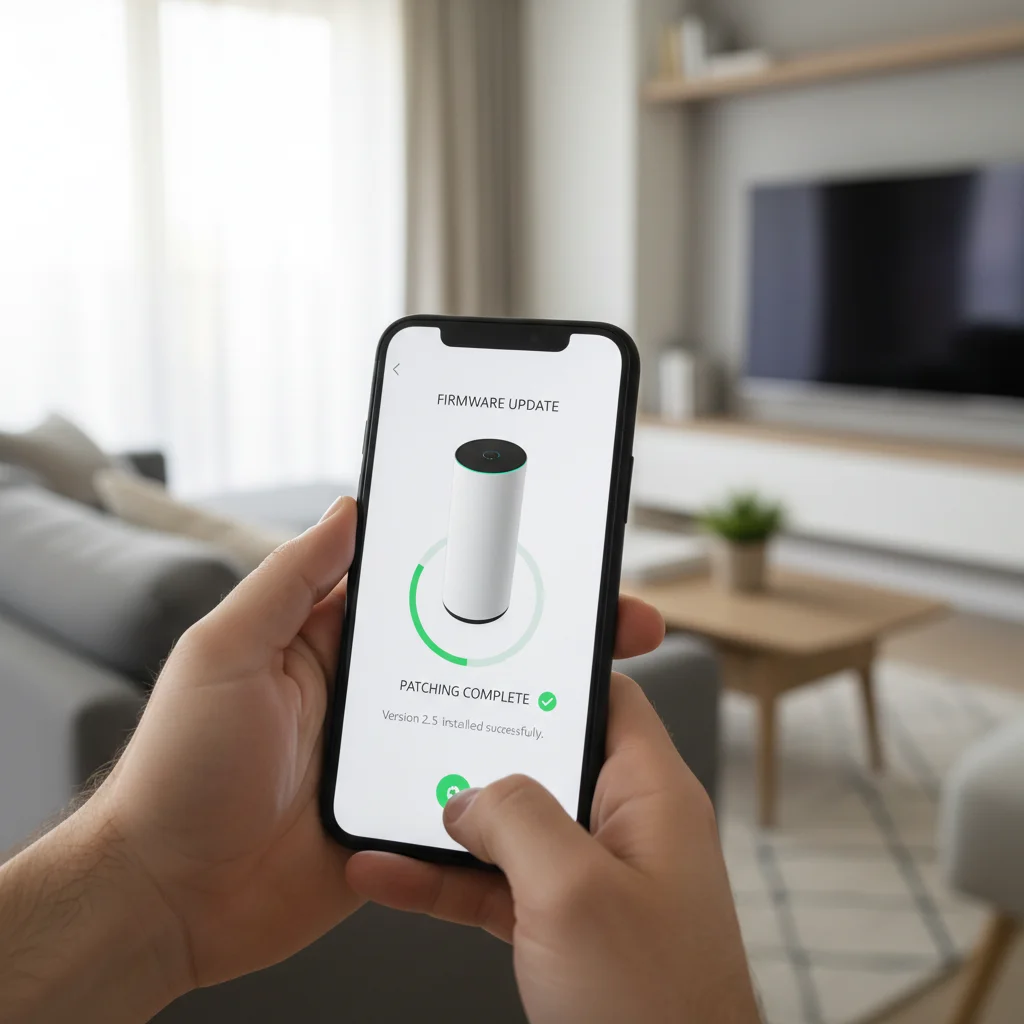
One of the most significant IoT Security Vulnerabilities is the absence of a secure and reliable update mechanism. Many devices lack the ability to receive over-the-air (OTA) updates, or their update processes are unencrypted, allowing attackers to intercept and inject malicious firmware.
Patching Strategy:
- Regularly Check for Firmware Updates: Periodically visit the manufacturer’s website for your IoT devices to check for available firmware updates. Download and install them manually if an OTA option isn’t available.
- Enable Automatic Updates: If your device supports automatic firmware updates, ensure this feature is enabled.
- Verify Update Authenticity: When performing manual updates, always download firmware directly from the official manufacturer’s website. Be wary of third-party sites offering updates, as they might contain malware.

The complexity of managing updates across a diverse range of IoT devices can be daunting, but it is a critical step in addressing IoT Security Vulnerabilities. Manufacturers have a responsibility to provide robust update mechanisms, and consumers have a responsibility to utilize them.
4. Insecure Data Transfer and Storage
Many IoT devices collect and transmit sensitive data (e.g., voice commands, video feeds, location data) without adequate encryption. This data can be intercepted during transmission or accessed if stored insecurely on the device or in the cloud.
Patching Strategy:
- Prioritize Encrypted Devices: When purchasing new IoT devices, look for those that explicitly state they use strong encryption for data in transit (e.g., HTTPS, TLS) and at rest.
- Review Privacy Policies: Understand how your device manufacturer collects, uses, and stores your data. Opt for devices from manufacturers with transparent and strong privacy policies.
- Limit Data Collection: Configure your devices to collect only the essential data needed for their functionality. Disable features that collect unnecessary personal information.
5. Lack of Device Management and Decommissioning Practices
When an IoT device reaches its end-of-life or is no longer used, it often remains connected to the network, potentially becoming a zombie device or a forgotten entry point for attackers. Proper decommissioning is often overlooked, creating persistent IoT Security Vulnerabilities.
Patching Strategy:
- Securely Wipe Devices: Before disposing of or selling an IoT device, perform a factory reset to erase all personal data and restore default settings. If possible, physically destroy storage components for highly sensitive devices.
- Remove from Network: Disconnect unused devices from your Wi-Fi network and remove them from any associated cloud accounts.
- Regular Inventory: Maintain a list of all IoT devices in your home. Periodically review this list to identify and remove any devices that are no longer in use or supported by the manufacturer.
6. Insufficient Privacy Protections
Beyond data encryption, many IoT devices raise privacy concerns due to their data collection practices. Microphones, cameras, and location trackers can inadvertently (or intentionally) collect more data than users realize, leading to potential misuse or surveillance if compromised.
Patching Strategy:
- Understand Device Capabilities: Before purchasing, research what data a device collects and how it’s used.
- Adjust Privacy Settings: Actively configure privacy settings on all your IoT devices and associated apps. Limit microphone access, camera access, and location tracking to only what is absolutely necessary.
- Physical Controls: Use physical covers for cameras when not in use and consider unplugging smart speakers when privacy is paramount.
7. Poor Physical Security
While much of IoT security focuses on digital threats, physical access to devices can also lead to compromise. An attacker with physical access might be able to extract sensitive information, modify firmware, or reset the device to factory defaults, bypassing digital security measures.
Patching Strategy:
- Secure Physical Access: Place IoT devices in secure locations where unauthorized individuals cannot easily access them. This is especially true for devices like smart hubs or network gateways.
- Tamper Detection: Some advanced IoT devices have tamper detection features. Enable these if available.
- Restrict Guest Access: If you have guests, ensure they only have access to a guest Wi-Fi network, limiting their ability to interact with or compromise your main IoT devices.
Beyond the 7: Advanced Strategies for Robust IoT Security
While addressing the seven common IoT Security Vulnerabilities is a crucial first step, forward-thinking households will adopt more advanced strategies to create a truly resilient smart home environment by mid-2026.
Implementing Network Segmentation
As briefly mentioned, network segmentation is a powerful security practice. It involves dividing your home network into multiple isolated segments. For instance, you could have one network for your primary computers and smartphones, another for your IoT devices, and a third for guest access. This way, if one IoT device is compromised, the attacker’s access is limited to that segment, preventing them from easily moving to more sensitive parts of your network. Many modern routers offer guest network functionality, which can serve as a basic form of IoT segmentation. For more advanced users, setting up VLANs (Virtual Local Area Networks) can provide even finer control.
Utilizing a VPN for Remote Access
If you require remote access to your IoT devices (e.g., checking your security camera feed while away from home), always do so through a Virtual Private Network (VPN). A VPN encrypts your internet traffic, creating a secure tunnel between your device and your home network, making it much harder for attackers to intercept your data or gain unauthorized access. Avoid directly exposing your IoT devices to the internet via port forwarding, as this significantly increases their vulnerability.
Regular Security Audits and Monitoring
Just like you’d get your car serviced, your smart home network benefits from regular security check-ups. This involves:
- Router Security Audit: Periodically log into your router’s administration panel to review its settings. Ensure strong passwords are in place, firmware is updated, and unnecessary services are disabled.
- IoT Device Inventory: Keep an up-to-date list of all your connected devices. This helps you track what needs updates and what might be decommissioned.
- Network Monitoring: Consider using network monitoring tools (some advanced routers have this built-in) to detect unusual traffic patterns or unauthorized access attempts. While this might be too technical for some, awareness of such capabilities is important.
Educating All Household Members
A chain is only as strong as its weakest link. In a smart home, that link could be any family member who inadvertently compromises security. Educate everyone in the household about the importance of strong passwords, recognizing phishing attempts, and understanding the privacy implications of smart devices. Ensure they know how to identify suspicious emails or messages that might try to trick them into revealing credentials or installing malicious software.
Staying Informed About New Threats
The cybersecurity landscape is constantly evolving. New IoT Security Vulnerabilities are discovered regularly, and new attack methods emerge. Stay informed by following reputable cybersecurity news sources, subscribing to security alerts, and checking manufacturer websites for security advisories related to your devices. Being proactive in learning about emerging threats can help you implement preventative measures before you become a target.
The Role of Manufacturers and Regulators
While individual users play a critical role in securing their smart homes, manufacturers and regulatory bodies also bear significant responsibility. By mid-2026, we anticipate:
- Stronger Industry Standards: The development and widespread adoption of clearer security standards for IoT device design and manufacturing.
- Mandatory Security-by-Design: A shift towards integrating security from the ground up in device development, rather than as an afterthought.
- Longer-Term Support: Manufacturers offering extended security update support for their devices, similar to how smartphones receive OS updates for several years.
- Clearer Consumer Information: More transparent labeling and information for consumers regarding a device’s security features, update policies, and data handling practices.
These developments will make it easier for consumers to choose secure devices and maintain their security posture, collectively reducing the prevalence of IoT Security Vulnerabilities in US households.
Conclusion: A Secure Smart Home by Mid-2026
The vision of a fully connected, convenient smart home is exciting, but it must be built on a foundation of robust security. Addressing IoT Security Vulnerabilities is not a one-time task but an ongoing commitment. By understanding the common weaknesses – from weak passwords to insecure data handling – and proactively implementing the patching strategies outlined in this guide, US households can significantly enhance their digital defenses.
The target of mid-2026 serves as a crucial deadline for collective action. It’s a call for individuals to take ownership of their smart home security, for manufacturers to prioritize security-by-design, and for regulators to establish clear, enforceable standards. By working together, we can ensure that our connected homes remain spaces of convenience and innovation, free from the looming threats of cyber intrusion. Start today: review your devices, change those passwords, and embrace a proactive approach to your IoT security. Your digital peace of mind depends on it.