Ransomware Defense Strategies: What 40% of US Small Businesses Are Doing Differently in 2026

Anúncios
Ransomware Defense Strategies: What 40% of US Small Businesses Are Doing Differently in 2026
The digital landscape is constantly evolving, and with it, the threats that lurk within. For small businesses, the stakes couldn’t be higher. Ransomware, in particular, has emerged as a pervasive and devastating threat, capable of crippling operations, eroding customer trust, and even forcing businesses to close their doors. While it might seem like a problem reserved for large corporations, the reality is that small businesses are increasingly targeted due to their perceived vulnerabilities and often limited resources. The FBI’s Internet Crime Report consistently highlights the escalating financial and operational impact of ransomware on businesses of all sizes, with small and medium-sized enterprises (SMEs) often bearing the brunt.
Anúncios
By 2026, a significant shift is anticipated in how US small businesses approach their cybersecurity posture, particularly concerning ransomware defense. A projected 40% of these businesses are adopting advanced, proactive strategies that go beyond traditional reactive measures. This article delves into these transformative ransomware defense strategies, exploring what these forward-thinking businesses are doing differently to safeguard their digital assets and ensure business continuity in an increasingly hostile cyber environment. Understanding these trends is not just about staying compliant; it’s about survival and thriving in the modern digital economy.
Understanding the Evolving Ransomware Threat Landscape
Before we explore the cutting-edge ransomware defense strategies, it’s crucial to understand why the threat continues to evolve. Ransomware is no longer just about encrypting files and demanding payment. Modern ransomware attacks are sophisticated, multi-faceted operations that often involve data exfiltration (stealing data before encryption), double extortion (threatening to publish stolen data if the ransom isn’t paid), and even triple extortion (adding DDoS attacks or contacting customers/partners). Threat actors are becoming more organized, leveraging Ransomware-as-a-Service (RaaS) models, and employing advanced social engineering tactics to bypass initial defenses. This makes a reactive approach, such as simply having backups, insufficient.
Small businesses are particularly attractive targets for these cybercriminals. They often possess valuable data, such as customer information, financial records, and intellectual property, but may lack the dedicated IT security teams and robust budgets of larger enterprises. This creates a ‘sweet spot’ for attackers, who can achieve significant returns with relatively less effort. Furthermore, the interconnectedness of supply chains means that a successful attack on a small business can have ripple effects, impacting larger partners. Therefore, effective small business ransomware defense is not just about protecting individual entities, but also about strengthening the overall digital ecosystem.
Anúncios
The cost of a ransomware attack extends far beyond the ransom payment itself. It includes significant downtime, data recovery expenses, reputational damage, legal fees, and potential regulatory fines. For a small business, these costs can be catastrophic, often leading to insolvency. This stark reality is driving the proactive shift we see among the 40% of businesses leading the charge in adopting advanced ransomware defense strategies.
Proactive Posture: Shifting from Reaction to Prevention
The most significant differentiator for the 40% of small businesses leading the charge in ransomware defense by 2026 is their fundamental shift from a reactive ‘clean-up’ mentality to a proactive ‘prevention-first’ posture. This involves a comprehensive re-evaluation of their IT infrastructure, security policies, and employee training programs. It’s about building resilience from the ground up, rather than simply patching holes as they appear.
One of the cornerstones of this proactive approach is a deep understanding of their attack surface. This means identifying all potential entry points for attackers, including unpatched software, misconfigured systems, weak credentials, and vulnerable network devices. Regular vulnerability assessments and penetration testing, once considered luxuries for small businesses, are becoming standard practice. These assessments help businesses identify and remediate weaknesses before attackers can exploit them.
Furthermore, these businesses are embracing a ‘zero-trust‘ security model. Traditionally, security models operated on the assumption that everything inside the network perimeter could be trusted. Zero-trust, however, dictates that no user or device, whether inside or outside the network, should be trusted by default. Every access request is authenticated, authorized, and continuously validated. This significantly reduces the lateral movement of attackers within a network, even if they manage to breach an initial defense. Implementing zero-trust principles is a complex undertaking, but the long-term benefits in ransomware defense are substantial.
The proactive posture also extends to continuous monitoring and threat intelligence. Instead of waiting for an incident to occur, these businesses are actively monitoring their networks for suspicious activity, using advanced tools that can detect early indicators of a ransomware attack. They are also leveraging threat intelligence feeds to stay informed about the latest ransomware variants, attack techniques, and common vulnerabilities, allowing them to adjust their defenses accordingly. This continuous vigilance is a hallmark of effective small business ransomware defense.
Embracing Advanced Endpoint Detection and Response (EDR)
Endpoint Detection and Response (EDR) solutions are no longer just for large enterprises. By 2026, a significant portion of small businesses are integrating EDR into their ransomware defense strategies. Unlike traditional antivirus software that primarily relies on signature-based detection, EDR offers a more sophisticated, behavioral approach to security.
EDR solutions continuously monitor endpoints (laptops, desktops, servers) for malicious activities, even those that haven’t been seen before. They use machine learning and artificial intelligence to analyze behaviors, identify anomalies, and detect suspicious patterns that could indicate a ransomware attack in progress. If a threat is detected, EDR can automatically isolate the affected endpoint, terminate malicious processes, and roll back changes, thereby minimizing the impact of an attack. This is a crucial layer of defense against fileless malware and zero-day exploits that often bypass traditional security tools.
For small businesses, the appeal of EDR lies in its ability to provide advanced protection without requiring a large, dedicated security team. Many EDR solutions are offered as managed services, where a third-party provider handles the monitoring, analysis, and response, making sophisticated cybersecurity accessible and affordable for SMEs. This allows small businesses to benefit from enterprise-grade security expertise without the overhead. The adoption of EDR represents a significant leap forward in small business ransomware defense, moving beyond simple prevention to active detection and rapid response.
Robust Backup and Recovery with Immutability
While prevention is paramount, no defense is foolproof. Therefore, a robust backup and recovery strategy remains a critical component of any ransomware defense plan. However, the 40% of small businesses leading the way are not just performing backups; they are implementing highly resilient, immutable backup solutions.
Traditional backups can be vulnerable to ransomware. If a network is compromised, ransomware can encrypt not only primary data but also accessible backup files, rendering them useless. Immutable backups, on the other hand, are designed to be unchangeable and undeletable for a specified period. Once data is written to an immutable backup, it cannot be altered or encrypted by any means, including ransomware. This provides an unassailable last line of defense, ensuring that even if an attack is successful, clean data can be restored.
These businesses are also adopting the 3-2-1 backup rule (at least three copies of data, stored on two different types of media, with one copy offsite) and often extending it to 3-2-1-1-0 (adding an immutable copy and zero errors). Offsite backups are crucial, often leveraging cloud storage with strong encryption and access controls. Furthermore, regular testing of backup and recovery processes is no longer an afterthought; it’s a scheduled, critical activity to ensure that in the event of an attack, recovery is swift and seamless. This focus on verifiable, immutable backups is a key differentiator in advanced small business ransomware defense.
Developing and Testing a Comprehensive Incident Response Plan
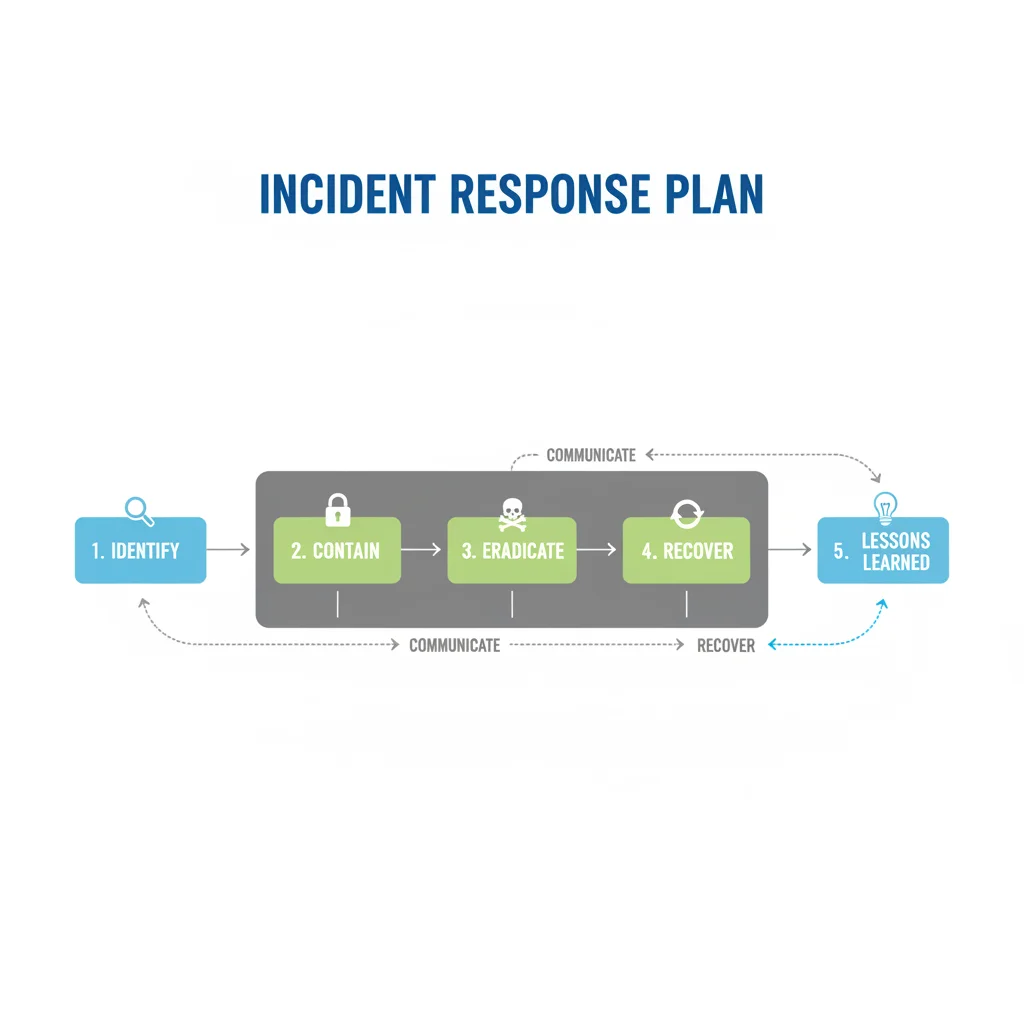
Knowing what to do when an attack occurs is just as important as preventing it. The 40% of small businesses with advanced ransomware defense understand this implicitly and have developed detailed, tested incident response plans. An incident response plan isn’t merely a document; it’s a living guide that outlines the steps to be taken from the moment a potential ransomware incident is detected through to full recovery and post-incident analysis.
These plans typically include:
- Identification: Clear procedures for detecting and confirming a ransomware attack.
- Containment: Steps to isolate affected systems and prevent further spread of the ransomware. This might involve disconnecting from the network, shutting down specific servers, or using EDR capabilities.
- Eradication: Removing the ransomware, identifying the root cause, and patching vulnerabilities.
- Recovery: Restoring data from clean backups and bringing systems back online in a secure manner.
- Post-Incident Analysis: A review of the incident to identify lessons learned and improve future ransomware defense strategies.
- Communication Protocols: Clear guidelines on who to inform (employees, customers, regulators, law enforcement) and how.
Crucially, these plans are not just created and filed away. They are regularly practiced through tabletop exercises and simulations. These drills help identify weaknesses in the plan, train employees on their roles, and ensure that everyone knows how to react under pressure. This preparedness significantly reduces the downtime and financial impact of a successful attack. A well-rehearsed incident response plan is an indispensable element of effective small business ransomware defense.
Enhanced Employee Training and Awareness Programs
Human error remains one of the weakest links in cybersecurity. Phishing emails, malicious links, and social engineering tactics are often the initial vectors for ransomware attacks. The businesses excelling in ransomware defense recognize this and are investing heavily in enhanced employee training and awareness programs that go beyond annual compliance videos.
These programs are continuous, interactive, and tailored to the specific threats faced by the organization. They include:
- Regular Phishing Simulations: Sending realistic fake phishing emails to employees to test their vigilance and identify those who need additional training.
- Interactive Workshops: Engaging employees with real-world examples and hands-on exercises to help them recognize and report suspicious activity.
- Micro-learning Modules: Short, digestible training sessions on specific topics, delivered frequently to reinforce key security principles.
- Clear Reporting Mechanisms: Ensuring employees know exactly how and to whom to report suspicious emails or activities without fear of reprisal.
- Focus on ‘Why’: Explaining the consequences of security lapses, both for the individual and the business, to foster a sense of shared responsibility.
By empowering employees to be the first line of defense, these businesses significantly reduce the likelihood of a successful ransomware breach. A well-informed and vigilant workforce is an invaluable asset in any small business ransomware defense strategy. This cultural shift towards security awareness is fundamental to long-term resilience.

Leveraging Managed Security Service Providers (MSSPs)
For many small businesses, building and maintaining an in-house cybersecurity team with the expertise required to combat modern ransomware threats is simply not feasible. This is where Managed Security Service Providers (MSSPs) come into play. By 2026, a significant portion of the 40% of businesses are outsourcing a substantial part of their ransomware defense to specialized MSSPs.
MSSPs offer a range of services that can dramatically enhance a small business’s security posture, including:
- 24/7 Monitoring and Threat Detection: Providing constant vigilance that an internal team might struggle to maintain.
- Incident Response: Having expert teams on standby to respond swiftly to any detected threats, including ransomware.
- Vulnerability Management: Regularly scanning for and addressing vulnerabilities in systems and applications.
- Security Information and Event Management (SIEM): Collecting and analyzing security logs from various sources to identify potential threats.
- Security Awareness Training: Developing and delivering comprehensive training programs for employees.
- Compliance Assistance: Helping businesses navigate complex regulatory requirements related to data security.
By partnering with an MSSP, small businesses can access enterprise-grade security tools and expertise at a fraction of the cost of building an internal team. This allows them to focus on their core business operations while having peace of mind that their ransomware defense is in capable hands. The strategic use of MSSPs is a smart and increasingly common approach to strengthening small business ransomware defense.
Advanced Access Controls and Multi-Factor Authentication (MFA) Everywhere
Compromised credentials are a leading cause of ransomware breaches. Attackers often gain initial access by exploiting weak passwords or credentials stolen through phishing. The forward-thinking small businesses are addressing this head-on by implementing advanced access controls and mandating Multi-Factor Authentication (MFA) across all critical systems and accounts.
Advanced access controls include:
- Principle of Least Privilege (PoLP): Ensuring users only have the minimum access rights necessary to perform their job functions. This limits the damage an attacker can do even if they compromise an account.
- Role-Based Access Control (RBAC): Assigning permissions based on job roles rather than individual users, simplifying management and improving consistency.
- Regular Access Reviews: Periodically reviewing user access rights to ensure they are still appropriate and removing unnecessary permissions.
MFA, which requires users to provide two or more verification factors to gain access (e.g., a password and a code from a mobile app), is becoming non-negotiable. It acts as a critical barrier, even if a password is stolen. The 40% of businesses are implementing MFA not just for external access but for internal systems, cloud applications, and VPNs. This layered approach to access security significantly enhances small business ransomware defense by making it much harder for attackers to gain and maintain unauthorized access.
Network Segmentation and Micro-segmentation
Network segmentation is a powerful technique to limit the lateral movement of ransomware within a network. Instead of a flat network where all devices can communicate freely, segmentation divides the network into smaller, isolated zones. If one segment is compromised, the ransomware is contained within that segment, preventing it from spreading to critical business systems and data.
The leading small businesses are taking this a step further with micro-segmentation. This approach creates even finer-grained segments, often down to individual workloads or applications. This means that even if an attacker breaches a server, they are severely restricted in their ability to move to other servers or data repositories. This significantly reduces the attack surface and minimizes the potential impact of a ransomware incident.
Implementing network segmentation and micro-segmentation requires careful planning and execution, but the benefits in terms of containment and resilience are immense. It’s a proactive measure that assumes a breach might occur and builds in safeguards to limit its scope, making it a sophisticated element of modern small business ransomware defense.
Supply Chain Security and Third-Party Risk Management
Ransomware attacks often exploit vulnerabilities in the supply chain. A small business might have robust internal defenses, but if a third-party vendor they rely on is compromised, that can become an entry point for attackers. The 40% of small businesses are increasingly focusing on supply chain security and third-party risk management as an integral part of their ransomware defense.
This involves:
- Vendor Due Diligence: Thoroughly vetting potential vendors for their cybersecurity practices before engaging with them.
- Contractual Agreements: Including specific cybersecurity requirements and liability clauses in contracts with vendors.
- Regular Audits and Assessments: Periodically reviewing the security posture of critical third-party vendors.
- Minimizing Third-Party Access: Granting vendors only the necessary access to systems and data, and monitoring that access closely.
- Incident Response Coordination: Ensuring that vendor incident response plans are compatible with their own.
By understanding and mitigating risks associated with their supply chain, small businesses are closing a common avenue for ransomware attacks, thereby strengthening their overall small business ransomware defense.
Conclusion: A New Era of Proactive Small Business Ransomware Defense
The ransomware threat is not going away; it’s evolving. The 40% of US small businesses that are proactively adopting these advanced ransomware defense strategies by 2026 are not just reacting to headlines; they are strategically investing in their future. They understand that cybersecurity is no longer an optional add-on but a fundamental pillar of business resilience and continuity.
From embracing proactive postures and advanced EDR solutions to implementing immutable backups, comprehensive incident response plans, enhanced employee training, leveraging MSSPs, and fortifying access controls and network architecture, these businesses are setting a new standard. Their approach is characterized by a layered defense, continuous improvement, and a recognition that people, processes, and technology must all work in concert to effectively combat ransomware.
For other small businesses, the message is clear: the time to act is now. Adopting these advanced ransomware defense strategies is not merely about protecting data; it’s about safeguarding livelihoods, preserving customer trust, and ensuring that your business can navigate the treacherous waters of the digital age with confidence and security. The future of small business ransomware defense is proactive, resilient, and strategically aligned with the evolving threat landscape.