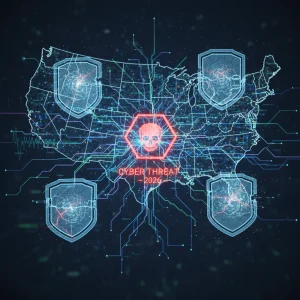
In an increasingly interconnected world, the digital landscape for US businesses is constantly evolving, presenting both unprecedented opportunities and persistent, sophisticated threats. As we navigate early 2026, the urgency for robust cybersecurity measures has never been greater. The adversaries are becoming more cunning, their methods more advanced, and the potential impact on organizations more severe. This comprehensive briefing aims to shed light on the US Business Cyber Threats that are most prevalent and impactful right now, providing a vital resource for business leaders, IT professionals, and anyone concerned with safeguarding digital assets.
Anúncios
Understanding these threats is the first step towards building resilient defenses. Proactive measures, rather than reactive ones, are paramount in an environment where a single breach can lead to significant financial losses, reputational damage, and operational disruption. Our focus here is to equip you with the knowledge needed to anticipate, prevent, and mitigate the most critical cyber risks facing US businesses today.
The Evolving Landscape of Cyber Warfare Against US Businesses
The digital battleground is not static. Cybercriminals, state-sponsored actors, and hacktivist groups are continuously refining their tactics, techniques, and procedures (TTPs). Early 2026 has seen a notable shift in the sophistication and target specificity of attacks. No longer are attacks solely broad-brush attempts; many are now highly personalized and meticulously planned, aiming to exploit specific vulnerabilities within an organization’s infrastructure or human element. This makes understanding the nuances of current US Business Cyber Threats absolutely critical for survival and sustained operation in the digital age.
Factors such as the widespread adoption of cloud technologies, the proliferation of remote workforces, and the increasing reliance on complex supply chains have broadened the attack surface, offering more entry points for malicious actors. Furthermore, the convergence of operational technology (OT) and information technology (IT) systems in many industries introduces new vectors for attacks that can have real-world physical consequences. It’s a complex tapestry of vulnerabilities that requires a multi-layered defense strategy.
Anúncios
The Imperative of Proactive Cybersecurity for US Businesses
For US businesses, cybersecurity is no longer just an IT concern; it’s a fundamental business imperative. Boards of directors and executive leadership are increasingly recognizing the strategic importance of robust cyber defenses. Regulatory pressures are mounting, with stricter data privacy laws and compliance requirements demanding greater accountability from organizations regarding their data protection practices. Failing to address these US Business Cyber Threats can result in severe legal penalties, loss of customer trust, and long-term damage to brand equity.
Moreover, the economic impact of cyberattacks is staggering. Beyond direct financial losses from theft or ransom payments, businesses face costs associated with incident response, system remediation, legal fees, public relations management, and the potential loss of intellectual property. The ripple effect can disrupt entire supply chains and have broader economic implications. Therefore, investing in advanced cybersecurity solutions and fostering a security-aware culture are not merely expenses but critical investments in the future viability and success of any US business.
Threat 1: Advanced Persistent Ransomware Campaigns
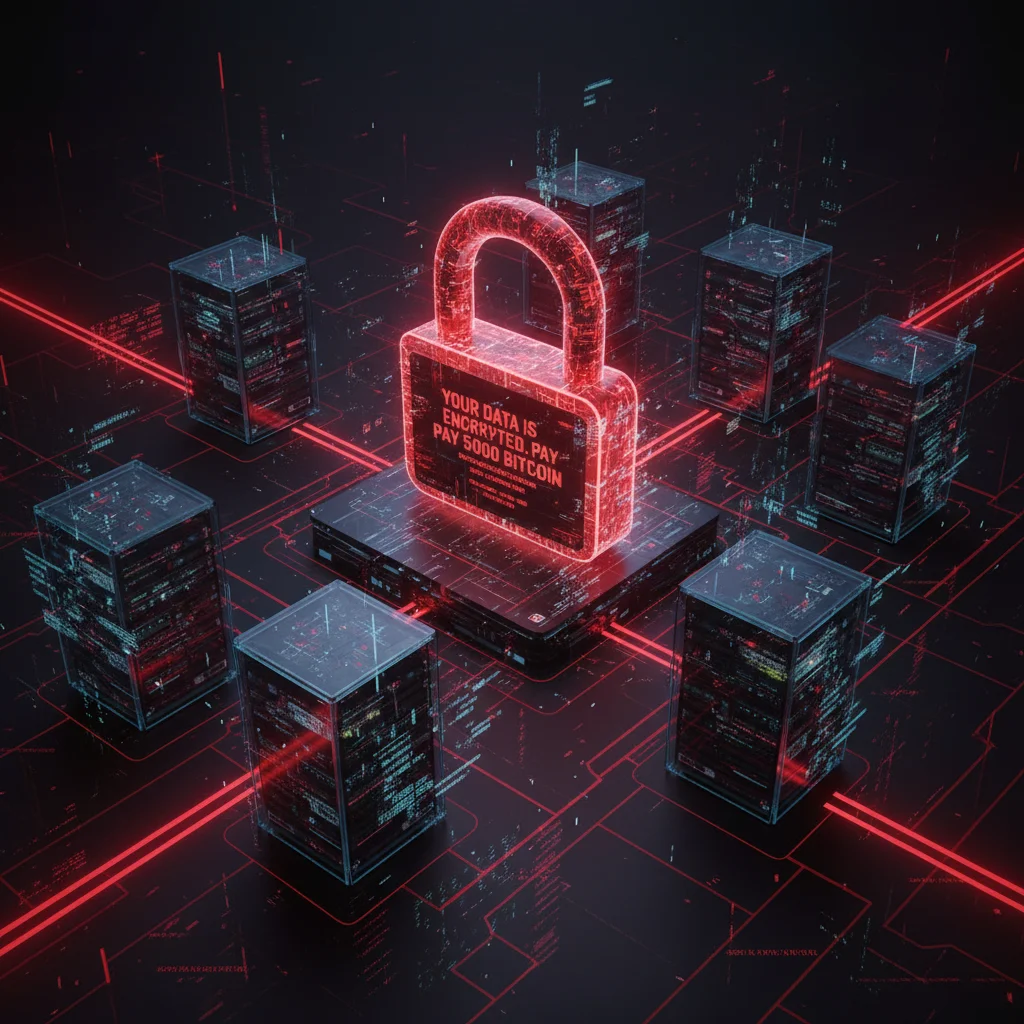
Ransomware continues to be a dominant and increasingly aggressive US Business Cyber Threat. However, the nature of these attacks has evolved significantly. We are now seeing Advanced Persistent Ransomware (APR) campaigns. These are not simple, opportunistic attacks but rather sophisticated, multi-stage intrusions where attackers gain initial access, remain undetected for extended periods (sometimes weeks or months), map the network, escalate privileges, and then deploy ransomware laterally across critical systems. The goal is maximum disruption and extortion.
Attackers are also employing a ‘double extortion’ tactic, where they not only encrypt data but also exfiltrate sensitive information before encryption. If the ransom is not paid, they threaten to leak or sell the stolen data on the dark web. This adds another layer of pressure on victim organizations, increasing the likelihood of payment. Furthermore, ‘triple extortion’ is emerging, involving threats to launch DDoS attacks or notify regulators and customers about the breach if the ransom is not met. This makes APR a particularly insidious form of US Business Cyber Threats.
Mitigating Advanced Persistent Ransomware
- Enhanced Endpoint Detection and Response (EDR): Deploy EDR solutions that can detect suspicious activities indicative of early-stage intrusion, lateral movement, and privilege escalation, not just known ransomware signatures.
- Robust Backup and Recovery Strategy: Implement immutable, air-gapped backups. Regularly test your recovery procedures to ensure business continuity even in a worst-case scenario.
- Network Segmentation: Isolate critical systems and data to limit the lateral spread of ransomware within the network.
- Security Awareness Training: Educate employees about phishing, social engineering, and safe browsing practices, as initial access often begins with human error.
- Vulnerability Management: Regularly patch and update all software and systems to close known vulnerabilities that attackers might exploit.
Threat 2: AI-Powered Phishing and Social Engineering
The advent of sophisticated AI and machine learning tools has significantly amplified the effectiveness of phishing and social engineering attacks, making them a top US Business Cyber Threat. Attackers are leveraging AI to generate highly convincing, personalized phishing emails, deepfake voice messages, and even video calls that mimic legitimate individuals. These AI-generated lures are grammatically perfect, contextually relevant, and incredibly difficult to distinguish from genuine communications.
Spear phishing campaigns, which target specific individuals within an organization, are now scaled and automated using AI, allowing attackers to craft thousands of unique, tailored messages. Business Email Compromise (BEC) scams are also benefiting from AI, making it easier for criminals to impersonate executives or trusted partners to trick employees into transferring funds or divulging sensitive information. The psychological manipulation involved is far more advanced than ever before, exploiting cognitive biases and trust with unprecedented precision.
Defending Against AI-Powered Phishing
- Advanced Email Security Gateways: Implement email security solutions that utilize AI and machine learning to detect anomalies, suspicious patterns, and deepfake indicators in incoming communications.
- Multi-Factor Authentication (MFA): Enforce MFA across all accounts and services to prevent unauthorized access, even if credentials are stolen through phishing.
- Continuous Security Awareness Training: Regularly train employees to recognize the latest phishing tactics, including AI-generated content, and conduct simulated phishing exercises.
- Zero Trust Architecture: Adopt a zero-trust model where no user or device is inherently trusted, regardless of their location, requiring verification for every access attempt.
- Verification Protocols: Establish clear protocols for verifying financial requests or sensitive information requests, especially those made via email or unexpected channels.
Threat 3: Supply Chain and Third-Party Risk Exploitation
The interconnectedness of modern business ecosystems means that a breach in one organization can have cascading effects across its entire supply chain. Exploiting vulnerabilities in third-party vendors, suppliers, or partners has become a preferred method for attackers to gain access to larger, more secure targets. This makes supply chain exploitation a critical and often underestimated US Business Cyber Threat.
Attackers target smaller, less secure vendors that may have access to a larger organization’s systems, data, or intellectual property. Once inside a vendor’s network, they can then pivot to the primary target. Recent high-profile incidents have demonstrated the devastating impact of such attacks, leading to widespread data breaches and operational disruptions. The complexity of modern supply chains, often involving hundreds or thousands of vendors, makes comprehensive oversight challenging but essential.
Managing Supply Chain Cyber Risk
- Thorough Vendor Risk Assessments: Conduct rigorous cybersecurity assessments of all third-party vendors and partners, including their security policies, controls, and incident response capabilities.
- Contractual Security Clauses: Include explicit cybersecurity requirements and breach notification clauses in all vendor contracts.
- Continuous Monitoring: Implement solutions to continuously monitor the security posture of critical third-party vendors.
- Least Privilege Access: Ensure that third-party access to your systems and data is granted on a ‘least privilege’ basis, meaning they only have access to what is absolutely necessary.
- Incident Response Planning: Develop and test incident response plans that include protocols for managing breaches originating from third-party vendors.
Threat 4: Exploitation of Cloud Misconfigurations and Vulnerabilities
As US businesses increasingly migrate to cloud environments (IaaS, PaaS, SaaS), the security of these platforms becomes paramount. While cloud providers invest heavily in security, the responsibility for configuring and managing cloud resources often falls on the customer. Cloud misconfigurations are now a leading cause of data breaches, making them a significant US Business Cyber Threat.
Common misconfigurations include improperly secured storage buckets (e.g., S3 buckets), overly permissive access controls, unpatched cloud-based applications, weak API security, and inadequate identity and access management (IAM) policies. Attackers actively scan for these vulnerabilities, which can expose sensitive data, allow unauthorized access to cloud resources, or enable the deployment of malicious code. The dynamic nature of cloud environments also means that misconfigurations can arise rapidly if not managed correctly.
Securing Cloud Environments
- Cloud Security Posture Management (CSPM): Implement CSPM tools to continuously monitor cloud configurations against security best practices and compliance frameworks.
- Identity and Access Management (IAM): Enforce strong IAM policies, including least privilege access, MFA for all cloud accounts, and regular review of access permissions.
- Cloud Workload Protection Platforms (CWPP): Utilize CWPP solutions to secure workloads running in the cloud, including virtual machines, containers, and serverless functions.
- Regular Audits and Penetration Testing: Conduct regular security audits and penetration tests of your cloud infrastructure to identify and remediate vulnerabilities.
- Employee Training: Educate IT and development teams on secure cloud configuration practices and the shared responsibility model in cloud security.
Threat 5: State-Sponsored Cyber Espionage and Critical Infrastructure Attacks
While often targeting larger enterprises or government entities, state-sponsored cyber espionage and critical infrastructure attacks pose an escalating US Business Cyber Threat that can indirectly or directly impact a wide range of US businesses. These actors are highly resourced, patient, and motivated by geopolitical objectives, intellectual property theft, or the desire to disrupt national infrastructure.
Small and medium-sized businesses (SMBs) are not immune, especially if they are part of the supply chain for critical infrastructure or possess valuable intellectual property that state actors might seek. Attacks can range from sophisticated infiltration for long-term data exfiltration to disruptive attacks aimed at energy grids, transportation systems, or financial services. The stealth and persistence of these threats make them particularly challenging to detect and defend against, requiring advanced threat intelligence and detection capabilities.
Countering State-Sponsored Threats
- Advanced Threat Intelligence: Subscribe to and integrate threat intelligence feeds that provide insights into state-sponsored TTPs and indicators of compromise (IoCs).
- Robust Perimeter Defenses: Implement next-generation firewalls, intrusion detection/prevention systems (IDS/IPS), and secure web gateways to fortify network perimeters.
- Proactive Threat Hunting: Engage in proactive threat hunting activities to search for advanced persistent threats (APTs) that may have bypassed traditional defenses.
- Collaboration with Government Agencies: Participate in information-sharing programs with government agencies like CISA (Cybersecurity and Infrastructure Security Agency) to stay informed about national threats.
- Operational Technology (OT) Security: For businesses involved in critical infrastructure, implement specialized OT security solutions and practices to protect industrial control systems (ICS) and SCADA systems.
Building a Resilient Cybersecurity Posture for US Businesses
Addressing the formidable US Business Cyber Threats requires a holistic and adaptive approach. Cybersecurity is not a one-time project but an ongoing process of assessment, implementation, monitoring, and adaptation. Here are key pillars for building a resilient cybersecurity posture:
1. Comprehensive Risk Management
Start with a thorough understanding of your organization’s unique risk profile. Identify critical assets, potential vulnerabilities, and the likely threat actors. A robust risk management framework allows businesses to prioritize security investments and allocate resources effectively. Regularly reassess your risk landscape as your business evolves and new threats emerge. This foundational step ensures that your cybersecurity strategy is aligned with your business objectives and the specific challenges you face.
2. Layered Security Architecture
No single security solution is foolproof. Implement a multi-layered defense-in-depth strategy that incorporates various security controls at different levels of your IT infrastructure. This includes perimeter security, network segmentation, endpoint protection, data encryption, identity and access management, and application security. Each layer acts as a barrier, increasing the difficulty for attackers to breach your systems and access sensitive data. This redundancy is crucial in defending against sophisticated US Business Cyber Threats.
3. Strong Identity and Access Management (IAM)
Identity is the new perimeter. Implement strong IAM practices, including Multi-Factor Authentication (MFA) for all users and systems, especially for administrative accounts and critical applications. Adopt the principle of least privilege, ensuring users only have access to the resources absolutely necessary for their role. Regularly review and revoke access permissions to prevent privilege creep and unauthorized access. Robust IAM is a cornerstone of protecting against many common US Business Cyber Threats.
4. Employee Training and Awareness
Your employees are both your first line of defense and potentially your weakest link. Implement continuous security awareness training programs that educate staff on the latest phishing techniques, social engineering tactics, and safe computing practices. Foster a culture where cybersecurity is everyone’s responsibility, and employees feel empowered to report suspicious activities without fear of reprisal. A well-informed workforce is a powerful deterrent against a wide array of US Business Cyber Threats.
5. Incident Response and Business Continuity Planning
Despite best efforts, breaches can occur. Having a well-defined and regularly tested incident response plan is critical. This plan should detail the steps to detect, contain, eradicate, and recover from a cyberattack. Furthermore, develop comprehensive business continuity and disaster recovery plans to ensure your organization can maintain critical operations even in the face of a significant cyber incident. Regular tabletop exercises can help refine these plans and ensure all stakeholders understand their roles.
6. Continuous Monitoring and Threat Intelligence
Cybersecurity is an ongoing battle that requires vigilance. Implement continuous monitoring solutions (e.g., SIEM, SOAR) to detect unusual activities and potential threats in real-time. Integrate threat intelligence feeds to stay informed about emerging threats, vulnerabilities, and attacker TTPs relevant to your industry and organization. Proactive threat hunting can help uncover stealthy intrusions that might evade automated defenses. Staying ahead of the curve is key to mitigating US Business Cyber Threats.
7. Regulatory Compliance and Data Governance
Ensure your cybersecurity practices comply with relevant industry regulations (e.g., HIPAA, PCI DSS) and data privacy laws (e.g., CCPA, state-specific privacy laws). Implement strong data governance policies to classify, protect, and manage sensitive information throughout its lifecycle. Non-compliance can lead to significant fines and reputational damage. Adhering to these standards not only ensures legal compliance but also strengthens your overall security posture against US Business Cyber Threats.
Conclusion: Staying Ahead of the Curve
The landscape of US Business Cyber Threats in early 2026 is complex, dynamic, and challenging. From advanced persistent ransomware and AI-powered phishing to supply chain vulnerabilities, cloud misconfigurations, and state-sponsored espionage, the risks are multifaceted. However, by understanding these threats and implementing a comprehensive, layered, and proactive cybersecurity strategy, US businesses can significantly enhance their resilience and protect their valuable digital assets.
Investing in robust technology, fostering a security-aware culture, and continuously adapting to the evolving threat landscape are not optional luxuries but essential requirements for survival and success in the digital age. The time to act is now. By prioritizing cybersecurity, US businesses can not only safeguard their operations but also build trust with their customers and stakeholders, ensuring a secure and prosperous future.